Execution case: Idaho Supreme Court rules for governor’s authority in clemency decisions
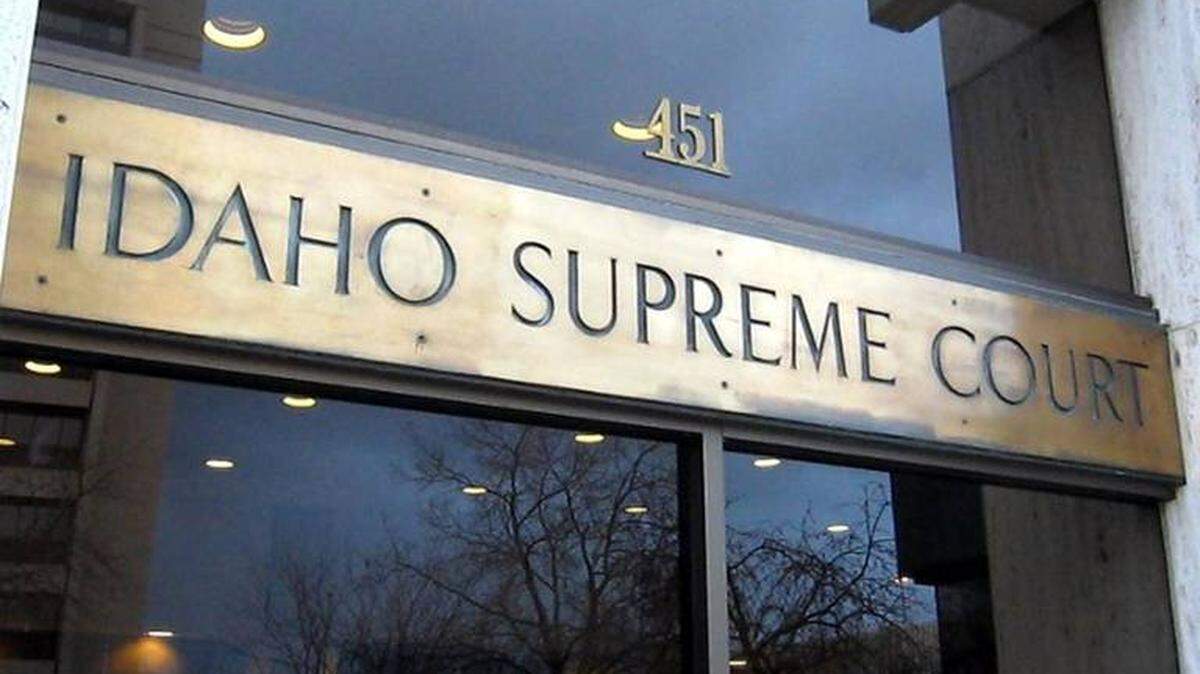
The Idaho Supreme Court ruled unanimously Tuesday that the governor maintains the power to reject the state parole board’s clemency decisions to reduce a prisoner’s sentence, in turn restarting a longtime death row inmate’s execution timeline.
The state’s highest court reversed a lower court’s prior ruling against the governor’s authority. That prevented the issuance of a death warrant for convicted murderer Gerald Pizzuto, 66, who is terminally ill with late-stage bladder cancer.
The Supreme Court’s ruling Tuesday affirmed the governor’s role in the clemency process in all cases, including capital punishment. In December, Gov. Brad Little denied the parole board’s recommendation to drop Pizzuto’s sentence to life in prison, removing him from death row.
In a statement to the Idaho Statesman after the court’s decision, Little underscored his rightful involvement in Pizzuto’s clemency bid, and also defended his choice to uphold the original sentence.
“As governor, my job is to follow the law and ensure that lawful criminal sentences are carried out,” Little said. “A jury convicted Pizzuto of his crimes and he was lawfully sentenced to death. I denied Pizzuto’s commutation request so that the lawful and just sentences could be carried out as ordered by the court. Today, Idaho’s highest court recognized that I acted consistent with my legal duties and that Pizzuto’s death sentence remains valid.”
How we got here
The case before the Supreme Court stemmed from Little’s action to immediately reject the parole board’s majority decision last year. The Republican governor rationalized that the severity of Pizzuto’s crimes warranted that his death sentence be fulfilled.
Pizzuto was convicted in 1986 — the same year voters approved the constitutional amendment in question surrounding the recent Supreme Court case — of the July 1985 slayings of Berta Herndon, 58, and her nephew, Del Herndon, 37, at a remote Idaho County cabin north of McCall.
Pizzuto and two accomplices were in the midst of robbing the Herndons when Pizzuto bludgeoned the two family members to death with a hammer, his accomplices later testified during trial in exchange for lighter sentences. Pizzuto was convicted and sentenced to be executed, and he has remained on Idaho death row for more than 36 years as several state and federal appeals have been exhausted.
In response to Little denying the parole board’s recommendation, Pizzuto’s attorneys with the nonprofit Federal Defender Services of Idaho filed a lawsuit in state district court. They challenged the governor’s power to do so according to the Idaho Constitution.
In February, Idaho District Court Judge Jay Gaskill, of Nez Perce County, sided with Pizzuto and his attorneys, agreeing that the state constitution never granted such authority to the governor. Instead, Gaskill ruled that power remains with the parole board, which is appointed by the governor.
The state, represented by the Idaho attorney general’s office and backed by the governor’s office, appealed Pizzuto’s legal victory in Idaho district court. The Supreme Court held arguments in June, and rendered its decision roughly 2 1/2 months later.
In the majority opinion, penned by Justice Gregory Moeller and issued Tuesday, the Supreme Court stated that a constitutional amendment passed by Idaho voters in 1986 affirmed the governor’s authority to deny clemency recommendations, after the Legislature sought to limit the power of the parole board by granting final say to the governor. Voters at that time approved the ballot measure with more than 68% approval.
“While the commutation power remains wholly vested in the executive branch through the Commission (of Pardons and Parole), the 1986 amendment to the constitution is clear that the Legislature now determines how that power operates,” the court’s decision reads. “This allowed the Legislature to include an additional requirement of gubernatorial approval for the commutation of capital offenses.”
The attorney general’s office, through spokesperson Scott Graf, declined Tuesday to comment on the ruling, saying “the matter remains ongoing.”
Pizzuto’s attorneys said in a written statement that they are “obviously disappointed and devastated” by the Supreme Court’s decision.
“We hope the governor will take a closer look at all the reasons the Idaho Commission of Pardons and Parole issued a rare recommendation of clemency for Mr. Pizzuto,” said Deborah Czuba, supervising attorney of the nonprofit’s unit that oversees death penalty cases. “Any aggressive pursuit of a death warrant at this point for Mr. Pizzuto would not only be barbaric, but also a clear waste of time, resources and taxpayer money.
“We believe the Commission of Pardons and Parole made a compassionate and reasoned decision,” she added, “and that there is still time for Gov. Little to take the wise and moral action to allow Mr. Pizzuto to die a natural death in prison.”
What’s next?
Under Idaho judicial rules, the court’s opinion becomes final 21 days after the decision is announced. Pizzuto’s attorneys have an opportunity to seek a rehearing within that window, if they choose, and filings in support of that request would be due within another 14 days after that. Extensions on that filing deadline are not uncommon, and the court would decide whether to grant a rehearing at some point after submission.
But with the ruling, the attorney general’s office is expected to again seek a death warrant for Pizzuto, which would signal his execution by lethal injection within 30 days of its issuance. The attorney general’s office made the request in both its appeal filings and during oral arguments in June before the Idaho Supreme Court.
Idaho County Prosecutor Kirk MacGregor told the Statesman by email that despite Pizzuto’s crimes and conviction taking place in his county, his office is uninvolved in pursuit of a death warrant, and the attorney general’s office is handling the case.
Robert Dunham, executive director of the Death Penalty Information Center, told the Statesman by phone that the court’s decision in the Pizzuto case again raises a central question relevant across the U.S. today about executing elderly or infirm inmates. The Washington, D.C.-based nonprofit takes no formal position for or against the use of capital punishment.
“This ruling brings us back to the previous issue of what it means for the state to carry out an execution of an individual who is terminally ill,” Dunham said. “Idaho has to determine whether it is acceptable to execute someone who is already in the process of dying. I think many people would consider that somewhat ghoulish, but that’s a choice that Gov. Little and state prosecutors have made.”
This story was originally published August 23, 2022 at 3:29 PM.