Judge overrules Idaho governor on death row inmate’s sentence, reduced to life in prison
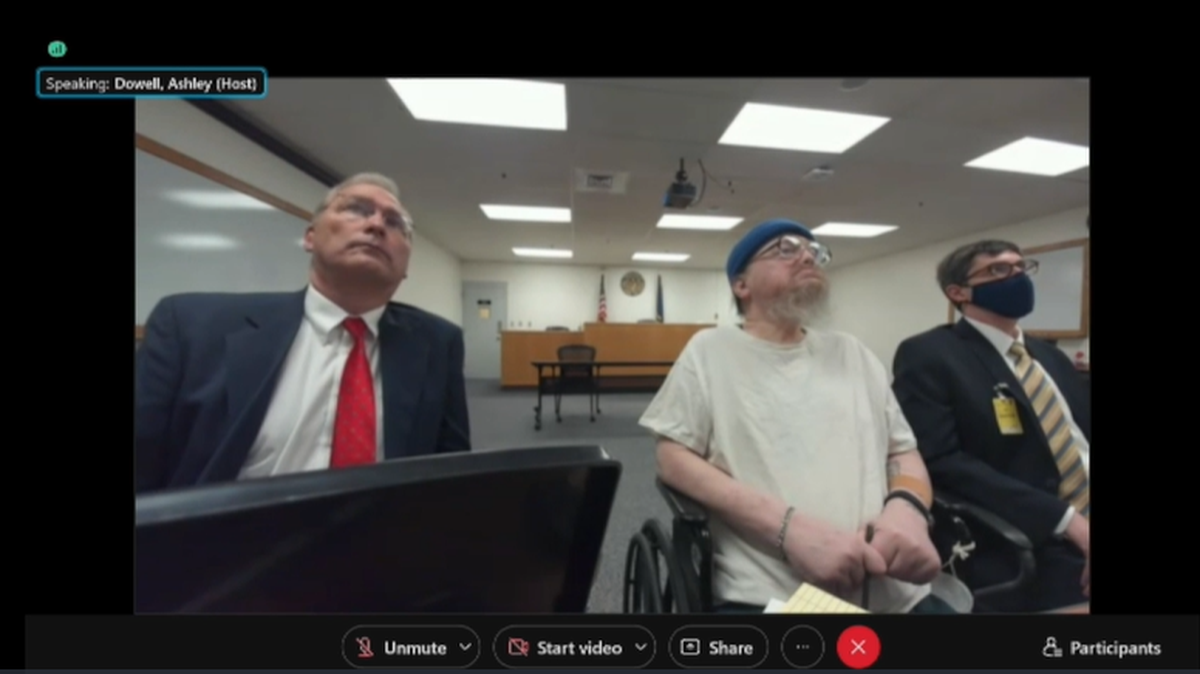
Inmate Gerald Pizzuto’s death sentence was reduced to life in prison by an Idaho district court judge Friday — a ruling with far-reaching implications for the state after the judge found Gov. Brad Little has no power to reject a clemency recommendation in murder cases under the Idaho Constitution.
In a legal challenge over Little’s decision, Judge Jay Gaskill, of Nez Perce County, ruled that the Idaho Commission of Pardons and Parole is the only body with the authority to commute an inmate’s sentence stemming from a murder conviction. The governor, meanwhile, possesses final say on cases of treason and impeachment.
In December, the Republican governor denied the parole board’s recommendation — made in a 4-3 vote — to reduce Pizzuto’s sentence to life in prison. Gaskill referred to a constitutional amendment in the 1980s regarding clemency, and concluded that the governor was never granted such overarching power.
“There is no indication that the founders or the people of the state of Idaho in 1986 intended to give the governor the ultimate decision-making authority with respect to whether a death sentence should be commuted,” Gaskill wrote. “This court finds that the commission’s power to issue commutations applies to all cases of offenses against the state except treason or conviction on impeachment.”
Under the action, the death sentence of Pizzuto, 66, who is terminally ill with late-stage bladder cancer, was dropped to life in prison without the chance of parole. Gaskill’s ruling prevents the state from issuing a death warrant to execute Pizzuto, who has been on Idaho’s death row since 1986. He has avoided execution three times since his conviction, most recently with the issuance of his last death warrant in May.
The Federal Defender Services of Idaho, the nonprofit that represents Pizzuto, applauded Gaskill’s decision.
“We are grateful that the court upheld the just and merciful decision by the parole commission to let Jerry Pizzuto die in prison,” Deborah Czuba, supervising attorney of the nonprofit’s unit that oversees death penalty cases, said in a written statement. “As the court recognized, the Idaho Constitution wisely leaves commutation decisions to the commissioners, who the governor appoints based on their judgment and expertise in such matters. The people of Idaho have not given the governor the power to interfere in the commutation process, and as the court found, he acted illegally here.
“We hope the state will now do the right thing and finally allow a dying man to pass away of natural causes in prison, rather than continuing to fight for an unnecessary execution through costly litigation at taxpayer expense,” Czuba added.
Gov. Little responds, plans to appeal court decision
Little’s office said Friday in a written statement that he will challenge the ruling, which is expected to be filed with the Idaho Supreme Court.
“One judge agreed with the federal defender that Idaho code violated the (Idaho) Constitution,” the written statement reads. “Gov. Little has followed the constitution and Idaho code as written. Gov. Little will challenge this ruling because the state must have the ability to carry out the death penalty as ordered by the court in this case. Pizzuto was convicted of rape, robbery and four brutally gruesome murders. This matter is now left for a higher court to ultimately decide.”
After an all-day clemency hearing on Nov. 30, and another day of closed-door deliberations for the parole board, the seven-member commission released its decision a month later, on Dec. 30, recommending Pizzuto be allowed to die of natural causes in prison. The governor rejected it the same day.
The attorney general’s office, which defended the state in the legal challenge, declined to comment Friday. The Idaho Department of Correction, and Commission of Pardons and Parole, also declined to comment on the ruling.
Pizzuto awaits death row after 1985 murders
Pizzuto was convicted of the summer 1985 murders of Berta Herndon and her nephew Del Herndon at a remote Idaho County cabin north of McCall. He has sat on Idaho death row ever since — most recently, one of eight inmates up for execution in the state.
Pizzuto previously served nine years in prison for a rape conviction in Michigan, and was later found guilty of two murders in Washington state after his conviction in Idaho.
Gaskill took just over two weeks to deliver his opinion. He agreed with Pizzuto’s attorneys, who argued that Little’s clemency rejection violated the law, because the state constitution limits the governor’s power to temporarily postponing an execution — nothing more. The parole board has the final say, they argued.
Gaskill was appointed as a judge in the state’s Second District Court by Gov. Butch Otter, Little’s predecessor, in February 2014. Little also was serving as Idaho lieutenant governor at that time.
The Nez Perce County district court judge also signed Pizzuto’s most recent death warrant, in May, for a scheduled execution by lethal injection on June 2, 2021. Less than two weeks later, Gaskill signed Pizzuto’s proceeding stay of execution once the inmate was granted the unexpected clemency hearing.
The legal challenge regarding the Idaho governor’s authority from Pizzuto’s attorneys would normally have landed in the district court for Idaho County, where Pizzuto was found guilty of the July 1985 murders of the Herndons. However, Idaho County District Court Judge Greg FitzMaurice recused himself from the hearing because he had been the attorney for deceased Pizzuto accomplice William Odom.
FitzMaurice helped broker a plea agreement for his client to testify against Pizzuto in exchange for a lighter sentence. Odom, and another convicted accomplice, James Rice, each served 12 years in prison and were then released. Pizzuto, meanwhile, received the death penalty and has awaited his execution for more than 35 years.
This story was originally published February 4, 2022 at 4:31 PM.