This man was beaten by a Meridian police officer during arrest. He just sued
Two years ago, then-Meridian Police Officer Donald Heida punched Colt Seward half a dozen times in the face and head during a DUI arrest, fracturing his eye socket. Seward is now suing the Meridian Police Department, alleging that the force used to detain him was “unnecessary, unreasonable, and excessive.”
In a lawsuit filed this month, Seward’s attorneys alleged that the Department, along with Heida and Officer Sean McDonald, violated their client’s constitutional rights, including his Fourth Amendment right to be free from excessive force by law enforcement.
“As a result of this violence, (Seward) has suffered severe injuries including nerve damage, broken bones, and impaired vision that have required treatment,” attorney Ryan Black wrote in the complaint.
The officers’ conduct caused Seward to suffer “severe and irreparable physical, mental, and emotional injuries and impairments,” which resulted in tens of thousands of dollars in expenses, according to the complaint. The lawsuit asked for at least $75,000 in damages for Seward’s injuries.
The Idaho Statesman reached out to the Meridian Police Department for comment.
Body-camera footage details arrest
In May 2023, the incident came under public scrutiny when video of Heida repeatedly hitting Seward while he was on the ground was posted on X by a Boise-based Black Lives Matter group. Officers were investigating Seward after he “passed out in traffic” near the intersection of North Ten Mile Road and West Ustick Road in Meridian, police said.
Meridian Police Chief Tracy Basterrechea said Seward — whose vehicle was running — was unconscious with the driver’s seat reclined, the car in gear and his foot on the brake. Basterrechea said Seward was “clearly under the influence of drugs.”
Seward failed a sobriety test, and was arrested and placed in the back of Heida’s police car, where police said he slipped out of his handcuffs. Police said they found methamphetamine and Xanax in his vehicle.
When officers were readjusting Seward’s handcuffs, he “threw an elbow,” hitting Heida in the chest, according to Basterrechea. Body-camera footage obtained by the Statesman through Seward’s wife showed Seward pulling his left hand away when officers attempted to re-cuff him.
Video showed Heida pushing Seward, face first, into the open patrol vehicle and hitting him at least twice, with Seward repeatedly saying, “I didn’t even hit you.” The men eventually fell to the ground in a struggle, the footage showed.
While on the ground, Heida had Seward pinned, with his knee on Seward’s neck part of the time, and was yelling at Seward to give him his hand. He punched him six times.
“He strikes me again,” Seward said in an interview last year, recounting his arrest. “He strikes me again and again.”
Seward sentenced to prison, eligible for parole in 2027
Seward was charged with driving under the influence and other drug-related counts, battering a law enforcement officer, resisting arrest and unlawful possession of a firearm by someone with a prior felony conviction.
The battery charge was dropped after Seward accepted a plea deal through the Ada County Prosecutor’s Office in August. He was sentenced to up to seven years in prison after pleading guilty to the other charges but will be eligible for parole in 2027, prison records showed.
Fourth District Judge Patrick Miller said at the October sentencing that he didn’t watch the footage of Seward’s arrest, adding that it wasn’t up to him to make decisions about the officer’s use of force, according to prior Statesman reporting.
“I just don’t watch it, candidly,” Miller said. “I think it’s probably pretty violent. I’ve seen the injuries; I’ve seen the description of it. It appeared to be quite flagrant, and the defendant did suffer substantial harm. I don’t know that I need to see it to further those conclusions.”
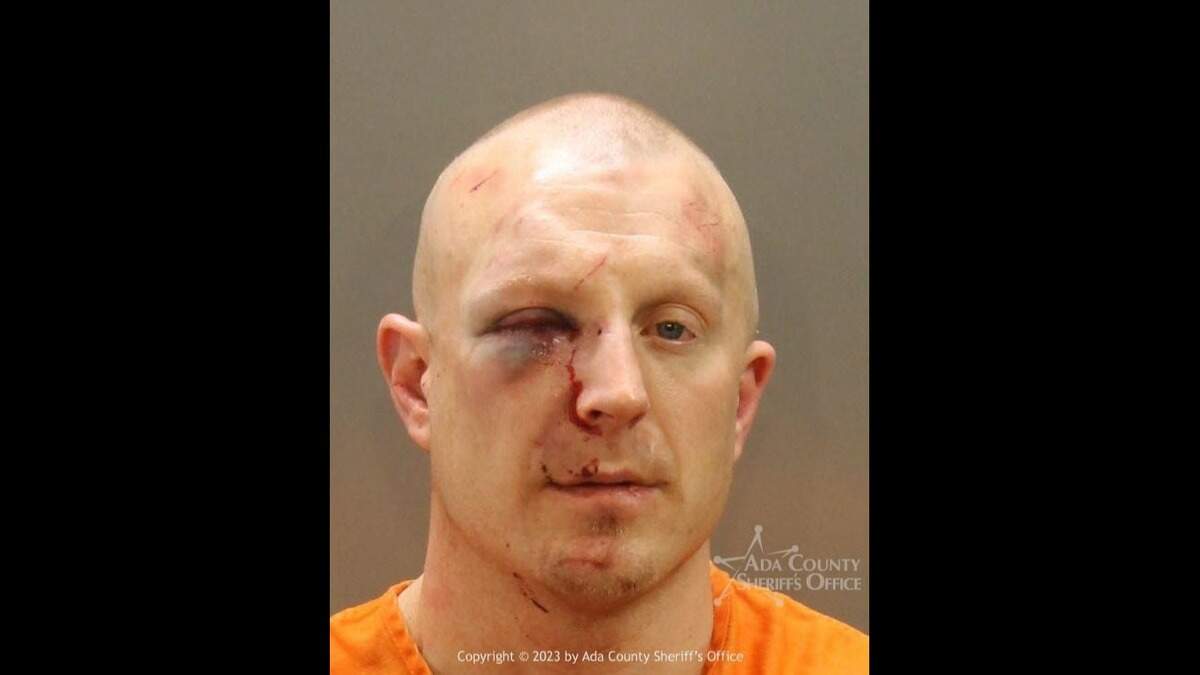
Neither of the officers was disciplined internally. Basterrechea announced a month after the incident that Heida and McDonald didn’t violate policy when they arrested Seward. While not encouraged, strikes can be used to gain compliance from someone who is resisting, he added.
“We support our officers in this use of force and I will emphasize these incidents don’t happen if the suspect cooperates or at least complies with an officer’s legal commands,” Basterrechea said.
There was “no need” for officers to use that degree of force during the arrest, Seward’s lawsuit asserted, adding that the Meridian Police Department was “deliberately indifferent” and didn’t adequately train its officers. Heida no longer works for the department, according to court records.
“I understand police have a dangerous job,” Zander Engeman, an attorney representing Seward, said last year. “But this situation felt like it went above and beyond what was needed to control the situation.”