‘Time is tissue’: Meridian Fire struggles to get to emergencies fast. Will new tech help?
When someone calls 911, the caller should expect first responders to show up in five minutes or less, according to Meridian City Council policy.
These days, that wait could be closer to nine minutes, said Joe Bongiorno, the department’s deputy chief of prevention. The extra time may not seem like much, but in an emergency, every second counts.
“Time is tissue,” he told the Statesman in an interview.
“The longer it takes us to get there – if someone is having a heart attack – that tissue is dying,” he said. “It’s the same thing with fires – fires continue to grow. So the quicker we can get there, get water on the fire, and get it out, the better.”
The American Heart Association says each minute added in EMS response time is associated with a 10.7% decrease in favorable neurological outcome after a cardiac arrest. The association also says survival is maximized when the time from collapse to CPR and medical attention is no more than four minutes.
An obvious way to bring down response times would be to build more fire stations and staff more firefighters – but that is expensive, Bongiorno said. Instead, the department is piloting a cloud-based program that changes traffic signals as fire engines approach – and in the process, can shave time off the engines’ drive to the site of the emergency.
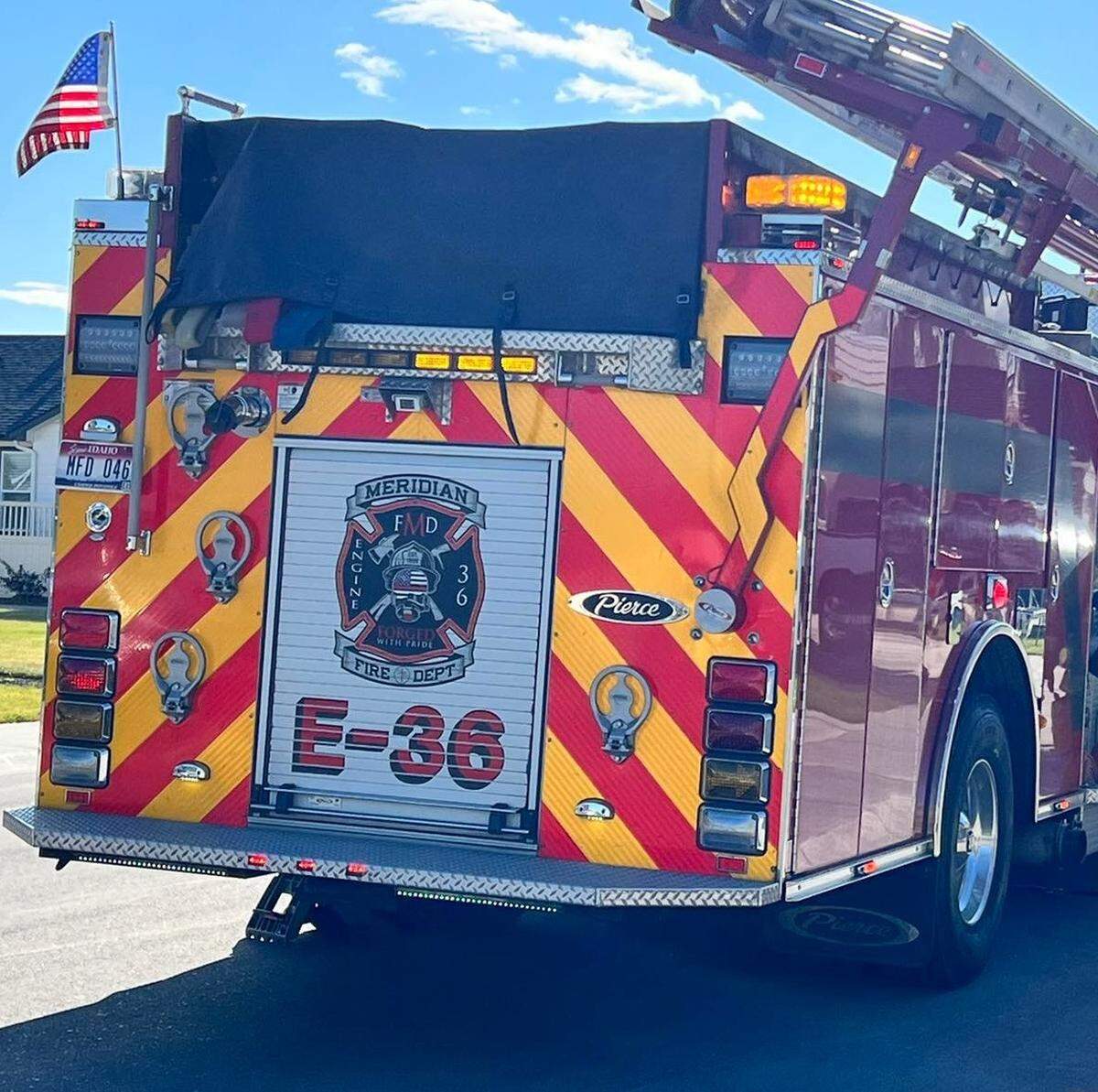
The department plans to set up and begin testing the program at 94 intersections within a month. Officials hope the new tech can help offset traffic amid the city’s population boom.
“Meridian is growing – Eagle Road is very, very packed, very busy,” Bongiorno said. “And almost every other street north, south, east or west is also being worked on … So if we can shave time off of our responses by having those intersections cleared, that’s the goal.”
Meridian’s population has grown about 50% since 2015, from around 90,000 to almost 140,000 in 2023.
The county already uses a similar technology, called Opticom, but it relies on line of sight. Each vehicle has an emitter on top that sends a signal to a receiver on traffic light poles. As fire engines approach the intersection, the light changes to let them through.
Because of the angle needed for engines to communicate with the receivers, the line-of-sight method doesn’t always work, particularly in hilly areas.
The new program, which uses the same hardware, will be more responsive to drivers’ decisions and traffic patterns, adjusting which traffic signals it’s changing as drivers use turn signals and change their routes.
The drive time is only a third of firefighters’ overall response times. Along with the new Opticom program, the fire chief is working with Ada County Dispatch to help get firetrucks on the road faster. As soon as dispatchers take down the address of an emergency, they’ll get at least one vehicle on the road while they collect additional information from callers.
Meridian isn’t the only department struggling to get on scene on time. Last week, the chief of the Middleton Star Rural Fire District told the Statesman that population increases, a new cap on property tax, and fast-rising construction and equipment costs have left the department unable to keep up with staffing and operational demands.
Other first responders in the county will be watching Meridian Fire’s data during its one-year pilot — and likely adopting the program themselves if it works, Bongiorno said.
The Ada County Sheriff’s Office, which houses the county’s dispatch services, did not reply by publication time to an emailed request for county-wide data on emergency response times.
In February, a former Meridian Fire employee sued the department, claiming it falsified its fire response times while seeking accreditation from an international public safety agency.
At the time, the city’s spokesperson disputed this account, citing the “extensive criteria” the department had to meet to receive the accreditation.
This story was originally published March 17, 2024 at 4:00 AM.