‘Time is tissue’: Meridian firefighters’ response times may endanger health, chief says
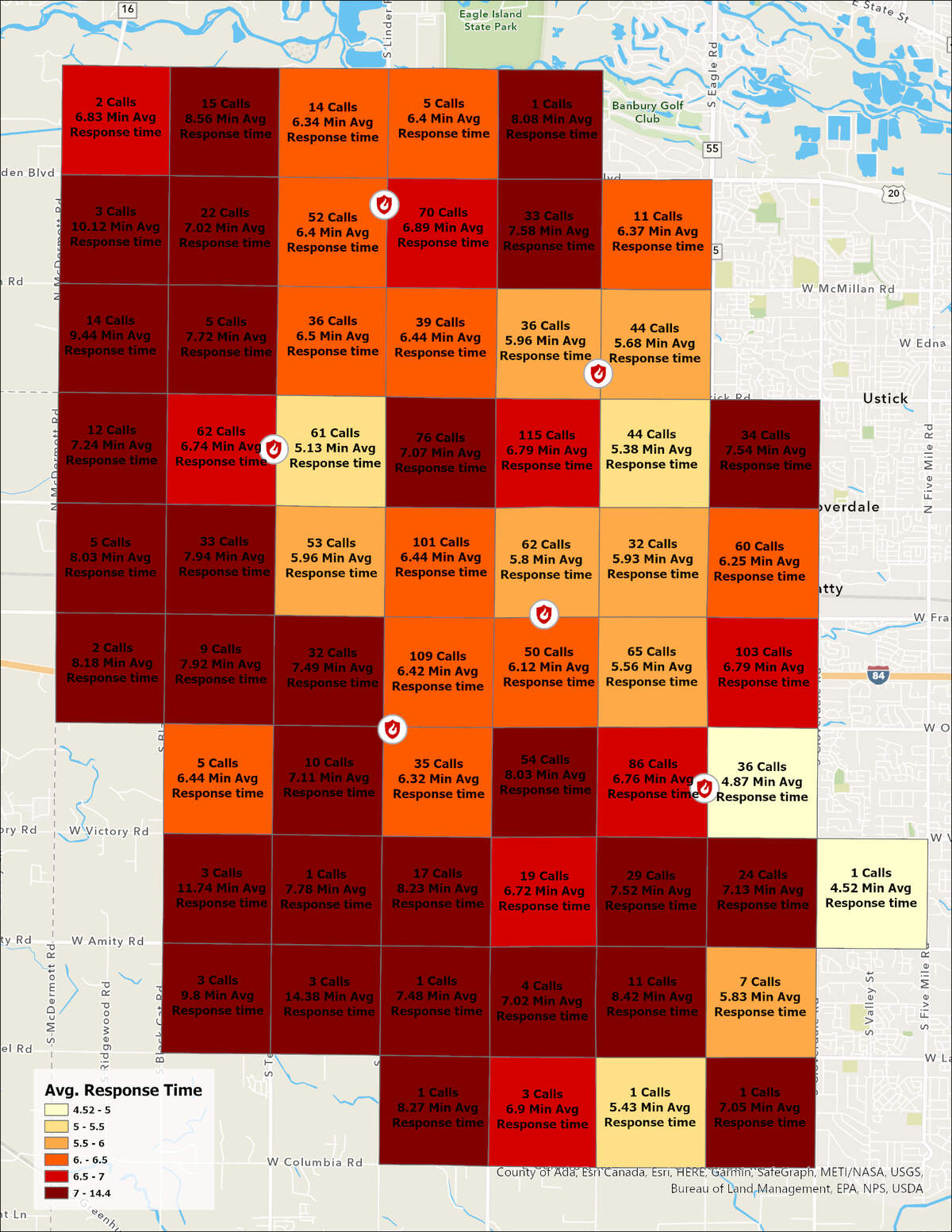
It takes the Meridian Fire Department more than five minutes to get to emergencies in most of the city of Meridian, a fact that worries Meridian Fire Chief Kris Blume.
“Time is tissue,” Blume said by phone. “We can’t put heart beats back into peoples’ bodies.”
The fire and Emergency Medical Service response times within Meridian city limits have increased as the city has grown, with more subdivisions added to the city map every year. Blume and Mayor Robert Simison have an idea to address the problem: two new fire stations to be funded and built in 2022, one each in the southeast and northwest areas of town.
The City Council is discussing the stations, and Blume hopes they can come to an agreement to commit to “responsible growth.”
The six fire stations in Meridian also provide EMS for events like a heart attack, stroke, or even a birth.
The American Heart Association says each minute added in EMS response time is associated with a 10.7% decrease in favorable neurological outcome after a cardiac arrest. The association also says survival is maximized when the time from collapse to CPR and medical attention is no more than four minutes.
Growth puts pressure on emergency services
Blume said once the response time gets to 10 minutes, the damage done to the brain from lack of oxygen is “unrecoverable.”
The time from a 911 call to the arrival of firefighters on scene should be five minutes or less, according to the council’s policy adopted in 2016.
The Meridian Fire Department had 9,500 calls for service in 2020 and employs 91 firefighters, Blume said.
The city approved 2,097 new residential building permits from June 2020 to May 2021.
“We are talking about thousands of occupancies, some commercial, but most are residential,” Blume said. “As you add these community members and their occupancies — that increases the opportunity for fire-related calls.”
Council members grapple with station funding
During the last two budget workshops, the council seems split on whether to approve two stations.
Impact fees would pay for Station 7, planned on Lake Hazel Road between Locust Grove and Eagle roads. Impact fees are fees that cities can charge developers on new development for the impact the development will make on the city’s financial resources. The fees can be used to pay for public goods, including public safety.
Funding for Station 8, planned near the new Owyhee High School, west of McDermott Road and south of McMillan Road, would come out of the city’s general fund, funded by property taxes.
Councilman Joe Borton said he was hesitant to use the general fund to pay for the extra station, when the point of impact fees is to pay for things like new fire stations.
“I don’t think we need to frame it as, ‘Should we have station 7 and 8?’ ” Borton said during a budget workshop on Tuesday, June 29. “It is that we need to plan around fiscal responsibility and to me, going outside of impact fees to fund a station is really challenging and really problematic.”
Simison said he would agree with Borton if the city did not have money for Station 8 in its general fund, but it does.
“We know we have the ability to fund it, and it is a policy debate on the appropriateness,” he said during the workshop. “But how do you decide who gets the five-minute response times and who gets the seven, when they are all taxpayers?”
Councilman Brad Hoaglun and Councilwoman Liz Strader said they support the two stations.
“People have an expectation of service, and we have to do it right,” Hoaglun said.
The council voiced support for building at least Station 7 next year. Council President Treg Bernt and council members Luke Cavener and Jessica Perreault were hesitant about building a second station in one year.
The council decided to keep both stations in the proposed budget that will be posted for the public to view and that will be discussed in the public hearing, set for August. The proposed budget has gone through two workshops, but has not been up for a council vote yet.
Rachel Spacek covers western Ada and eastern Canyon counties. Have a story suggestion or a question? Email Spacek at rspacek@idahostatesman.com.
This story was originally published July 11, 2021 at 5:00 AM.