How bad is Boise air quality right now? See wildfire smoke risks, safety tips
As the Claremont Fire continues to burn across the Boise foothills, smoke is billowing into the air.
Air quality in the Boise area has reached “unhealthy” levels due to tiny particulate matter from the wildfire, according to The Weather Channel.
The wildfire started Monday afternoon at North Claremont Drive north of the Military Reserve, the Idaho Statesman previously reported.
The blaze had burned 3,850 acres of land as of Tuesday, the Statesman reported.
No structures have been lost, and no evacuation alerts have been issued for residential areas. However, the wildfire has led to the closure of several local roads and trails.
Here’s how to stay safe as the air quality drops:
How bad is air quality in Boise right now?
As of Tuesday, air quality in Boise was “unhealthy for sensitive groups” due to particulate matter measuring less than 2.5 microns, according to The Weather Channel.
The U.S. Environmental Protection Agency’s Air Quality Index warns the public that “unhealthy” levels of pollutants can lead to “serious health effects” for sensitive individuals.
According to the National Weather Service’s current forecast for Boise, smoke could linger until 7 p.m. Wednesday.
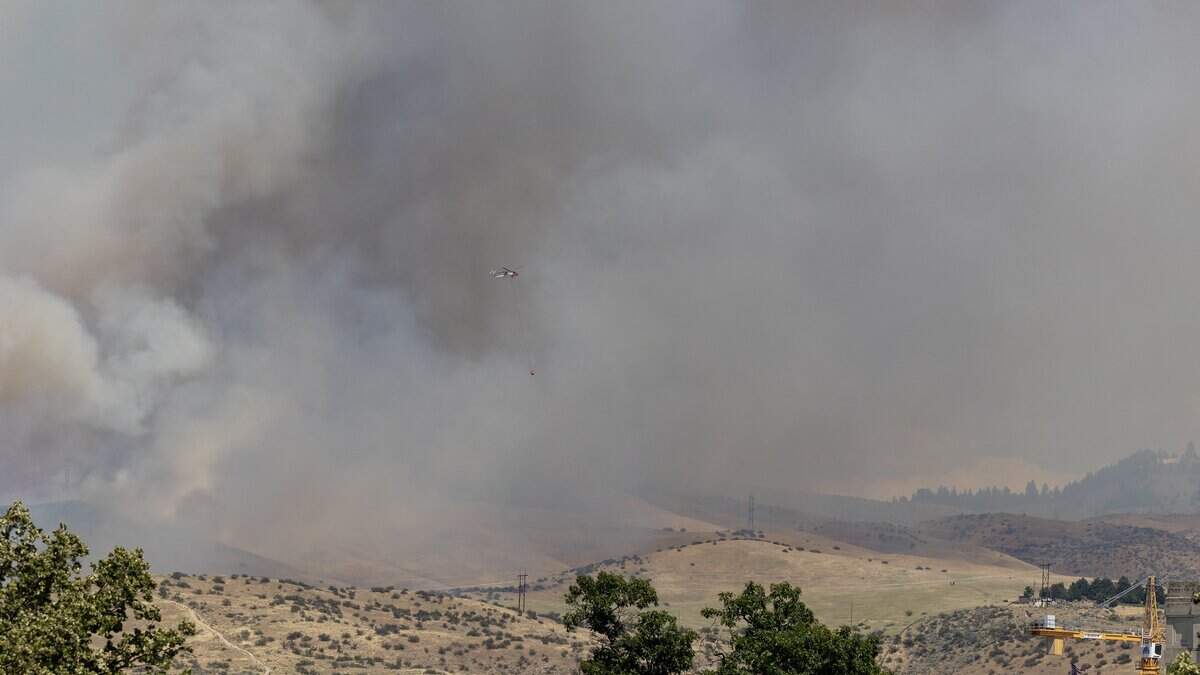
How does wildfire smoke impact air quality?
Wildfire smoke is formed from some of the smallest and most dangerous pollutants, according to Boise State University.
As smoke “travels through the air, (it) can interact with the sun and other atmospheric chemicals, making it more toxic,” Boise State said.
Here are the six air quality levels you should know:
- Good (AQI of 0 to 50): Air pollution poses little or no risk.
- Moderate (AQI of 51 to 100): Health risks for those who are sensitive to air pollution.
- Unhealthy for Sensitive Groups (AQI of 101 to 150): Members of sensitive groups may experience health effects.
- Unhealthy (AQI of 151 to 200) - Members of the general public may experience health effects; members of sensitive groups may experience more serious impacts.
- Very Unhealthy (AQI of 201 to 300): Health risks increase for everyone.
- Hazardous (AQI of 301 or higher): Emergency status health alert issued, exercise extreme caution.
What are side effects of breathing in smoke?
If your eyes, throat or nose start to become dry and irritated, it may be related to increasing air pollution from the Claremont Fire.
The particles that make up wildfire smoke are complex and can include several pollutants, according to the Mayo Clinic. “Those with ultrafine particles pose the most significant threat because they can infiltrate deep into the lungs.”
Inhaling too much smoke can lead to several serious conditions, affecting not only your lungs, but your heart as well, the Mayo Clinic said.
“People with preexisting heart disease or hypertension may experience symptoms from elevated levels of wildfire smoke, including chest pain, palpitations and fatigue,” the Mayo Clinic said.
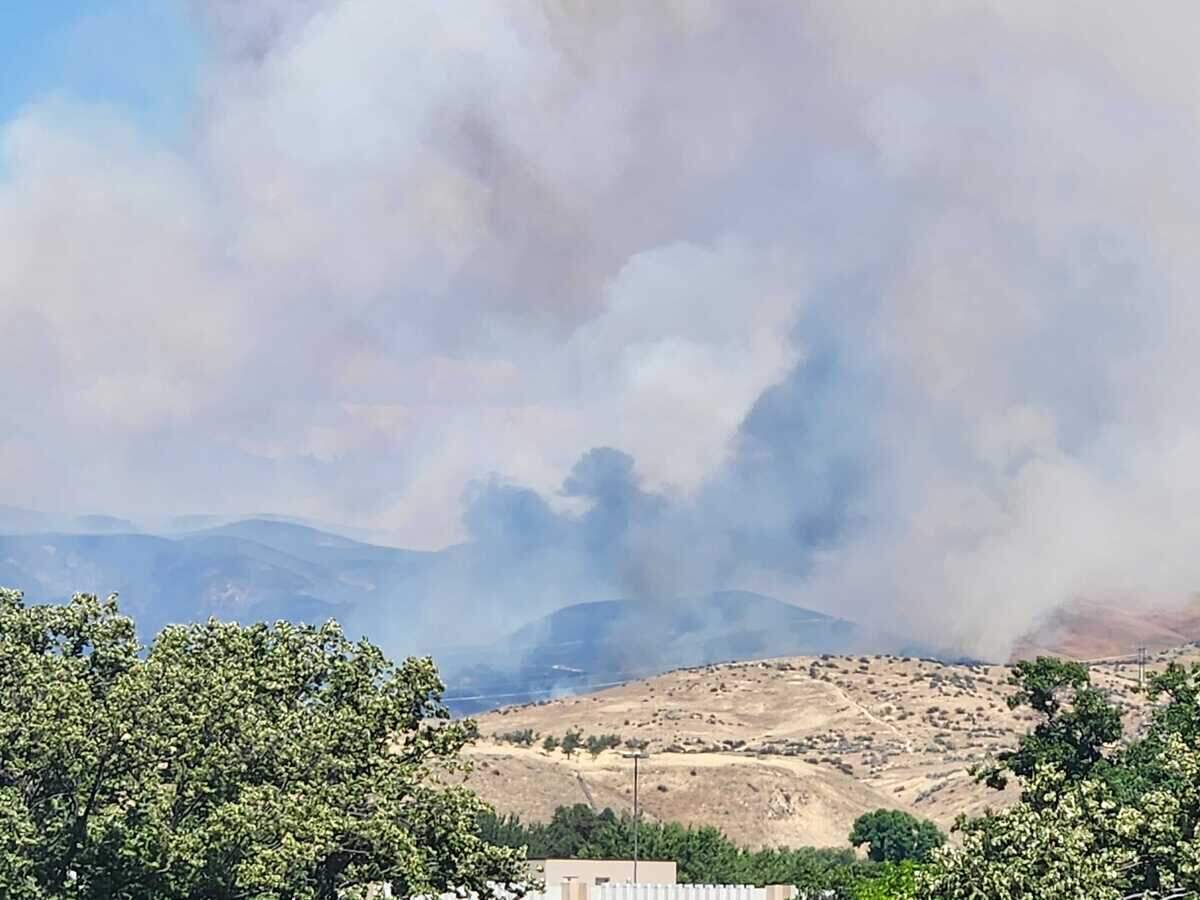
According to the Mayo Clinic, wildfire smoke can lead to these health concerns:
- Scratchy throat, coughing and asthma attacks
- Wheezing, shortness of breath and trouble breathing
- Chest pains and tightness
- Fast heartbeat
- Headaches and drowsiness
- Sinus irritation and a runny nose
- Stinging eyes
How can I stay protected from smoke pollution?
Check the air quality before you go outside if you see smoke on the horizon, according to the U.S. Centers for Disease Control. “Stay inside if authorities tell you to do so.”
“Keep smoke outside,” the CDC said. Pick a room that doesn’t directly lead outside, keep that door closed and set up an air filter if you have one.
“As much as possible, avoid burning anything indoors, including candles, gas, propane, incense or wood,” the CDC said. “You can also keep indoor air quality safe by not smoking, using a stove to cook, or vacuuming.”
When it’s mandatory for you to be outside in smoke, protect yourself with the proper respiration gear such as an N95 or P100 that fits.