
EVs out, ADUs in: Boise bets these changes hold answers in housing search
AI-generated summary reviewed by our newsroom.
- Council removes EV charger mandates, partly due to 2025 state law.
- Projects with 25% of units at 80% AMI become eligible for incentives.
- Code allows two ADUs or tiny homes on wheels and eases junior ADU kitchen conversion.
The Boise City Council has finalized changes to its zoning code, striking electric vehicle charging requirements while opening up more options for homes on single-family lots in a suite of changes designed to spur the city’s lagging housing stock.
The update Tuesday follows months of proposed tweaks to the city’s evolving land use policy, which the council overhauled in a massive 2023 modernization.
Key to the 2026 update is the removal of rules requiring electric vehicle charging stations in all new developments. That’s due in part to 2025 state law banning such mandates, according to a February report accompanying the zoning changes written by Maureen Brewer, head of the city’s planning department. But it’s also a response to complaints from developers over cost of installing the infrastructure and flagging demand.
In December 2025, 14,100 of 2.53 million registered vehicles In Idaho were electric, Idaho Transportation Department spokesperson Britt Rosenthal told the Idaho Statesman. That’s around one half of 1%.
Rather than a requirement, electric vehicle charging will be part of the city’s sustainability incentive program, which unlocks more density or waives parking requirements for projects that meet environmental thresholds.
Late last year, Conservation Voters of Idaho Program Director Ryan McGoldrick told the Statesman that, while a large chunk of Ada County’s emissions come from transportation, he accepts the city’s goals.
“As much as I would love to keep the full requirements, I also understand that we have extremely expensive housing in the city,” McGoldrick said. “If we want to have places where people can live, we need to have requirements that match that and allow us to actually build housing.”

Council raises income limits for incentives
Boise’s latest Housing Needs Analysis identified a dearth of low-income housing options, particularly for families making 60% of the area median income or below. That was reflected in the 2023 code rewrite. Developers who earmarked units at a price affordable at that income level — that’s $44,940 for an individual or $64,200 for a family of four, per Boise affordability guidelines — were eligible for bonus incentives, like waivers to parking requirements and height limits.
No one took the city up on the deal. Now, the council is raising the threshold. Projects deed restricting a quarter of units at 80% of AMI will be open to the incentives. That lifts the cap to $59,950 for an individual or $85,600 for a family of four.
“We worked really hard to get from 80% to 60% with these incentives, but the math just didn’t work out,” Kyle Patterson, Boise’s director of organizational effectiveness, told the council. “We need the value of what we’re offering to be greater than the cost of what we’re requiring — and the cost was just really, really expensive.”
Capital City Development Corp. Project Manager Alexandra Monjar applauded the change. Monjar works on property development at the urban renewal agency. In her experience, he said, “the market is essentially incapable of delivering housing” affordable to residents making 60% of AMI.
“Housing policy is only effective if it’s used,” Monjar told the council. “In my opinion, it’s objectively better to get housing built at 80% of AMI than none built at 60% of AMI.”
“The easiest and simplest way to reducing housing costs,” she added, “is to build more of it.”
‘Junior’ ADUs aim to boost housing stock
The new code backs the city’s push to add accessory dwelling units, or ADUs, to existing properties. The amendment allows a property owner to put two ADUs or tiny homes on wheels on lots.
It also streamlines the process for adding “junior” ADUs, or mother-in-law suites, in the main house by making it easier for a homeowner to add a second kitchen. A second kitchen would turn the house into a duplex under the original code, triggering more intensive building requirements.
“I think it treats homeowners as partners in this housing shortage,” Council President Meredith Stead said.
Later this year, Boise hopes to make ADUs even easier to build. The city is on track to release a catalogue of eight pre-approved designs this year to streamline the process and trim costs on homeowners.
“This initiative will help create a variety of housing options for Boiseans, provide a development pattern that is less water and energy consumptive, and create mobility options for Boiseans,” city spokesperson Maria Ortega told the Statesman in an email earlier this year.
Costs remain a challenge
Most public comments supported the change, though some thought they stopped short of what Boise’s housing crunch requires.
Some small-scale developers found the costs pushed by code too onerous, driving up prices for homes. That’s particularly true when building in existing neighborhoods, according to Boise developer Mike diVittorio.
Existing code “remains out of touch with the economics of the current market,” he said, making it “virtually impossible” to build affordable housing in established areas. To diVittorio, the minimum lot sizes are too big — and therefore expensive; setbacks from streets are too broad, eating up buildable land; and sidewalk requirements are too costly, getting passed off to consumers.
In his view, that’s pushing developers out further into the countryside in search of cheaper land. So, he said, builders put “large, expensive homes in neighborhoods already saturated with large, expensive homes, because that’s all that will pencil.”
Council Member Colin Nash took his point but defended the city’s sidewalk requirement.
“We don’t impose sidewalk requirements to make it more difficult to build housing,” Nash said. “We do it because we don’t have many other tools to build sidewalks.”
Other residents hoped the city would look to further shrink parking requirements to spur housing density. Boise is “an outlier on the high side” of parking requirements, according to Patrick Spoutz, a board member of the Gem State Housing Alliance, a housing advocacy nonprofit. Those costs show up in rents and sale prices, he said. Spoutz pointed to Spokane, which eliminated off-street parking minimums, in hopes that Boise would take inspiration.
Boise council stands by 2023 rewrite
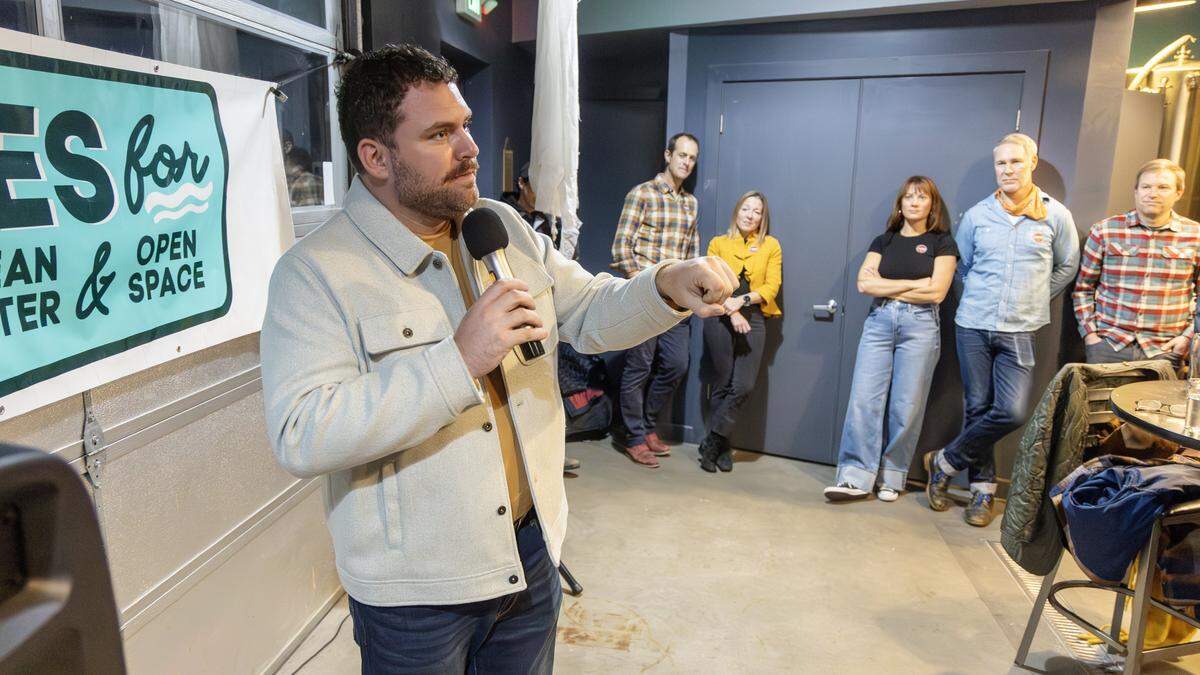
The latest changes are part of an ongoing process to refine the city’s “Modern Zoning Code,” which the 2023 rewrite is called around City Hall.
Still, Council Member Jimmy Hallyburton warned against making too many changes too fast. Constantly upending rules creates a moving target, he said, and risks undermining what he sees as the successful changes of 2023. Somewhere, he said, there’s a “sweet spot” between stable rules and “room for common sense.”
Nash agreed. “We have had two elections since we passed” the 2023 zoning rewrite, he said, “and there has been no referendum on what we’ve done.”