This state-run Boise nursing home serves 122 veterans. A big change is coming
Rick Holloway, administrator of the Idaho State Veterans Home in Boise, wants to hear the spirited sounds of life every day at work.
A retirement or veterans home, he said, should be filled with activity.
The veterans home in Boise is no different, with the sounds of debates over games of pinochle, pumpkin-carving contests and birthday celebrations criss-crossing its hallways.
But soon, the three-story veterans home will see a new kind of activity as it prepares for a major reconstruction after over 50 years of housing those who served.
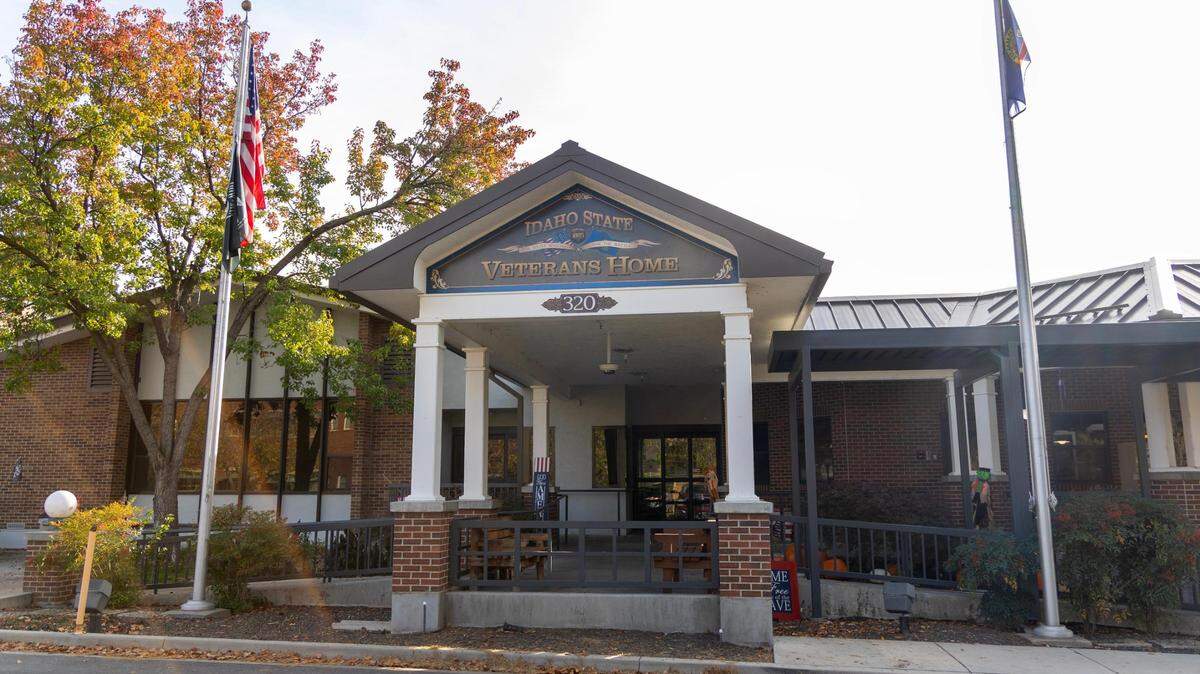
The Idaho Division of Veterans Services is preparing to build a new, four-story veterans home around the current building in an L shape before demolishing the old building.
The division runs homes in Boise, Lewiston, Pocatello and Post Falls that provide 24-hour medical and supportive care to veterans who can no longer provide for themselves, according to their website. To become a resident, an applicant must be an honorably discharged veteran or a veteran’s spouse, widow or widower.
All residents are responsible for the cost of their care, with costs ranging from about $300 per day to nearly $400 per day for veteran and nonveterans, depending on location. The cost can be covered with private insurance, Medicaid or Medicare, Social Security or other forms of income, according to the application for admission.
There is room to provide housing for up to 122 veterans in the Boise home. The new home’s capacity be the same.
The Division of Veterans Services would wait to demolish the old Boise home until all residents move into the new building to prevent displacing residents.
According to Mark Tschampl, the division’s director, the existing home has gone past its usable life. The building at 320 Collins Road sits just across from the Boise Veterans Affairs Medical Center off Fort Street just north of downtown.
“It’s … an old building,” Tschampl said. “It’s had a couple of additions added on to it, so it’s a bit of a Frankenstein building.”
At some point, he said, the costs to maintain the building’s equipment, roof, boilers and air conditioning became more expensive than building a new one.
“Every year you look at the costs, and when the costs exceed the viability of that facility, it’s time to build a new one,” Tschampl said.
Each bedroom in the building is shared by two residents, with two rooms sharing a single bathroom, meaning four people use that one bathroom.
“When you have a group living like that, it’s really easy for infectious diseases to spread,” Tschampl said.
According to Holloway, the COVID-19 pandemic tore through the home when it first broke out. All staff members, including administrators, spent 2½ years wearing scrubs to reduce the chance of sickness and implemented a check-in process that asks visitors to disclose any recent illnesses or infections.
The new home would bring in modern technologies that can’t be retrofitted into the old building, such as a new air handling system that would pull air from outside to prevent air recirculation. Tschampl said this would reduce the likelihood of recirculating diseases.
Each resident would receive a private bedroom and an attached private bathroom. The lower level would include amenities such as a movie theater, bistro, chapel and barber shop. The three floors above would be mostly devoted to residential rooms.
Each floor would revolve around a central dining area, with the uppermost floor looking out over nearby buildings toward the Boise Foothills.
“Quality of life will be far far superior to what it is now,” Tschampl said. “It’s going to be less of a facility and more of a home.”
Aaron Thomas, a 24-year veteran of the Air Force who has lived at the home since August 2021, said he has a great roommate, and living in the home has been a good experience — especially playing cards on Tuesdays and Thursdays.
“Outside of playing cards with (volunteer Ed Samuel), it’s fantastic,” Thomas said with a laugh. “He cheats a lot.”
But Thomas is excited about the new home.
“It’d be nice to have my own room, my own bathroom,” he said.
Thomas said he’s looking forward to a sports bar planned for the ground floor, since he and his roommate both enjoy football and root for opposing teams.
Roger Byrd said he is excited too. Byrd served in the Air Force as a jet mechanic from 1966 to 1970 and spent around 14 years as a cook for the Army National Guard.
“It’s nice here, and my roommate is nice, and we get along,” Byrd said. “(But) the new rooms will be better.”
Byrd spent much of his adulthood driving trucks, working oil rigs and riding bareback broncs at rodeos. Now he often spends his days playing pinochle, cribbage or games on his iPad or taking part in activities the home puts on.
“About everything here is nice,” Byrd said.
According to Tschampl, the new home will cost about $118.5 million. The state plans to break ground around May 2024, with construction to take about three years.
The Division of Veterans Services won a federal Veterans Affairs grant to build the home. That grant will cover 65% of the cost. The state will cover the rest.
The division chose Arizona-based Orcutt Winslow as the architect and Hoffman Construction to lead the construction. Orcutt Winslow also designed a new state veterans home in Post Falls, which opened last November.