Builder proposes a place for artists to live, work. What about their gas-fueled cars?
A proposal to house artists and their studios at a new building in Garden City encountered resistance from elected leaders who saw its efforts to reduce reliance on cars as unrealistic.
Operating in the shadow of a court case that found deficiencies in the city’s code, leaders reluctantly moved to approve the project anyway, allowing an art-centric community with bike parking spots and a shared electric car to move forward.
After more than two hours of deliberation, the Garden City Council approved an apartment building for artists to live and work in at 210 E. 35th St.
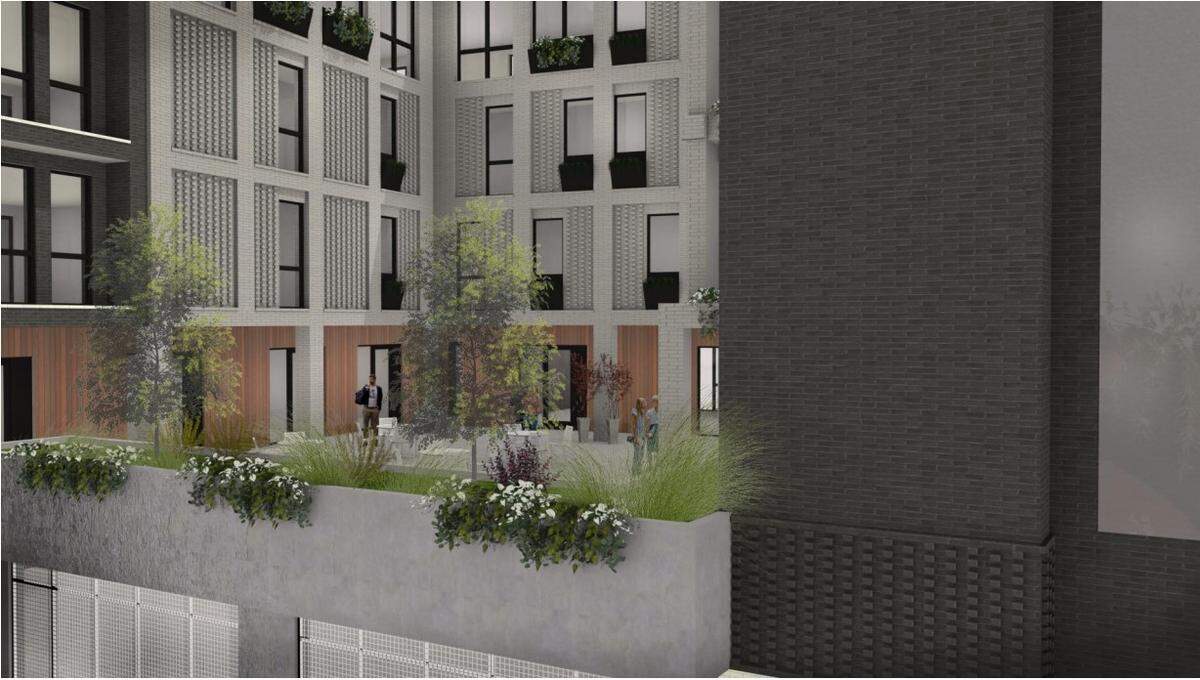
Brie Katz and Matthew Cameron Clark, the founding artistic director of Boise Contemporary Theater, said they wanted to build a shared space where artists could afford to live, with access to public transportation, the Greenbelt and nearby businesses. The project, called the Sonder, would have a rooftop greenhouse structure.
With a number of other transportation alternatives present, part of the concept would be to reduce residents’ reliance on cars. The apartments would be a few blocks’ walk from the Greenbelt and Bernadine Quinn Riverside Park to the east and from Chinden Boulevard to the west.
Council members pointedly took issue with the applicant’s parking plans, which include 17 covered parking spots for 15 living units, seven artist work spaces and a small retail tenant, intended to be a coffee shop, on the ground level.
The building would also have 34 bike parking spaces and a shared electric vehicle — maintained by the building’s owners — that could be used by the residents and artists.
The mix would include multibedroom, one bedroom and studio apartments. At the meeting, Clark acknowledged that while the hope is to lease the art studios to the building’s residents, it’s possible that some could be leased to artists who do not live on site.
While concerns about the entrance’s design had been resolved at the Design Review Committee level, the two committee members were unable to agree on whether parking standards had been met. Without a quorum, the decision was pushed to the council.
Council wanted more parking, but found its hands were tied
The problem hinged on a vagueness in the city’s code.
While residential developments have specific parking requirements based on the number and size of units, for mixed-use developments the requirements are to be “determined by the planning official.”
That, according to a court case this year that found deficiencies in Garden City’s code, is likely not allowed.
The case, in Idaho’s Fourth Judicial District, “concluded that standards cannot be determined on a case-by-case basis,” according to a memo from Garden City’s planning department. “As the Planning Official is tasked with determining the number of parking required for a mixed-use, rather than code dictating a specific number for mixed-use projects, there is no objective standard to apply.”
Jason Jones, the local developer who prevailed in that lawsuit, spoke during Monday’s hearing, pointing out that the code was not objective because “we can sit here and have an argument about it.”
Charlie Wadams, the city’s attorney, also pointed to the lawsuit and strongly cautioned the council against denying the application using conditions the judge had pointed to as being vague, ill-defined or not objective, because they could leave the city vulnerable to further court action.
Since the lawsuit, the city has made changes to some of its code, and plans to make more, including to the parking requirements. But the mixed-use project’s application was filed this summer, before any changes were made, leaving the council with only the code that existed at that time.
Council Member Teresa Jorgensen called the developers’ proposal “almost a slap in the face” and said she was “extremely concerned” about the parking. Jorgensen and others on the council worried that cars from the building would clog nearby streets, and said they have received complaints from residents who have difficulty finding parking.
Council Member Bill Jacobs attempted to find a path that would allow the council to define the apartments in the development as residential, thereby requiring more parking. Wadams said he didn’t think that would work.
Jacobs and Council Member Russ Heller also took issue with the building’s height — 72 feet — but the since the code does not specify height requirements, the council concluded that height could not be a condition of denial.
Mayor John Evans cast the tie-breaking vote, along with Heller, to approve Council President James Page’s motion to approve the project. Jorgensen and Jacobs voted against it.
During their presentation, the developers said they wanted to collaborate with the city and neighbors and planned to live at the site. They said the car-share venture, which has been done in other cities, would help reduce the need for so many cars.
“We believe that we have an innovative design,” Clark said.
The building’s name comes from The Dictionary of Obscure Sorrows, a book by John Koenig, Clark and Katz told the Statesman in a text message. In the book, ‘Sonder’ is defined as “the realization that each random passerby is living a life as vivid and complex as your own.”