‘Landmark redevelopment’ planned on site near Boise State where low-income tenants live
A “landmark redevelopment” is planned along Capitol Boulevard, just south of the Boise River and across Capitol from Boise State University. But what exactly will go there is not yet known.
The city of Boise is angling to partner with Boise State as they “share a vision to create a landmark redevelopment of mixed-use and mixed-income housing, retail and other facilities,” according to a description of the project in the agenda packet given to City Council members for Tuesday night’s council meeting.
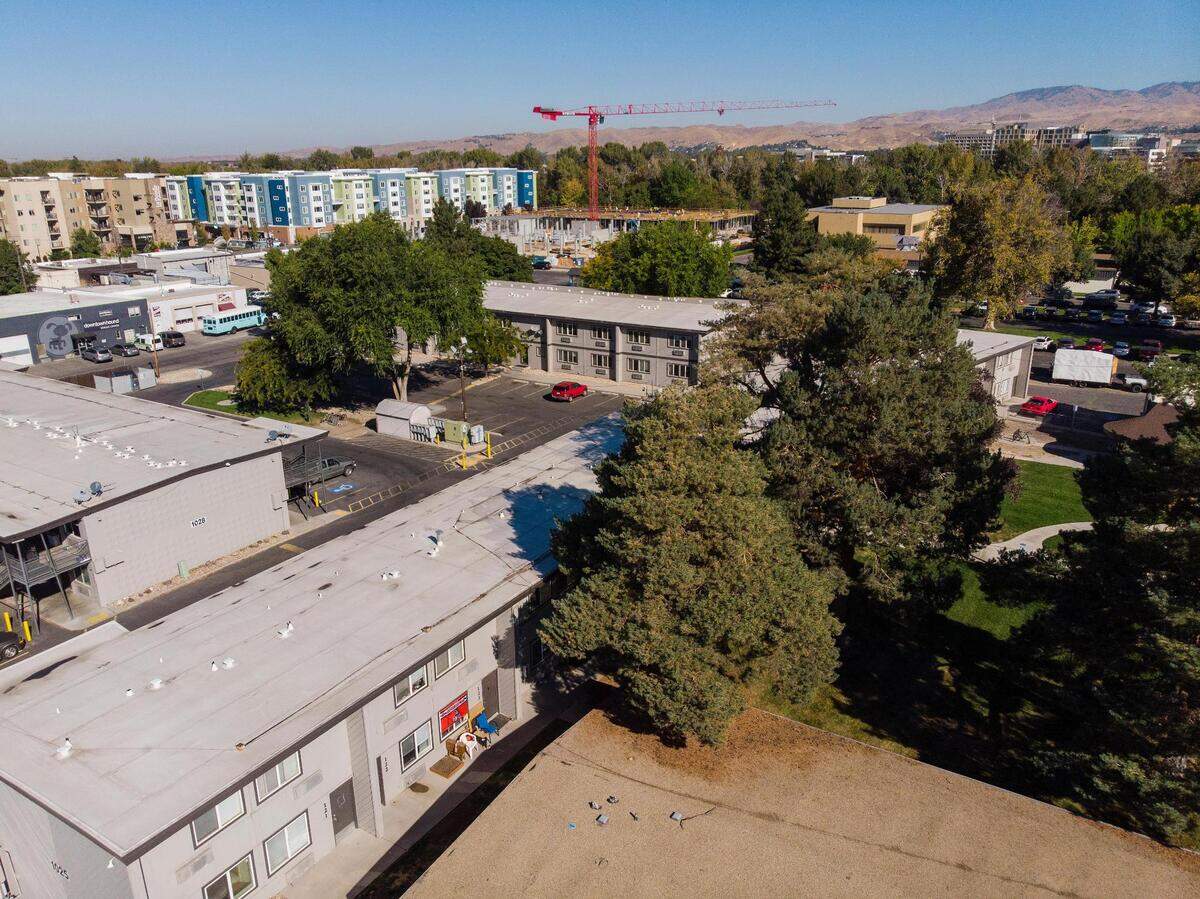
The city owns 3.1 acres at 1025 S. Capitol Blvd. and 1028 S. Lusk St. The university owns 1.6 acres at 855 W. Royal Blvd.
The city land has apartments that are leased to “low and very low-income tenants with significant barriers to securing housing on the private market,” according to a memo written by Mary Grant, of the city’s legal team, to Mayor Lauren McLean and council members.
The council unanimously voted for the city and university to issue a joint request for ideas to redevelop the combined 4.7 acres.
”This is an incredible opportunity to work with our premier university across the river that has interest and needs for housing for their students, their graduate students and their professors and other educators,” McLean said at the meeting. “And we have holdings in the area and a neighborhood that’s excited about being involved in a process to re-envision and collaboratively develop this area moving forward. So, look forward to the partnership and all it’ll bring for our residents and our students.”
The city and university “recognize the opportunities for redevelopment are optimized” by combining the sites into one, according to the resolution.
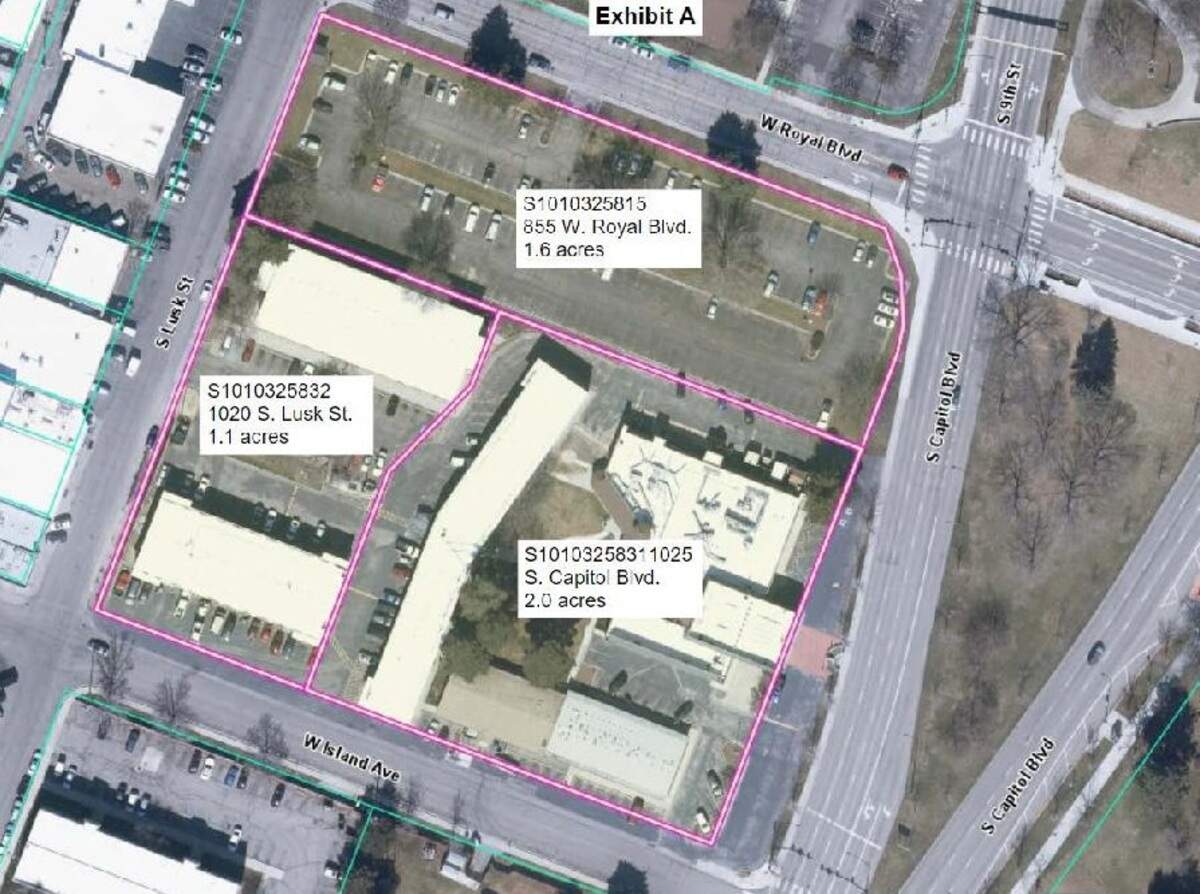
The request for information would be to “solicit ideas for financing and redevelopment of the property, to mutually evaluate any responses thereto, and to consider selection of a common developer for the project.”
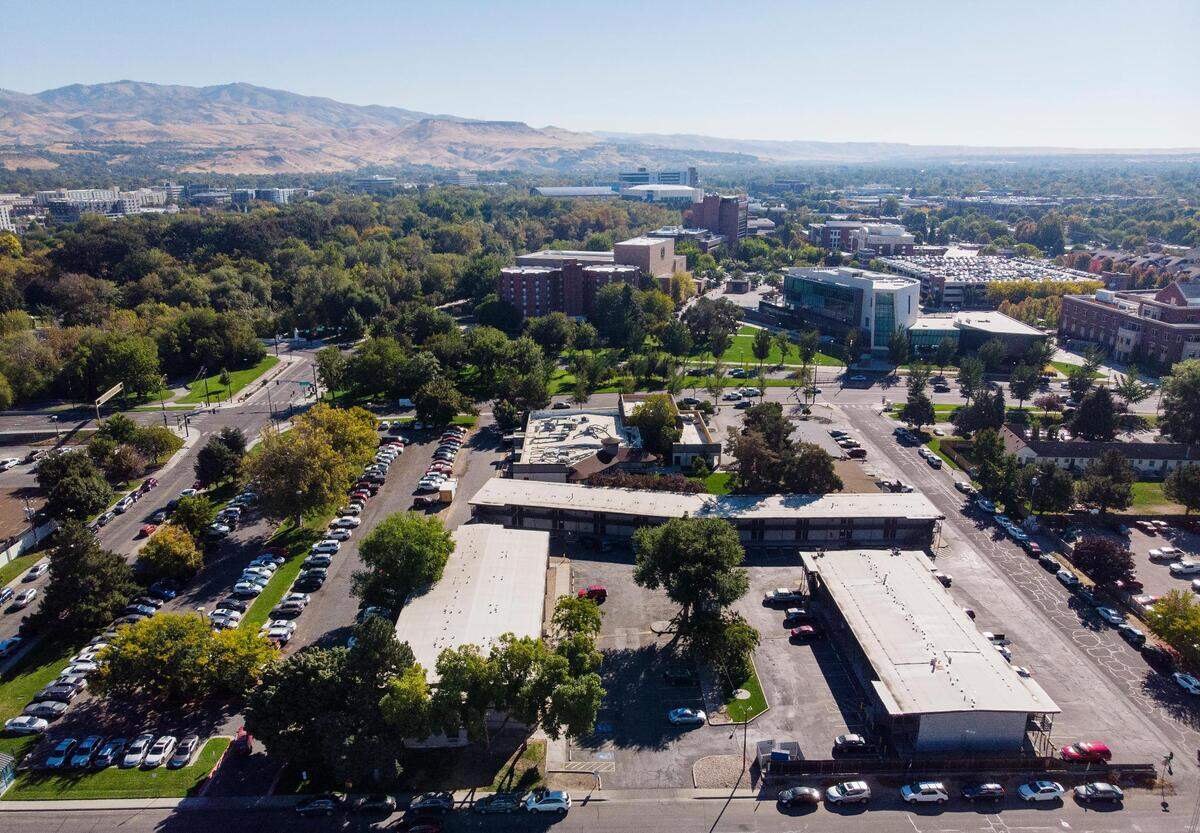
The combined sites occupy one large block just west of North Capitol Boulevard between West Island Avenue to the south, South Lusk Street to the west and West Royal Boulevard to the north.
It’s part of the booming Lusk District, which has sprouted new apartment buildings over the past decade largely aimed at Boise State students. The district is adjacent to the Boise River Greenbelt and Ann Morrison Park, is a short walk from campus, and is close to downtown across the river.
The site is also just east of Dawson Taylor coffee shop and the Boise Bicycle Project.
“The Lusk District has become an exciting hub for Boise State students and the community,” Dr. Marlene Tromp, Boise State University president, said Wednesday in a news release. “The university looks forward to exploring possible opportunities to collaborate with the city of Boise on the future development of this area. We share the city’s commitment to our community and to genuinely enhancing this important neighborhood near our campus.”
Boise State’s chunk of land is a parking lot. The city’s land has 110 apartments built about 60 years ago that are approaching the end of their “useful life,” said Maureen Brewer, the city’s housing and community development senior manager.
The 110 apartments make up more than a third of the 300 housing units the city owns and manages. The city refers to the apartments as Capitol Campus and posted about its plans on its website.
A building’s useful life ends when repairs and maintenance cost more than what it would to knock it down and rebuild. As the buildings have aged, tenants have moved out, and some of the buildings are already closed, Brewer said Wednesday by phone.
Sixty-eight tenants live on the property. Brewer said the city’s top development priority is to keep the tenants who are there now stably housed despite having to move. She said the city is working with them to help them relocate.
The city would like to find other city-owned affordable housing for them to move to, she said. If that’s not possible, tenants could receive financial assistance through the Uniform Relocation Act, a federal law designed to ease the transition when people are displaced by the government.
“Is it inconvenient for them? Absolutely. Is it probably a little bit anxiety-inducing as far as, OK, when is this going to happen? Who’s going to help me move? What will my rent be in a new place, etc? Yeah,” Brewer said. “And that’s why we will and have been working very closely with them. We’ll have a relocation specialist.”
The deadline to move out, when construction begins, is still years away.
The city sees a big opportunity, though, because the 110 units could be replaced by 350 or 400 units. One of the requirements for a future developer would be for a minimum of 51% of the units on city-owned land to serve people earning 80% of the area median income or lower, Brewer said. She hopes the affordability would go even deeper, possibly serving people earning 30% or 60% of the median income, but those details could depend on developers’ responses to the request for information.
Since several recently built nearby buildings have been geared toward students, Brewer anticipates this new development would serve different groups, whether it’s people seeking affordability or Boise State’s workforce.
“It’s really our goal for this to be a neighborhood asset,” Brewer said.
At Tuesday’s meeting, Council Member Elaine Clegg said that after she was first elected in 2004, the city had discussions about what to do with the buildings it owned in the Lusk District. She thought redevelopment of the area would happen sooner, but “it’s pretty exciting to see it finally move forward.”
Council Member Jimmy Hallyburton, who is also the executive director of the nearby Boise Bicycle Project, echoed Clegg that planning for the area has been decades in the making and that he’s also looking forward to what could be coming.
To confront Boise’s housing-affordability crisis, the city has recently made a big push to use lands it owns as sites for new affordable housing. Requests to City Hall and to Boise State for additional details about the vision for redevelopment and the future of the low-income tenant households were not immediately granted.
The apartment building at 1025 S. Capitol Blvd. is owned by the city of Boise and operated by its Housing and Community Development Division. It was built in 1966 and has 34,000 square feet, two floors and 51 living units, according to the Ada County Assessor’s website.
This story was originally published October 4, 2022 at 6:19 PM.