The dream: a good Ridge-to-river bike path through downtown Boise. Now it may come true
The city of Boise is looking to extend a North End bikeway to the Boise River south from State Street.
The Boise City Council has directed the city’s Planning and Development Services staff to devise a plan for bikeway and streetscape enhancements on a 10-block stretch from State Street to River Street.
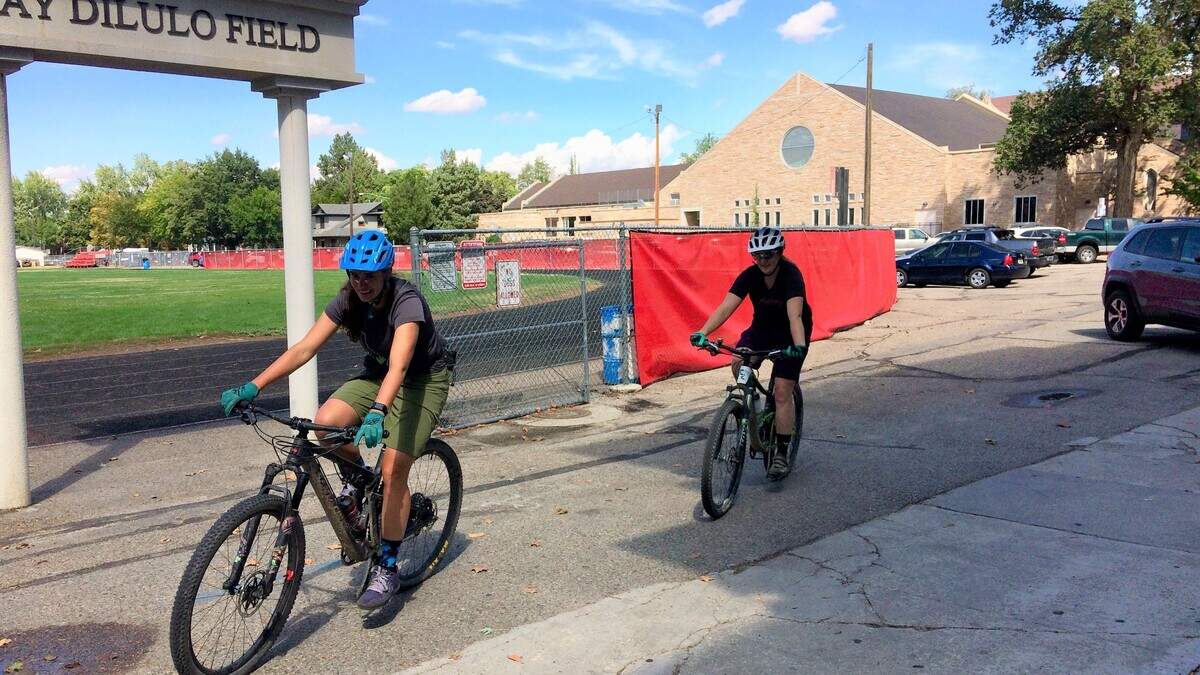
In late October, the Ada County Highway District Commission approved a mile-long “low-stress bikeway” from the southern end of Camel’s Back Park, in the North End, through the Boise High School campus to State Street.
The bikeway, a route designed primarily for bicycle travel, will include wayfinding signs, added pavement markings and curb extensions, while eliminating some on-street parking. Some intersections will get four-way stops.
The ACHD Commission had originally considered a two-mile bikeway all the way to River Street but removed the southern section from consideration after staff members determined that portion of 11th already met ACHD bikeway guidelines, because some portions have 5-foot-wide bicycle lanes, although there are none between Myrtle and River streets.
Before the commission action, a third of respondents to an ACHD solicitation on the bikeway asked for that section to be reinserted into the plan and enhanced. They said it would improve safety for bicyclists pedaling to the Boise River and Greenbelt.
“Although the bikeway facilities on 11th Street do technically meet the intent of the roadways-to-bikeways matrix, they’re not comfortable, and they’re not inviting, and some people avoid using them,” said Zach Piepmeyer, a city transportation planner, at a City Council work session Tuesday, Dec. 10.
While the highway district board declined to reinstate the southern portion, it asked its staff to work with the city, the Idaho Transportation Department, the highway district’s Bike Advisory Committee and the Capital City Development Corp., the city’s urban renewal agency, to create another low-stress bikeway between State Street and the river.
Low-stress bikeways are designed to protect bicyclists sand encourage bike travel on streets with low volumes and speeds of 25 mph or less. They’re meant for riders of all abilities, but especially for those concerned about riding on streets with heavy traffic.
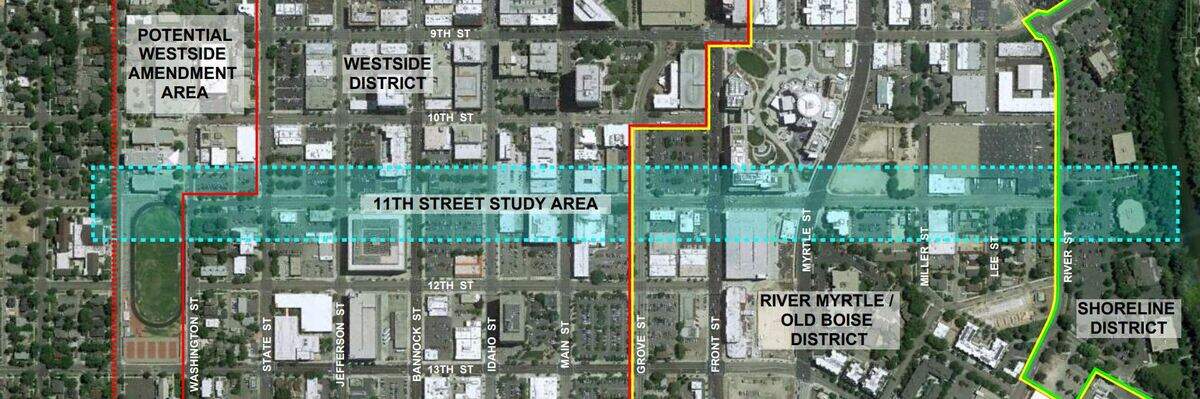
“This is our primary ridge-to-river connection,” Darren Fluke, the city’s deputy director for comprehensive planning, told the council. “We view this as the premier north-south route through downtown, but more broadly, connecting the Boise Foothills to the Boise River, which has long been a dream of the ridge-to-rivers plan.”
The CCDC has budgeted $3.2 million for 11th Street improvements in its five-year Capital Improvements Plan. The city and CCDC have discussed coordinating streetscape and bicycle improvements between State and River streets.
The Planning and Development Services Department plans to solicit public comment on four possible improvement plans and seek additional ideas before returning to the council.
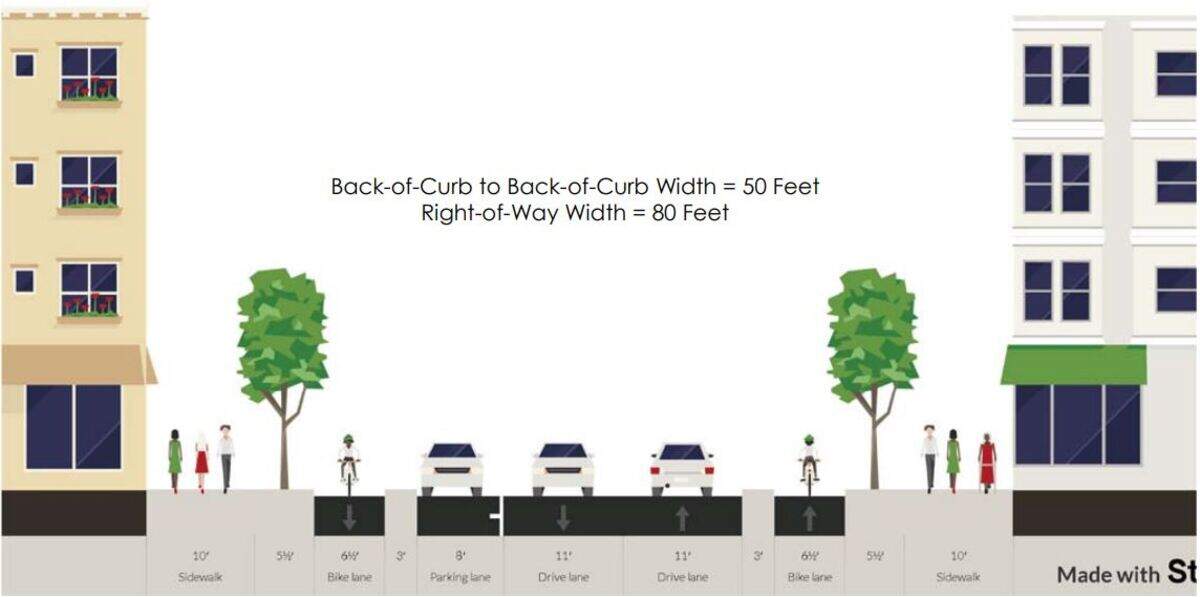
One option would keep the current street configuration, which includes two vehicle lanes (one each direction), and bicycle lanes and on-street parking on both sides of the street. That plan would focus on streetscape improvements between the existing curb and buildings.
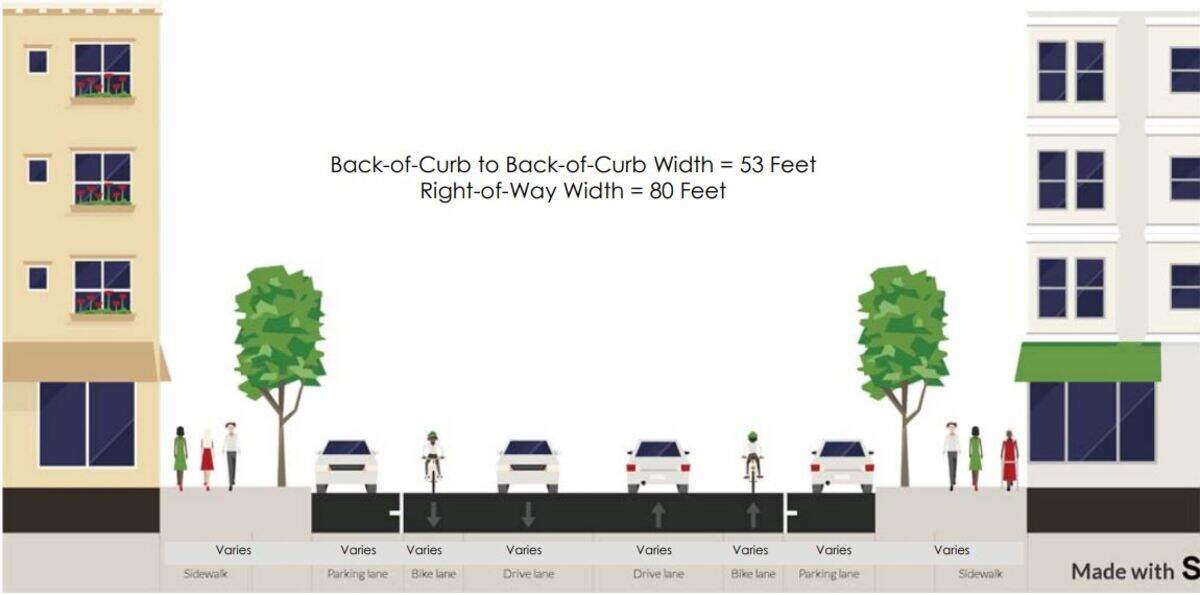
The second option would provide 8 1/2-foot-wide sidewalks and two 7 1/2-foot-wide bike lanes protected by a raised median or buffer. On-street parking would be removed from one side of the street.
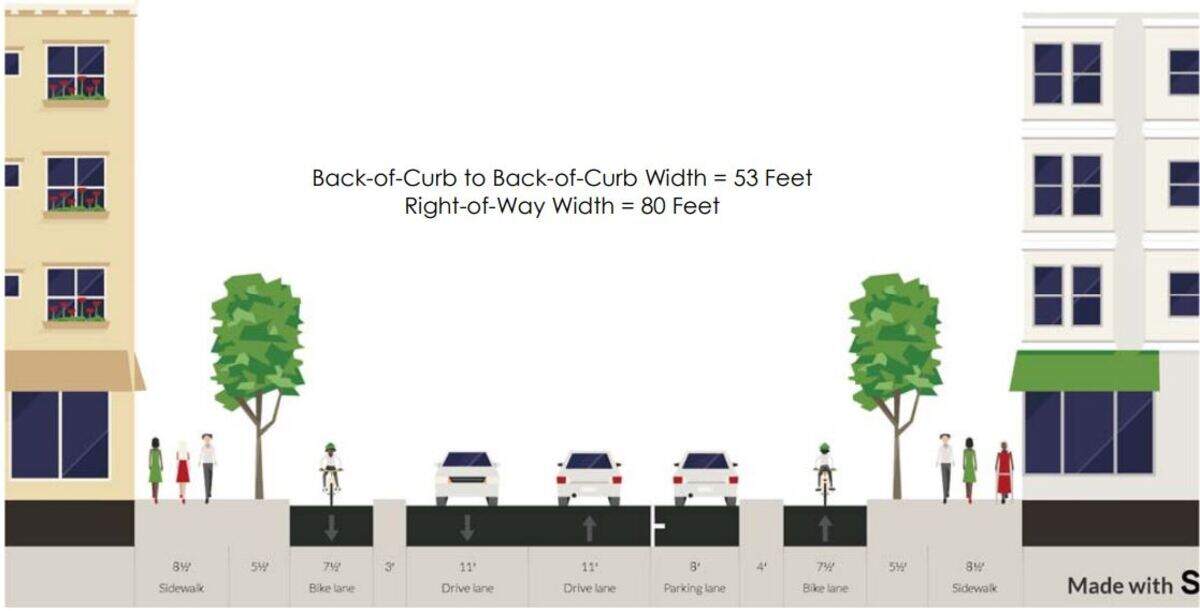
The third option would retain on-street parking on both sides and offer protected 6 1/2-foot-wide bike lanes by making sidewalks 3 feet narrower on each side. They now vary from 5 to 10 feet wide.
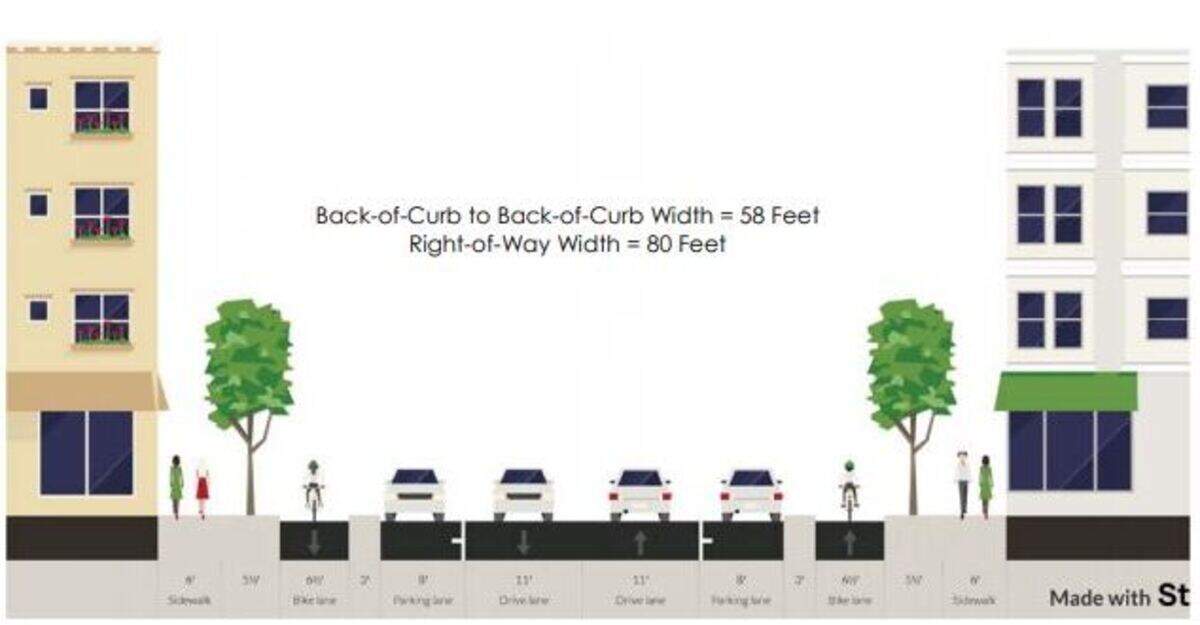
The fourth would provide protected 6 1/2-foot-wide bike lanes while removing one side of on-street parking. That would allow widening of the space between buildings and the curb about 4 feet on each side, to 15 1/2 feet.
It’s unknown at this point how much each of the options might cost.
Over the next year, the city plans to solicit comments from bicyclists, business and property owners and the public. The assessment will be conducted in cooperation with the highway district and CCDC.
Council President Pro Tem Elaine Clegg said the project is a priority for all three agencies.
“Continuing the bikeway down to River Street was really important in our discussions,” Clegg said. “And while it’s officially stopped at State Street, my understanding from that discussion was that they were open to looking at this other end.”