New downtown apartments could have fetched top rent. Instead, they’ll be affordable
If Clay Carley wanted to, he could have built luxury apartments on the parking lot he owns at 116 S. 6th St. in downtown Boise. The longtime Boise developer could have commanded rent of $1,600 a month or more for a one-bedroom apartment, as he has with some other apartment buildings he’s developed nearby.
Instead, on the prime location behind Cactus Bar and Pengilly’s, he’s planning to build affordable housing.
Carley and his development team — Chance Hobbs in McCall, Dean Pape of deChase Miksis in Boise, and Bill Truax of Boise’s Galena Opportunity Fund — were just awarded $1 million in tax credits each year for the next 10 years to include 45 low-income units in a 60-unit, seven-story apartment building they will build.
The apartments will be rented to people making from 30% to 60% of Ada County’s median income. The federal Housing and Urban Development Department says the median income is $73,600 for a family of four, so families earning less than $44,160 would qualify for the units. Rents will go for $343 to $730 for a studio, $507 to $783 for a one-bedroom, and $606 to $937 for a two-bedroom.
Developers don’t typically build affordable housing without government help to offset high construction costs. Federal tax credits are one solution, but they’re scarce and in high demand by developers. Boise has said it needs about 1,000 new homes per year just to keep up with growth, yet only 70 units in the city — all of them rentals — will receive new credits this year.
Boise will also pitch in $1 million through the HOME Investment Partnerships Program, an affordable housing fund that also relies on federal money.
“There isn’t enough affordable housing in Boise,” Carley said. “It’s the right thing to do.”
Carley’s project is one of two in Boise that will receive the credits. The other is a 28-unit apartment complex called Celebrate Acres, planned for a 7-acre site near the southwest intersection of North Five Mile Road and West Fairview Avenue. Twenty-five units will be reserved for low-income renters.
Carley said his project will help provide housing to those who work in Downtown Boise but don’t make enough to live nearby.
“Those workers have to live in Kuna or Nampa and commute, and it’s terribly inefficient,” said Carley, an advocate of improved regional public transportation.
Zoe Ann Olson, executive director of the Intermountain Fair Housing Council, says affordable housing — especially low-income housing — is vital to employers, since it acts as a “wage subsidy” when people don’t earn a livable wage.
She said centrally located affordable apartments also benefit seniors and people with disabilities by providing housing near medical care and public transportation.
“It’s encouraging to see developers considering giving people equal access to places that are highly desirable to live,” she said.
That’s not typical. Most affordable housing developers resort to finding land far from the downtown core to keep costs low.
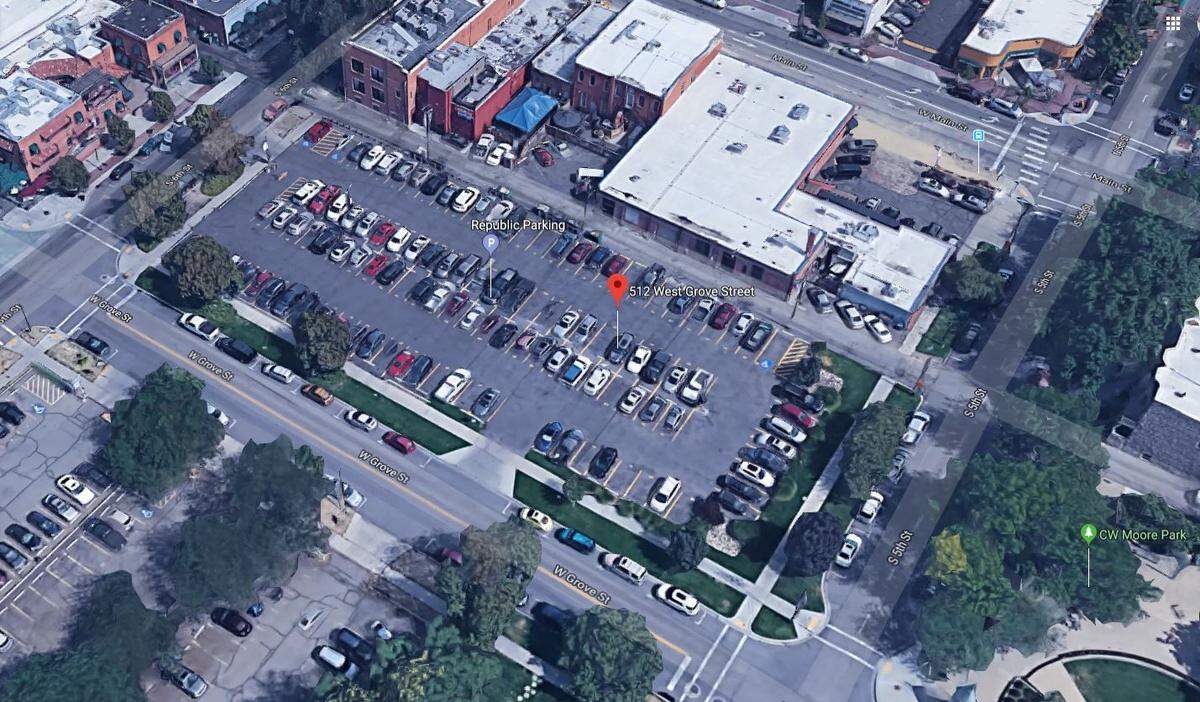
Carley, though, found himself in a unique position. His mother, Joan Carley, bought several lots downtown in the 1980s, when they cost far less than they would today. Among those was 116 S. 6th St.
“If I had just arrived in Boise and paid market rate for this, it’d be much harder to justify the affordable units,” Carley said.
“It is one of the few chances where you’ll get tax credit on a downtown deal,” said Truax, who has worked on a number of affordable housing projects throughout the Boise area. “You have to have someone like Clay to get this deal together.”
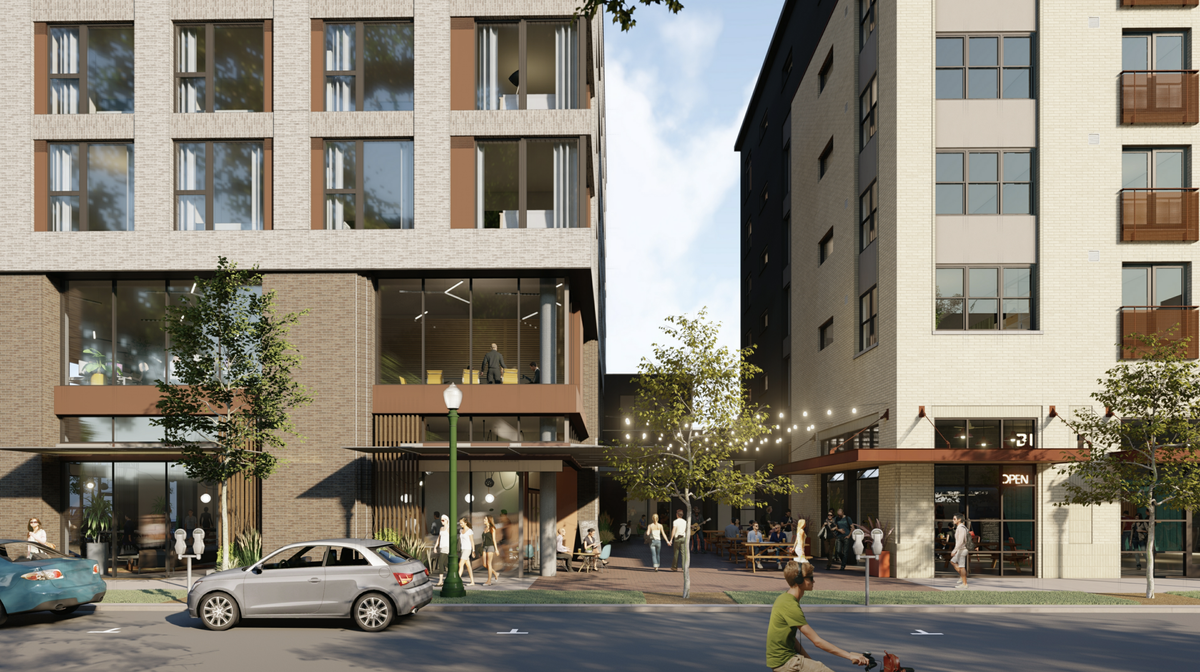
While some affordable housing projects face neighbors’ opposition, Carley need not worry much, as he owns many of the surrounding properties.
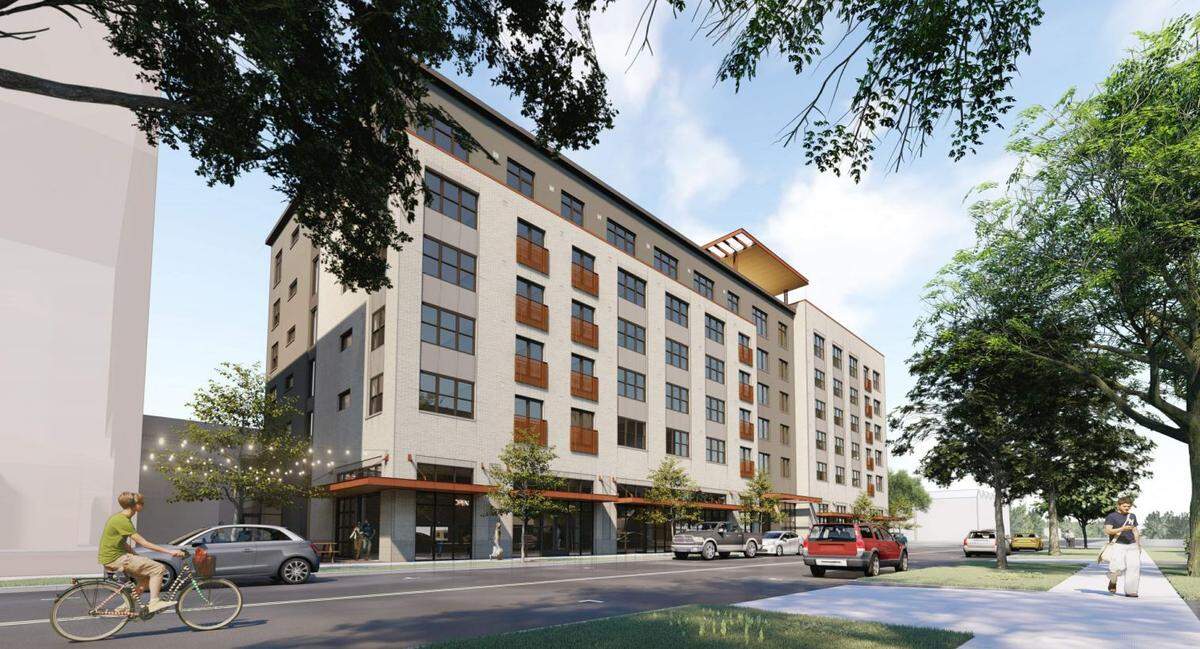
They include a property next door, 512 W. Grove St., where Carley is working with his same development team to build a 114-unit, six-story building. The two buildings will share a small courtyard.
Of the units in 512 W. Grove St., 50 will be “workforce housing” — affordable to those earning close to 100% of the area median income. Carley had offered the workforce housing to make his project stand out in the competition for tax credits.
But they won’t be cheap: Rents will go for around $1,300 a month for a one-bedroom apartment. That’s on par with other new, market-rate one-bedroom apartments downtown, and is about $300 more than the average price that Zumper, a real estate listing service, says Boise-area one-bedrooms are being offered for today.
Can more be done?
Fifty new units of low-income housing is a small part of what’s needed, given climbing rents and rental vacancy rates at just 3.7% in Ada County, Olson said. But she stressed that any increase in housing is important.
Developers like Truax and Carley say they want to build more affordable units but can’t without more tax credits or local incentives.
The Idaho Housing and Finance Association, a quasi-governmental agency that allocates the federal credits through a competitive process, is limited in how many tax credits the federal government allows it to give out.
In 2019, for example, Idaho awarded $4.3 million in competitive 10-year tax credits to eight projects. This year: $4.9 million to another eight.
To spread the wealth statewide, the association sets a maximum of $1 million in 10-year tax credits it will allocate per project. While Carley’s 6th and Grove project was awarded that maximum, the money was enough for only 45 units, Truax said.
The low-income tax credit was created as a public-private partnership in 1986. Developers that win the tax credits sell them to investors for 94 to 96 cents on the dollar. So a developer awarded a $100,000-a-year tax credit for a 10-year duration would accumulate a $1 million in credits, which could be sold for about $950,000.
The sale proceeds go into the development. The investors, meanwhile, take the full credits on their taxes, reducing their tax burdens.
Lawmakers have pushed to increase funding for the low-income tax credit program as recently as June. But the proposal, which would have increased tax credits allocated to each state by 50%, was held up in the Senate.
Other low-income tax credit projects
The 28-unit project in West Boise will be built by Haan Development of Phoenix, Arizona, in partnership with the El-Ada Community Action Partnership, a nonprofit corporation that combats poverty in Ada, Elmore and Owyhee Counties.
“We were looking for a development opportunity outside of where Boise has most of its affordable housing,” said Justin Francis, a development officer for Haan Development.
Two of the units will be designated for veterans, he said. The developers are still seeking funding for the project beyond the $360,500 in tax credits it received from IHFA, but they plan to start construction by July 2020.
Olson said the project will bring housing to families in West Boise, where jobs are growing but affordable housing has not kept up.
In recent years, IHFA has awarded tax credits to several Boise-area affordable-housing developments, many of which are still under construction. In 2019, five of the eight projects awarded tax-credits were in the Treasure Valley, including Valor Pointe, a 27-unit apartment building that will offer health care and mental health counseling to homeless veterans; the 50-unit Cleveland Square senior apartments in downtown Caldwell; and the 30-unit Hope Plaza Apartments in Caldwell built by Advocates Against Family Violence, a nonprofit that helps victims of domestic violence.
In 2018, five of the seven projects awarded tax credits were in the Boise area, including 18 townhouses at at Parkway Station in Garden City and the Mercy Creek senior apartments in Nampa.
“Every neighborhood could use housing that is accessible to all income levels,” Olson said.
This story was originally published January 14, 2020 at 4:00 AM.