
How little-known Lauren McLean beat Boise’s mighty Mayor Bieter: The inside story
Before Lauren McLean declared victory in Boise’s mayoral runoff to hundreds of supporters Tuesday, before her campaign had knocked on nearly 90,000 doors, before she submitted the paperwork to be a candidate, she had her election team draw up a plan of what running for mayor might look like.
From the beginning, her campaign manager said, it seemed possible that she could unseat Mayor David Bieter, her political ally for years. The combative Bieter had been elected four times, but in 2019, with housing prices soaring and people sensing they had little voice in the growth and change sweeping the Valley, he was vulnerable.
“Too many folks are feeling priced out, talked over, left out or forgotten, and that should worry us all,” McLean, said when she announced her candidacy in May. “They want their leaders to be transparent, set aside old grudges, and get serious about bold action to make every Boisean’s life better.”
But McLean was not a household name. A few months before then, she was still planning to run to keep her seat on the Boise City Council. But she wanted to see what it might look like to aim a little higher, said Melanie Folwell, the campaign manager.
So McLean hired Folwell, a native Idahoan who helped flip the three-person Ada County Commission to the Democrats last year by helping Diana Lachiondo get elected, and Zach Reider, another native Idahoan who worked on the successful statewide Medicaid expansion initiative. Folwell and Reider are partners in a two-person, progressive Boise political consulting firm called The Scrap Shop.
They took the look. To win the city, Folwell said in an interview, McLean would have to win a broad coalition of voters, which meant bringing together different kinds of people. It would require a lot of hard work.
McLean had a strong foundation in Boise politics. She managed the successful campaign to pass the 2001 Foothills levy. She served on the Boise Parks Commission under former Mayor Brent Coles and on the Planning and Zoning Commission under Bieter.
Bieter appointed her to fill a City Council vacancy in 2010. She ran unopposed in 2011 and 2015. Her peers elected her council president in 2017 (a job she’ll retain until she is sworn in as mayor on Jan. 7).
Her family — husband Scott, daughter Madeleine, a college student, and son Aiden, a freshman at Boise High School — was behind her. The only person who wasn’t quite sure was McLean herself.
“We always joke that she was the last person in Boise to realize she was running for mayor,” Reider said.
The first day she decided to run for mayor instead of council, Folwell said, McLean told her staff she was not interested in running a negative campaign. Her goal, Folwell said, even if she lost, was to make sure Boise would be “kept whole” after the election.
It started with knocking on a lot of doors. McLean, joined by her family, her staff of three full-time people, including Folwell and Reider, and some part-time help, worked with more than 600 volunteers and knocked on nearly 90,000 doors by Tuesday, Folwell said. (Bieter said his team knocked on 85,000.)
The campaign documented the nature of each voter’s support (or lack of). That data determined how McLean’s campaign would communicate with those same voters later, oftentimes with a personal follow-up by McLean. It influenced which specific pieces of campaign mail a voter would receive or what digital ads they might see online.
“At the end of the day, it was a combination of data-driven strategy and what I would call good, old-fashioned relationship-based political campaigning,” Folwell said.
The campaign worked to find new ways to connect with voters. People who live in the North End are “used to being listened to” by politicians, Folwell said. North End voters turn out in higher percentages than other neighborhoods, and as a result, local campaigns tend to start (and often end up fixated) there.
“Instead, we went to underserved neighborhoods across Boise, and Lauren just listened,” Folwell said. “There was a pent-up desire to say things to politicians, and people wanted to get it out and be heard.”
McLean’s “listening sessions” with Boiseans were at libraries and coffee shops across the city, sometimes focused on specific topics like housing or LGBTQ issues but mostly on whatever voters wanted to discuss. Focusing on places other than the North End, where McLean lives, helped her to connect with new people.
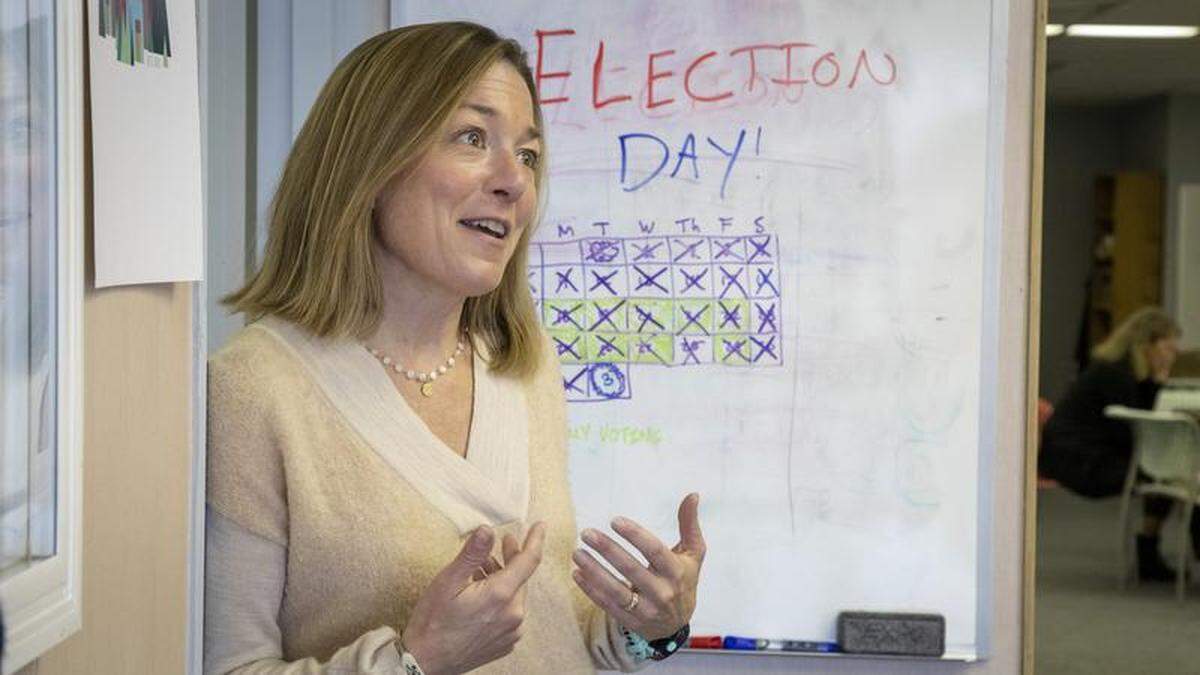
“It was my favorite part,” McLean said by phone. “I got to know the city in deeper ways than I would have otherwise.”
McLean said she focused on “being everywhere.” She rode her bicycle most places. That meant going through more bike tires than she could count — she rides even when wearing high heels — but it made a difference with voters. The success of her campaign, McLean said, was being able to authentically connect her goals for Boise with the goals of residents.
A tougher part was reaching out to people to raise money for her campaign. That involved calling people, including some she had known for years, and often getting turned down.
“Fundraising calls suck,” Folwell said. “There was a time on our fundraising calls where like we got a lot of rejection, even from people that she’s worked with and known for a long time, who were just basically like, ‘sorry, I can’t.’”
The campaign used peanut M&Ms to help push through. McLean would move them from one bowl to another with each call to visualize the amount of work done. The mayor-elect maintains she didn’t eat many — they got “so gross” from handling.
The work paid off. Each campaign raised more than $300,000. During the four weeks between the Nov. 5 election and the runoff, McLean’s campaign spent less than Bieter’s and brought in more. That gave McLean the flexibility to focus on different areas and left McLean with what appears to be a large war chest if she seeks re-election in four years.
McLean lacked support from many of the city’s politicians. Four of her five colleagues on the City Council — Scot Ludwig, Holli Woodings, T.J. Thomson and eventually Council President Pro Tem Elaine Clegg, after she had secured re-election Nov. 5 — endorsed Bieter. (The fifth, Lisa Sánchez, did not endorse.) So did several former city officials, including former council members Maryanne Jordan, now a state senator, and Ben Quintana.
“We figured we would be walking the road alone, but we did believe that we could still win without endorsements,” Folwell said. “If you look at the last few election cycles, endorsements from elected officials did not seem to matter.”
The mayoral race started softly, with a forum Aug. 28 put on by Conservation Voters for Idaho (which would later back McLean) that was so gentle the candidates clapped for each other.
It didn’t stay that way. By mid-October, Bieter began to spar with rivals, a trend that continued until the November election and afterward.
In the only debate of the runoff, the mayor took shots at everything from the number of times McLean attended Valley Regional Transit meetings to her votes while on City Council.
After McLean said she wouldn’t participate in more debates, Bieter sent a mailer out asking what she was hiding. Online, he accused her volunteers of saying he was backed by and part of “the Basque Mafia.”
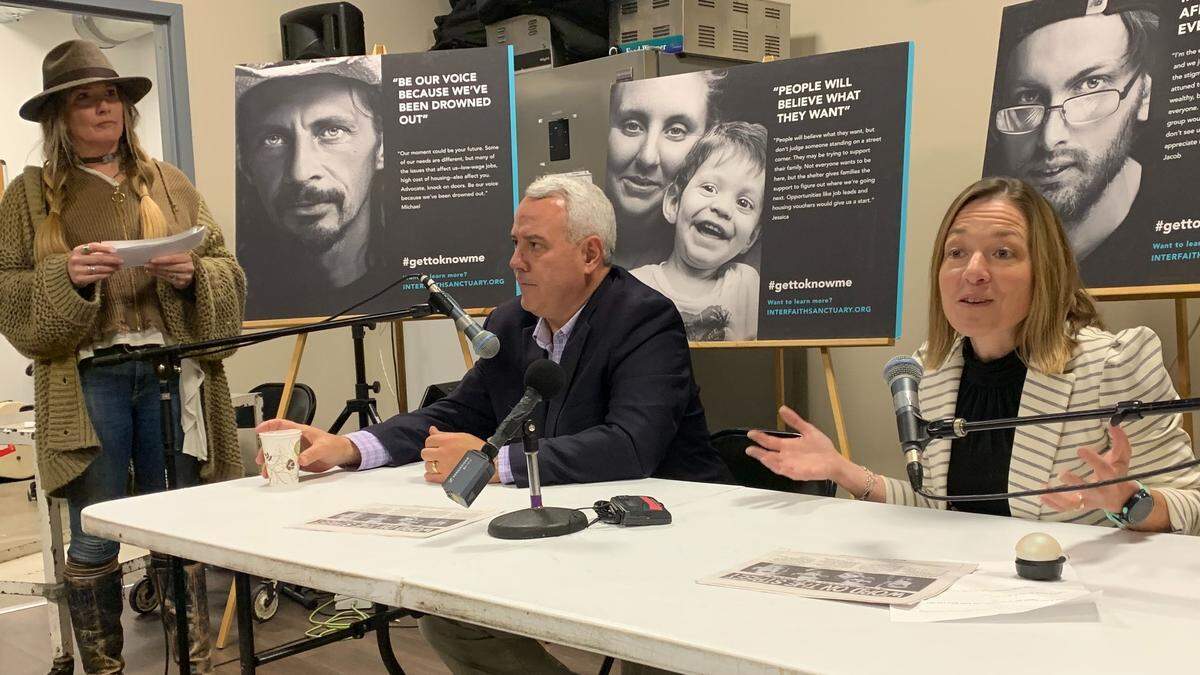
His support of ticketing homeless people who camp outdoors, and McLean’s recent opposition to ticketing, inspired some people to set up tents in front of her campaign signs and a political action committee funded by Boise developers David Wali and Gary Hawkins to send mailers saying she supported encampments.
McLean’s team relied on good relationships with local vendors to make posters and flyers quickly. Doing design work and ad-buying in-house saved money and allowed quick decisions. Staff members often worked late into the night.
McLean put aside her consulting business and dove full-time into the campaign. Each day, she would wake up, run in the Boise Foothills — often for more than a dozen miles at a time, sometimes alone, sometimes accompanied by friends — before biking to her campaign headquarters and getting to work.
On Election Day, McLean garnered 46% of the vote in a seven-person race. Bieter won 30%. Without the required majority, McLean faced Bieter again in the runoff. The election was a rout: McLean won 65.5% of the more than 46,000 votes cast.
Sue Lovelace, one of her running companions, said at McLean’s December election night party that the same endurance and commitment required for running allowed McLean to win. They had run nine miles that morning, talking about the election and working through McLean’s worries.
“If you want to elect a good mayor, you should elect an endurance runner,” Lovelace told the Statesman. “They never quit.”
.jpg)