
‘A little scary right now’: Boise homeless shelter overwhelmed by demand, heat
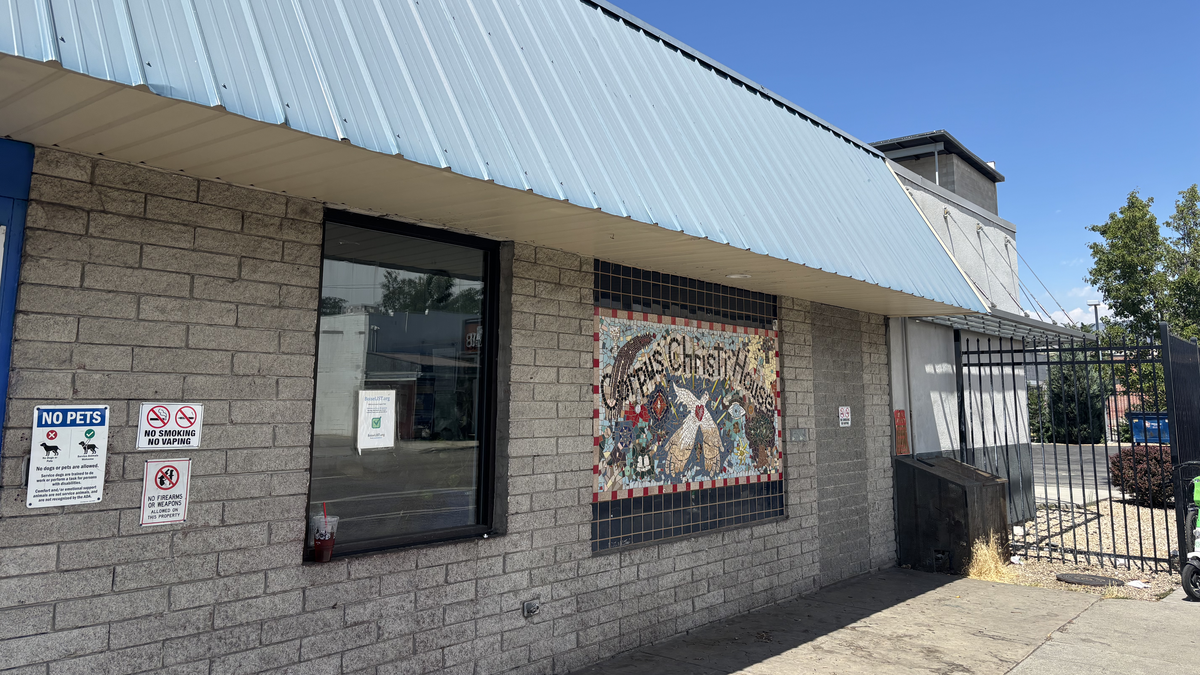
With temperatures in Boise on the verge of breaking into triple digits, one of the city’s daytime homeless shelters is sounding the alarm over strained services for residents.
Leaders at Corpus Commons, a homeless shelter that operates during daytime hours, have cited growing demand for overnight beds at other shelters and new restrictions on public camping, coupled with soaring temperatures, as producing a situation they describe to be increasingly untenable for shelters and homeless residents alike.
“It’s a little crazy, and a little scary right now, honestly,” Jess Abbott, Corpus Commons’ executive director, said in an interview. “We are just in this perfect storm.”
Corpus Commons, located near the intersection of South Americana Boulevard and West River Street just a few blocks from the Boise River, sees roughly 100 to 200 homeless people a day, according to Abbott. The shelter operates under a drop-in “zero-barrier” model, Abbott said, in which anyone can enter and make use of its services.
Many of those served by Corpus Commons come into the shelter with a history of mental illness or substance use — circumstances that, its staff say, are made even worse in the face of extreme heat.
“Whenever it gets really hot, people who are already in decline — like with mental health, or with substance use — we’re going to see them go down even harder,” said Jordan Schoorl, Corpus Commons’ operation manager.
The National Weather Service forecasts temperatures above 100 degrees on Friday and Saturday, and heat that is set to stay in the high 90s over the coming week.
Other shelters in Boise have also seen rising demand as temperatures climb. Interfaith Sanctuary, a 205-bed homeless shelter once based near Corpus Commons that recently moved into a new facility on State Street, faces a waitlist for beds of more than 300 families and individuals, according to Jodi Peterson-Stigers, its executive director.
This pressure is driven in part by hot weather, Peterson-Stigers wrote in an email, alongside a larger housing shortage in Boise. “Our shelter bed count will not be able to meet the need of the actual number of people currently experiencing homelessness and wanting shelter,” she added. “It is a very sad equation.”
For Roy Contreras, 56, a homeless resident originally from Dallas who now frequents Corpus Commons, the heat in Boise can be “not too bad” when hovering around the mid-70s or 80s. But, he added, temperatures that rise close to 100 can be devastating for many.
“Like, the older people around here,” he said, gesturing toward the shelter’s main spaces, where residents sit to eat lunch or head outside for cooling misters, “I feel sorry for them.”
Others at Corpus Commons had similar worries.
“It’s very exhausting,” Lee Spring, 46, said of the ongoing heat. Spring, who said he came to Boise from Moscow and has spent nearly six months homeless, said that most of the city lacks places for homeless residents to easily cool off — and that even when a space does offer respite from the heat, police are often quick to disperse or ticket homeless people who may stay there for too long.
Such tactics by local police are often tied to Idaho’s so-called “Galloway Law,” or House Bill 1141, which state legislators passed in 2025. The bill bans public camping in cities with populations above 100,000 — Boise, Meridian and Nampa.
After the bill was signed, Boise Mayor Lauren McLean blasted it as creating “an endless loop that makes it harder for people to get back on their feet” in a statement posted online. The Boise City Council later voted to make public camping an infraction, punishable by a $10 ticket, in order to comply with the law.
As a result, Spring added, Boise’s homeless population has “scattered,” moving from informal hubs — such as the Rhodes Skate Park, just steps from Corpus Commons — to “the parks, the river, somewhere in town.”
The threat of getting a ticket can be debilitating.
“I’m more worried about the cops than I am the heat,” Spring said.
In a statement, Boise Police Department spokesperson Haley Williams wrote that, “Boise Police officers are encouraged to engage with individuals experiencing homelessness in a manner that fosters community trust while ensuring that all individuals are treated with dignity and respect.”
Emilee Ayers, a spokesperson for McLean, added in an email that the city invests in funding for Our Path Home — a public-private partnership that aims to end homelessness in Ada County — to provide support for homeless residents, “including cooling centers, during periods of extreme heat.”
Still, Abbott said, the situation on the ground for Corpus Commons shows little sign of easing.
“We’re just seeing people feel very desperate,” she said. “Where’s the solution? How do we do this better?”