Apartments are tipping point in changing Meridian area. Why residents want them
With some tweaks — and strong neighborhood support — a 200-apartment complex planned for Overland Road got the go-ahead in Meridian.
The Meridian City Council approved the development on Tuesday, May 19, in a 5-1 vote after just a few minutes of deliberation. The main reason for the quick turnaround: It came on the heels of a nearly three-hour hearing on the development a few weeks prior. And before that hearing, the proposal dates back even further.
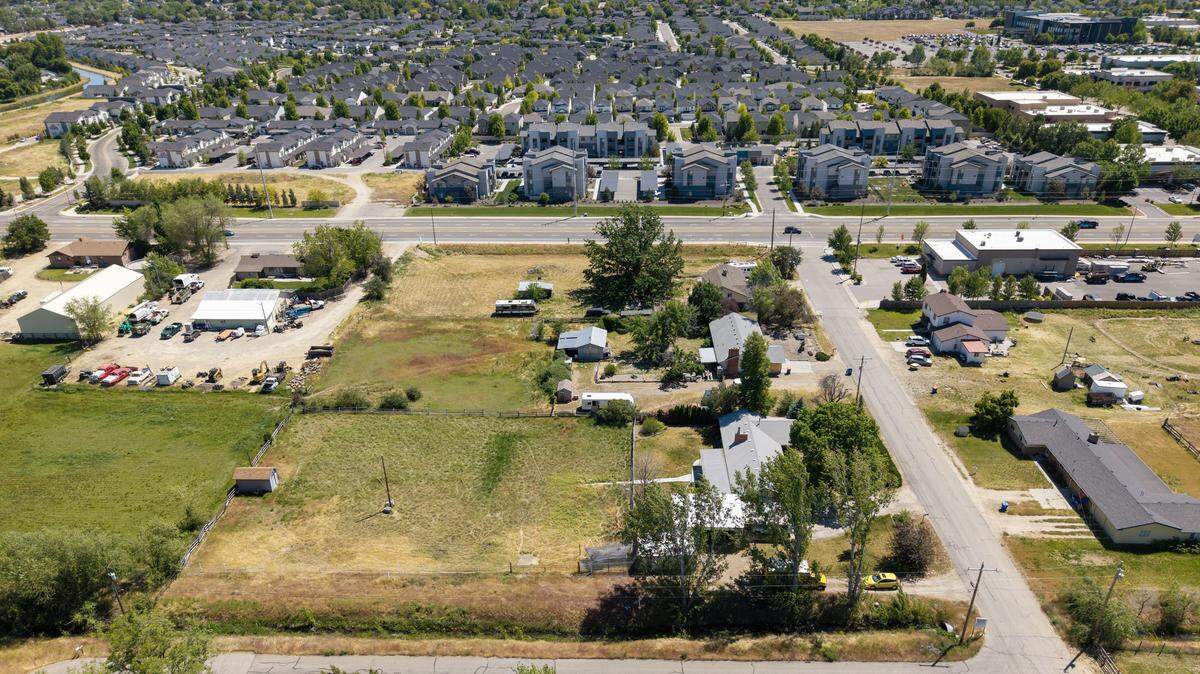
Called Rolling Hill, the complex is slated for roughly 8 acres of county land on the northeast corner of Overland Road and Rolling Hill Drive, about a quarter-mile south of Topgolf and Eagle View Landing and not far from the Boise border. Go there now, and you’ll see thick fields and aging farmhouses residents have been trying to sell for years as denser residential and commercial development has crept in.
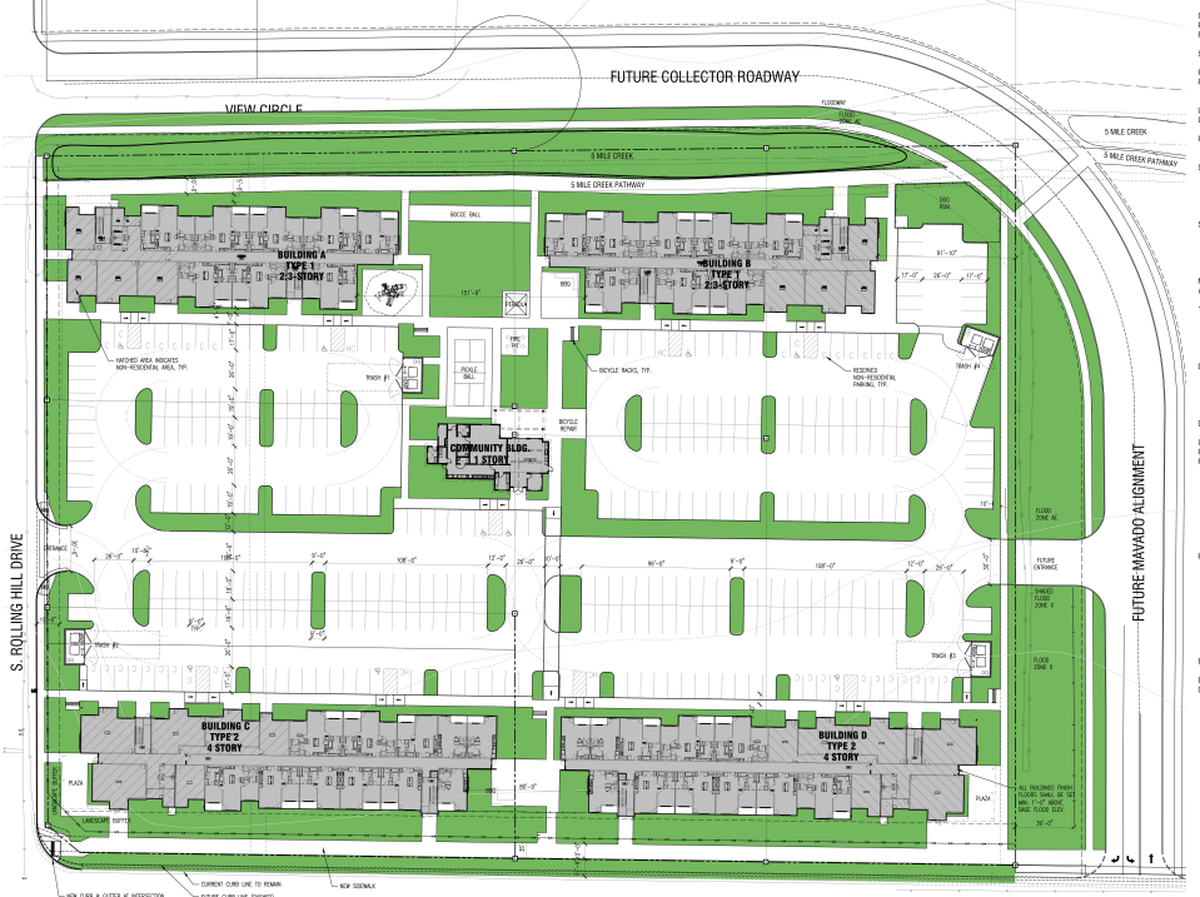
Brett Slagle with California residential-project management firm Assemble Management plans to buy them, and in their place build four three-story buildings with apartments stacked above about 20,000 square feet of ground-floor commercial space. There, developers envision “emerging small businesses and entrepreneurial ventures,” according to plans filed with the city — things like boutique gyms, salons, pet grooming services or therapy offices.
The 200 apartments, developers said in a project narrative letter, would provide needed housing in a growing area with access to “key employment centers” via Idaho 55 and Interstate 84. Those include St. Luke’s Meridian Medical Center, the state’s Chinden Campus, the Capitol, Micron and the Mountain Home Air Force Base, the letter said.
Apartment amenities include pickleball courts, developers said.
BoiseDev first reported on Rolling Hill’s approval.
Officials weigh traffic, safety on fast-growing Overland Road
The City Council had opted in late April to postpone a final say on the proposal, which had received a recommendation of denial from the planning and zoning commission and city planning staff. That was primarily because of traffic and safety concerns, said Meridian Associate City Planner Nick Napoli at the April 28 hearing.
The proposed development sits on the edge of a changing road in a changing neighborhood. Overland is anticipated to be widened to seven lanes, which would then limit access onto Rolling Hill Drive to a right-in, right-out only turn, Napoli said.
“This raises significant concerns from staff regarding safety,” he said.
The city and Ada County Highway District had their sights set on a solution: Developers would need to construct a collector road that would curve around the northeast side of the development, starting at Overland and ending at Rolling Hill Drive. It would align with Movado Way, which now winds south from Overland. The highway district also wanted to see a signal go in at Overland the new Movado Way.
But only a small piece of the land slated for the new collector road sits within the Rolling Hill development. Slagle can donate that piece to the highway district, but he can’t build the road himself.
Josh Leonard, representing Slagle, said at the hearing that the developer offered to collaborate with the adjacent landowner, buy the land and build the road, or dedicate money for it. “That owner would not engage with us,” Leonard said.
According to data from the Ada County Assessor’s Office, that parcel is owned by Endurance Holdings, a limited-liability company headed by Corey Barton, the founder of CBH Homes.
“I want to figure out a way to make this work,” Slagle said at the hearing. “I’ve tried so hard to get Corey Barton to do anything with me,” he said. It’s been a nonstarter, he said.
That impasse and the traffic and safety implications contributed to an earlier iteration of the project, then with 154 apartments, being denied in 2024, Leonard said.
As homes age, county residents want out of developing area
Residents who testified at the hearing were adamant that now is the time to develop.
“The whole area is changing,” said Kim Boyak, who lives on about 2.5 acres of land that will join the Rolling Hill development. “It’s not the same as it was.” Boyak said she has lived on the property for 40 years, raising two kids there. “Some of you might have seen our horses there,” she said. “It’s our little farm.”
But Boyak has seen development coming and for years has been looking for the opportunity to sell. She said she had nearly given up trying to sell to a developer when Slagle approached her with an offer in 2021.
“My big concern is that if this project is not approved, that it’s going to stall even longer,” she said. She testified that this development would help “break things loose” for herself and other residents hoping to move on from the area.
Other neighbors testified that their homes and properties were falling into disrepair as they’ve refrained from spending money on them, waiting for Slagle’s proposal to come to fruition.
“Our house is a hovel,” said one resident, Angela Raney. “We haven’t put any money or anything into it for five years, knowing that it was going to sell.”
Neighborhood ‘in transition’ sparks new idea
Neighbors’ testimony sparked a new possibility for solving the traffic problem. Now, Rolling Hill Drive is blocked off farther north of the proposed development, because of safety concerns for residents along the unimproved road. But the concept that residents are looking to pack up raised a new consideration: Could approving Slagle’s proposal galvanize other development in the area that could pay for improvements to Rolling Hill Drive and allow it to open up?
For his part, Slagle planned to improve the east side of Rolling Hill Drive, adding curbs, gutters and streetlights along the piece of his property.
While the road wouldn’t get opened up until after all homes were gone, it seemed to officials that that could happen sooner than anticipated.
“At some point ... development will have to be the mechanism that improves these roads,” City Council member Liz Strader said at the hearing. “So if I knew that this whole neighborhood is really in transition, and things have changed, that would give me the confidence” to support Slagle’s development, she said.
The council unanimously voted for a continuance to give city planning staff time to coordinate with nearby property owners and find out if they intend to sell and be developed, as well as to draft a development agreement with possible conditions of approval.
Their finding: The neighborhood is “in transition.” For several city officials, that meant hope for a domino effect of additional development and improvements to Rolling Hill Drive.
After hearing from staff and Slagle again Tuesday, it took just two minutes from when the council closed the public hearing to when it finally gave the development the green light.
City Council member Luke Cavener, who serves the district where the development would be built, cast the lone opposing vote.
“I recognize for many people in the audience, this is the right solution,” he said. “I view this as exacerbating an already challenging problem in the area.”