Developers wanted in; utilities lagged. Meridian feared losing something bigger
AI-generated summary reviewed by our newsroom.
- City Council approved development in fast-growing NW Meridian despite infrastructure lag.
- City staff said nearby landowners are considering getting sewer services from Star.
- Officials worried competition with Star would jeopardize city investment in the area.
What’s the rush?
That’s the question Meridian City Council Member Luke Cavener posed to developers seeking the city’s blessing to annex 70 acres of farmland to build a residential and commercial hub in Meridian’s northwestern reaches.
The farm field-dotted corner of the city, west of the coming Idaho 16 extension, has long been eyed as a future growth spot by developers and city planners alike. But public infrastructure there lags, and City Council members raised concerns that developers’ plans were too vague to push forward. A hasty annexation, Cavener said at a public hearing April 14, could accelerate growth and increase pressure on nearby roads and schools.
“I don’t think I’ve been more opposed to an annexation in a number of years,” Cavener, a longtime council member, told a representative for Eagle real estate agent Mark Bottles’ firm, 5B Holdings. “Help me understand where I’m wrong.”
While developers argued that annexation was the first step in a long process, with much city input to come, the answer that seemed to sway officials came from a different source altogether: a city engineer.
And it wasn’t about detail-scarce plans or traffic concerns.
The rush, it turned out, was about sewer systems. Namely, an emerging competition between Meridian and a Star taxing district over who would bring sewer services to — and ultimately have a say over — the highly sought area that Meridian has spent years and millions of dollars planning for.
The city approved the development in a 5-1 vote.
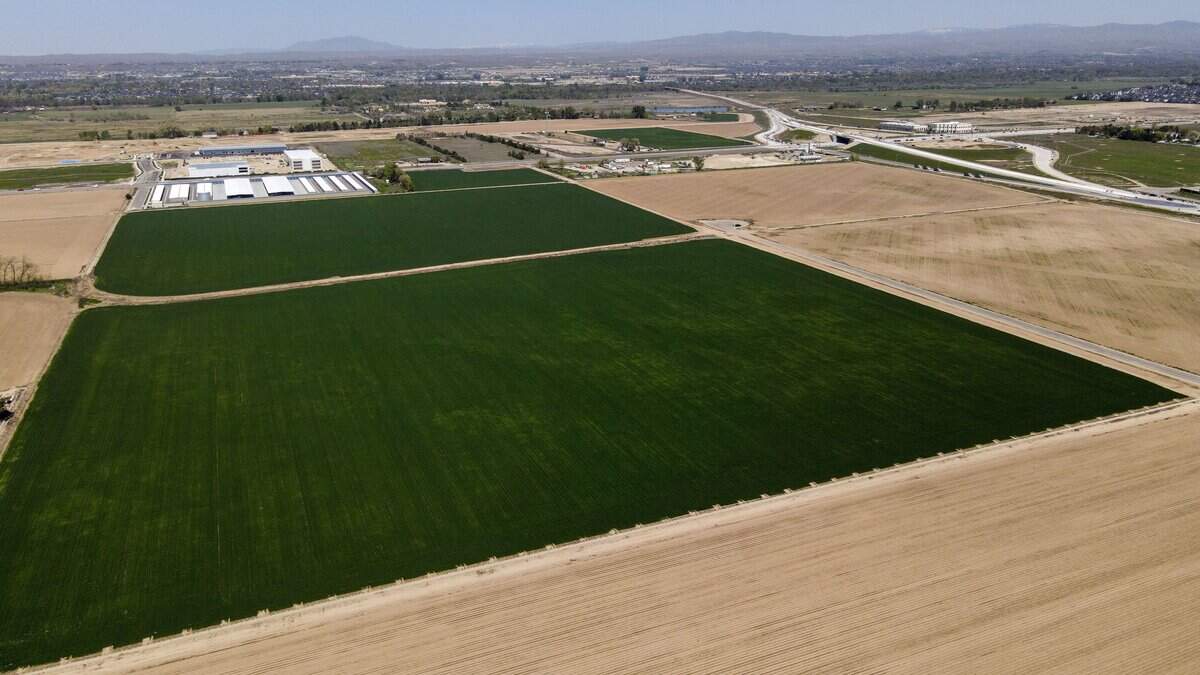
Big development eyed near Idaho 16 as infrastructure lags
Called North Meridian Fields, Bottles’ development is planned near the southwest corner of Idaho 16 and Chinden Boulevard (U.S. 20/26), north of the planned Cole Valley Christian school. Just to the northwest, across Chinden, sit the southernmost properties in fast-growing Star, geographic data from the Ada County Assessor’s Office shows.
The development is set to include roughly 25 acres of land slated for shops and employment opportunities, plus 48 acres of residential development, with anywhere between 144 and 382 “modern farmhouse” single-family homes.
Many of the details have yet to be ironed out. Plans filed with the city include no exact number of homes, average density, lot sizes or lists of amenities. For the commercial segment along Chinden, developers say they will not build “high-traffic” businesses such as gas stations, convenience stores, storage units and car washes, but they don’t say what they intend to build, or how much of it.
Further information would have to wait until developers returned to the city for later approvals closer to construction, 5B Holdings proposed. In the meantime, Bottles’ team wanted its property to join the city and be zoned for development.
Emily Mueller, a representative for Bottles, argued that this approach was “good planning.” It would give transportation agencies and schools more time to prepare for impacts, and developers a “more stable environment” for investment, Mueller said.
“None of this is ready tomorrow to be developed,” Mueller said at the hearing. She said annexing now would add a “second layer of skin” to the city’s long-range plan for the region, which Bottles was involved in developing in 2021.
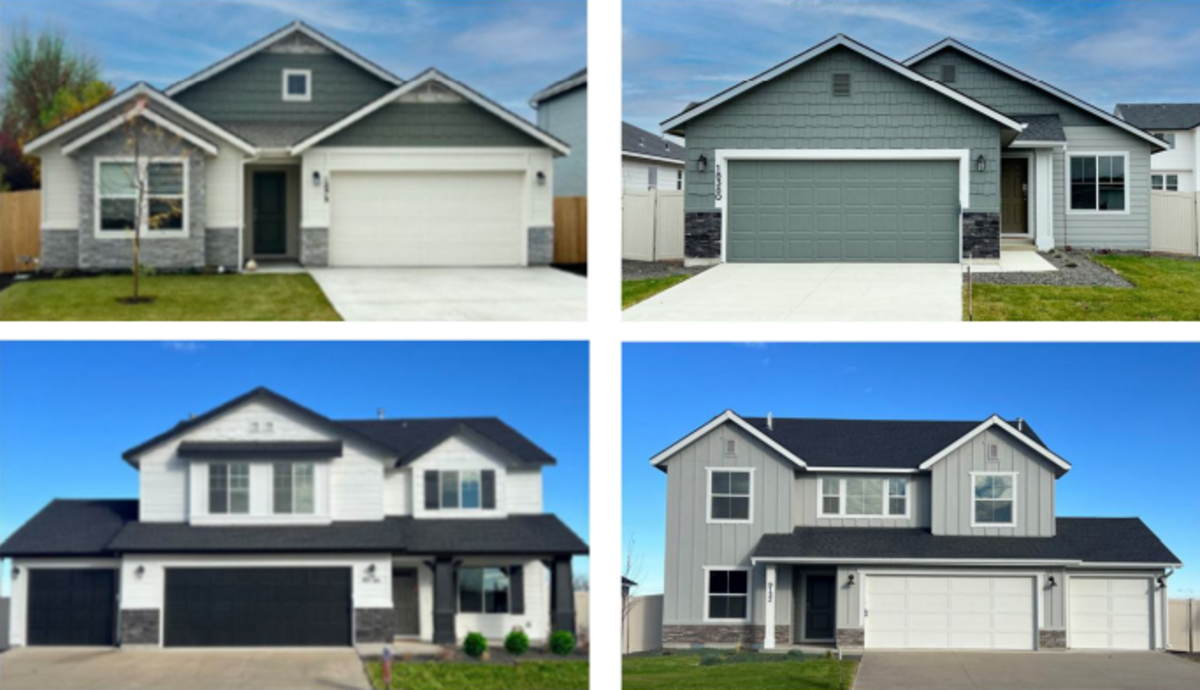
The plan, called the Fields Subarea plan, calls for a “self-sufficient” and pedestrian-friendly mini-city in the 4-square-mile area bound by Chinden, Ustick, McDermott and Can Ada roads. The northwesternmost part of the city, it’s where Meridian’s area of impact meets Star and Nampa.
“It is our commitment to the city that we see this developed within the city’s framework,” Mueller said.
Mueller and Bottles did not respond to email inquiries from the Idaho Statesman.
‘A real lack of detail’: City Council members raise concerns
Meridian City Council members seemed skeptical that annexing without more information would protect the city’s vision for the area.
“This is a huge development,” said City Council Member Liz Strader. “It’s at the corner of a critical infrastructure point with the extension of Highway 16. There’s no traffic-impact study, and I’m looking at the most bubbly of bubble plans that I’ve seen, and this is a real lack of detail.
“As a control freak, I hate all of that.”
To add insult to injury, sewer services aren’t available at the site, Strader and others noted — something that’s typically required for annexation.
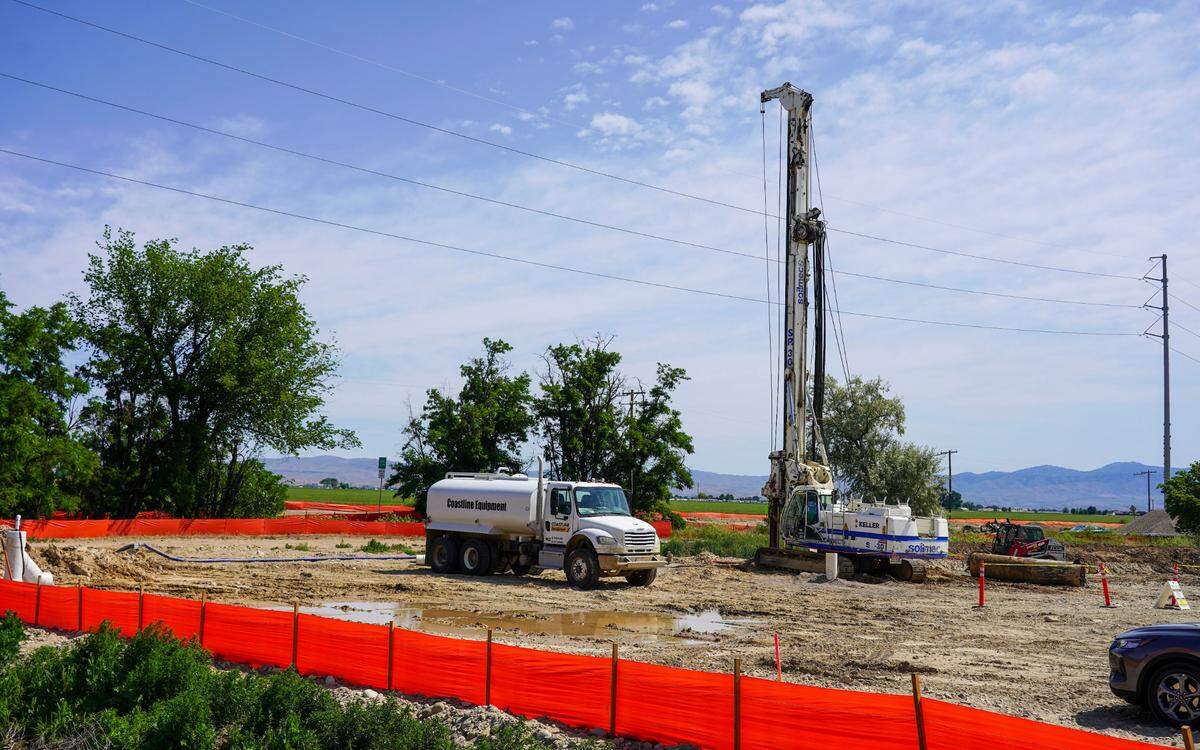
Those services are coming, testified Warren Stewart, the city engineer, but they’re still a ways out. The $26 million project to build a lift station and extend a sewer main along McMillan Road — expected to kick off long-awaited growth in the region — is under construction. Pipes are scheduled to reach the area south of Bottles’ development by June.
The whole project would need to be finished for sewage to start flowing, BreAnna Clifford, a city spokesperson, told the Statesman by email. That’s expected around spring 2027, she said.
For Mueller, the timeline was just another sign of Bottles’ loyalty to Meridian. Instead of waiting for the city, he could have taken his plans to the county, where an independent taxing district, Star Sewer and Water, is already providing services on the other side of Chinden.
“In fact, there is a risk to the 5B Holdings group in annexing before services are available,” she said. “Sewer is available in Star right now.”
$26 million sewer project takes center stage
If that prospect made council members antsy, officials’ testimony soon after didn’t help.
“There’s been discussions with parties to the west who are interested in developing sooner than this parcel,” and are eyeing services in Star, said Meridian’s community development director, Dave Miles. Those nearby property owners have been in contact with the sewer district, which is separate from the city of Star, and have filed preliminary requests to develop in Ada County, he said.
“This council body may not have an option to have input if that were to happen,” Miles said.
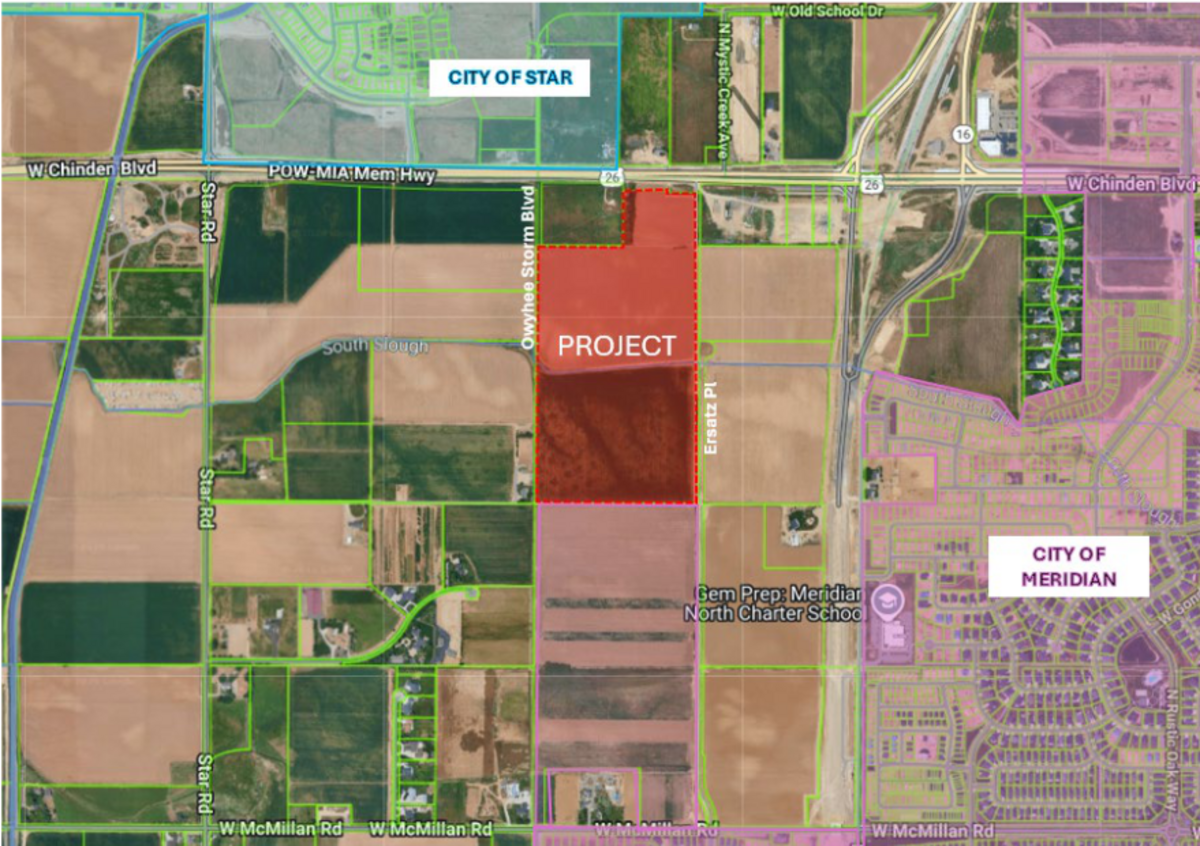
Miles told the Statesman that Meridian has “good partners in the city of Star,” and that neighboring cities’ carved-out areas of impact provide an “understanding that ... helps the two communities grow adjacent to each other.”
“What we don’t have currently is a commitment from the Star sewer district about sticking to the boundaries and their water service areas that they’ve committed to,” he said by phone.
The Statesman left a voicemail with the sewer district’s attorney, Stephanie Bonney of MSBT Law. Star’s city spokesperson, Dana Partridge, referred the Statesman to the sewer district when asked about planning efforts in the region and did not respond to follow-up questions via email.
After Miles’ testimony, Strader asked the city engineer to retake the stand and evaluate how real a possibility losing the nearby properties would be. Could Star’s sewer district actually drill under Chinden Boulevard and into Meridian’s area of impact?
“It wouldn’t be that hard,” Stewart said. “In fact, there’s already a property to the west who has requested it.”
The sewer district would simply “bore a casing underneath the roadway, and slip the pipes underneath,” he said. “We’ve done it multiple times on Chinden. They can do the same thing, and they have already expressed that they would have no problem trying.”
Strader asked what the financial risk is to the city if properties that Meridian planned to service were annexed into Star or developed in the county instead.
The answer: potentially in the millions of dollars. The city accounted for anticipated development when designing — and paying for — the $26 million sewer extension, Stewart explained.
Losing land to another jurisdiction could “mean that the infrastructure that we have already invested in might be oversized and bigger than we need,” he said. “And you might say, ‘Well, that’s unfortunate,’” but it would actually have a ripple effect, he said.
The segments of the extension that haven’t been built would need to be made smaller. Smaller pipes require a steeper slope to “keep the effluent flowing correctly,” which means that the line couldn’t be extended as far without needing another lift station, he said.
“If we lose enough property in the right locations ... you could be looking at a situation where we would have to put in additional lift stations, which are extremely expensive, both to build and operate, in order to serve areas that now don’t have sewer flows to justify the larger pipes,” Stewart said.
Meridian’s nearest and newest lift station on Can Ada Road cost $4 million to construct, according to Clifford, Meridian’s spokesperson.
Where Meridian meets Star: A race for sewer, annexation?
Stewart and Miles’ remarks were the “deciding factor” for at least one council member at the hearing.
“That would be my answer to the question of, ‘What’s the rush?’” said Council Member Brian Whitlock. “I think this area is too valuable to put it at risk of being serviced by the city of Star, or Star Sewer and Water.
“This area is really the last great frontier for the city of Meridian,” he said in a phone interview with the Statesman. “People have been at the table for a long time trying to build a vision for something that will be a hallmark for the city.”
The prospect of losing nearby properties struck him as “a risk of jeopardizing everything that we’ve been working toward,” Whitlock said.
“My antenna went up.”
Whitlock noted that approving Bottles’ development didn’t necessarily mean that neighboring property owners couldn’t still choose to go to Star’s sewer district for services. But it would put them closer to Meridian’s city limits, meaning they could sooner have the opportunity to annex into Meridian.
“Contiguity is key,” he said. Under Idaho law, a property can be annexed into a city if it touches land that’s already part of that city.
“There may be a race to see who can get the contiguity issue addressed and have the ability to provide services to future development there,” Whitlock said.
Officials approves development in NW Meridian
Strader, too, came to “appreciate the dynamic with Star” and support annexation — with a “lot of heartburn,” she said at the hearing.
“It really bothers me to kind of set up a lower bar for what I consider to be appropriate readiness for annexation,” she said. “I just think that the public investment in infrastructure that we’ve already made ... is of such a magnitude” that putting it at risk “would not be, let’s call it, the highest and best use of our taxpayers’ money.”
She voted to approve the development with the condition that 5B Holdings come back for development-agreement modification requests when it had more detailed plans for both its residential and commercial portions. Those modifications require City Council approval.
The lone holdout against the development? Cavener.
Cavener had faith that the city of Star and the county would respect the agreed-to areas of impact, he told the Statesman in a text message. As for the development, he listed the same concerns that had initially prompted him to ask developers to explain to him “the rush”: overburdened roads, crowded schools and lagging utilities.
Apparently unsatisfied with the answer, Cavener said, “There were too many flags.”
This story was originally published April 28, 2026 at 2:52 PM.