Wastewater is up 20% in this fast-growing Boise suburb. A new technology to help
As Idaho’s second-largest city continues to grow, one key infrastructure site is getting an innovative upgrade to help make sure things don’t get backed up — in more ways than one.
Every day, Meridian’s more than 150,000 residents flush their toilets, run their dishwashers and use their showers, sending nearly 10 million gallons of wastewater rushing through the city’s underground network of pipes to its central sewer plant to be treated. And like many measures of public infrastructure strain across the Treasure Valley, that number is growing as the city’s population does.
At the city’s wastewater resource and recovery plant, it’s Laurelei McVey and her team’s job to deal with the increasing volumes of wastewater. Asked how, the public works director will explain that the plant’s primary function is to separate liquid waste from solid. The treated water — which could fill more than 15 Olympic swimming pools per day — is sent back into Five Mile Creek, eventually flowing into the Boise River.
From 2020 to 2025, the total volume of wastewater treated at the plant jumped 20%, according to data from a city spokesperson. Last year, that amounted to more than 3.6 billion gallons treated.
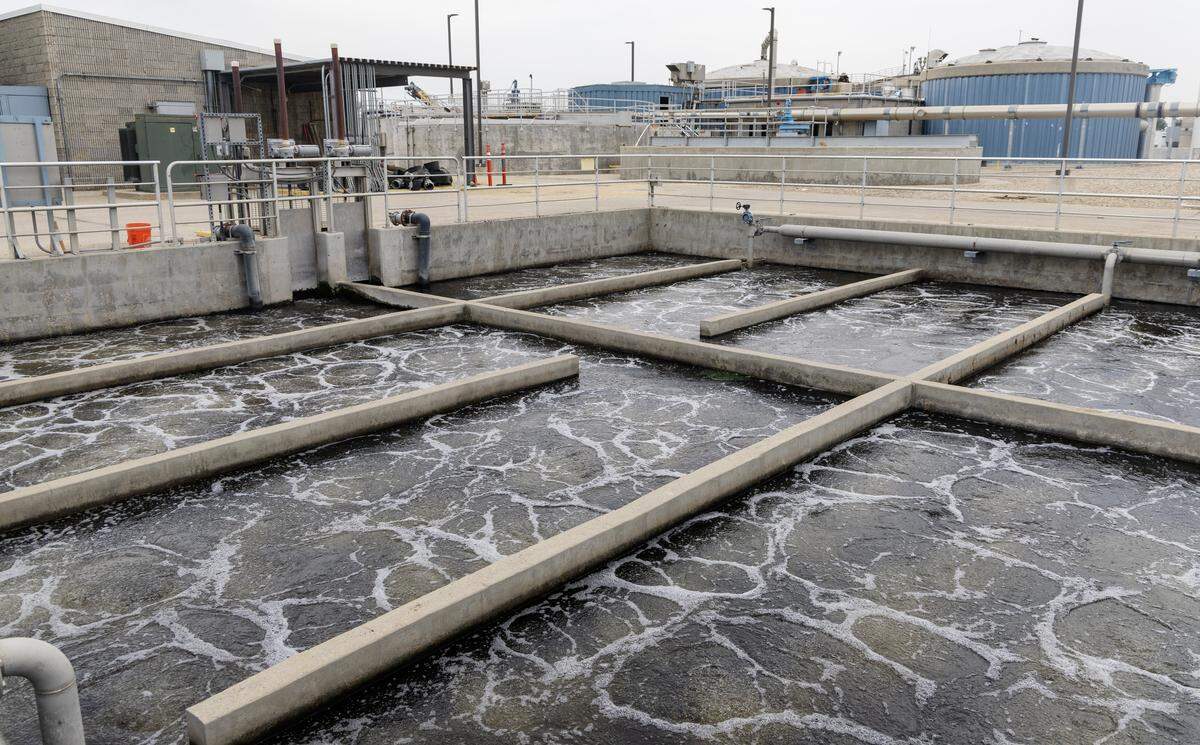
But what about the solids? Those are broken down, dried out and hauled off to the Ada County Landfill, McVey told the Idaho Statesman in an interview. Now, a new piece of technology under construction near Ten Mile and Ustick roads will add another step to that process that city officials hope will help the city mitigate the effects of population growth and keep sewer and water bills the lowest in the Valley.
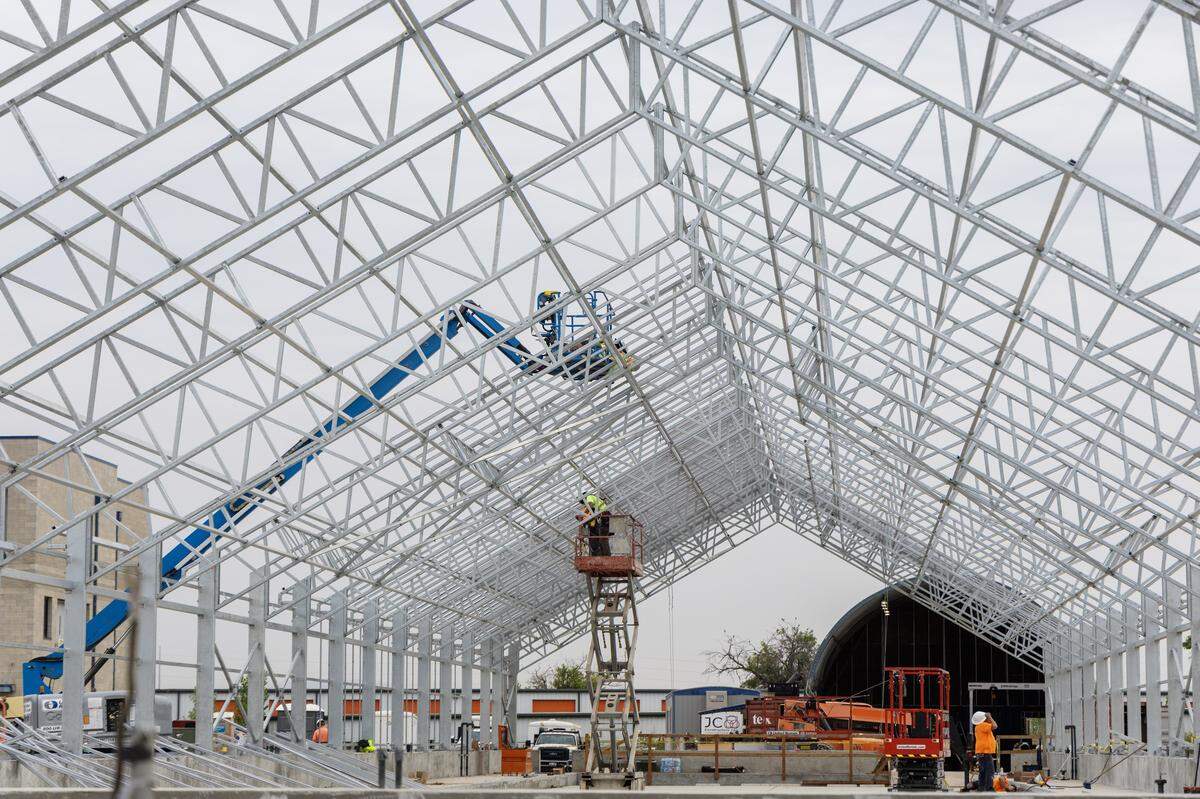
That’s a new $7.6 million biosolids dryer, a giant greenhouse-like structure, which will use solar energy and heat to evaporate about 94% of the leftover moisture, according to a city blog by Mayor Robert Simison. It was paid for with federal grant money under the American Rescue Plan Act, Simison said.
“It’s essentially an add-on” to the solid treatment process, McVey said — importantly, a cost-saving one.
Once initially separated, solid waste is first sent to “anaerobic digesters,” where microorganisms break down the waste in sealed, oxygen-free zones, McVey said. After spending more than a month there, the waste is spun in a large centrifuge, which McVey likened to a washing machine on its spin cycle, further drying out the waste.
That’s the last step before heading to landfill for now, but soon, those leftover “biosolids” will take another stop at the dryer.
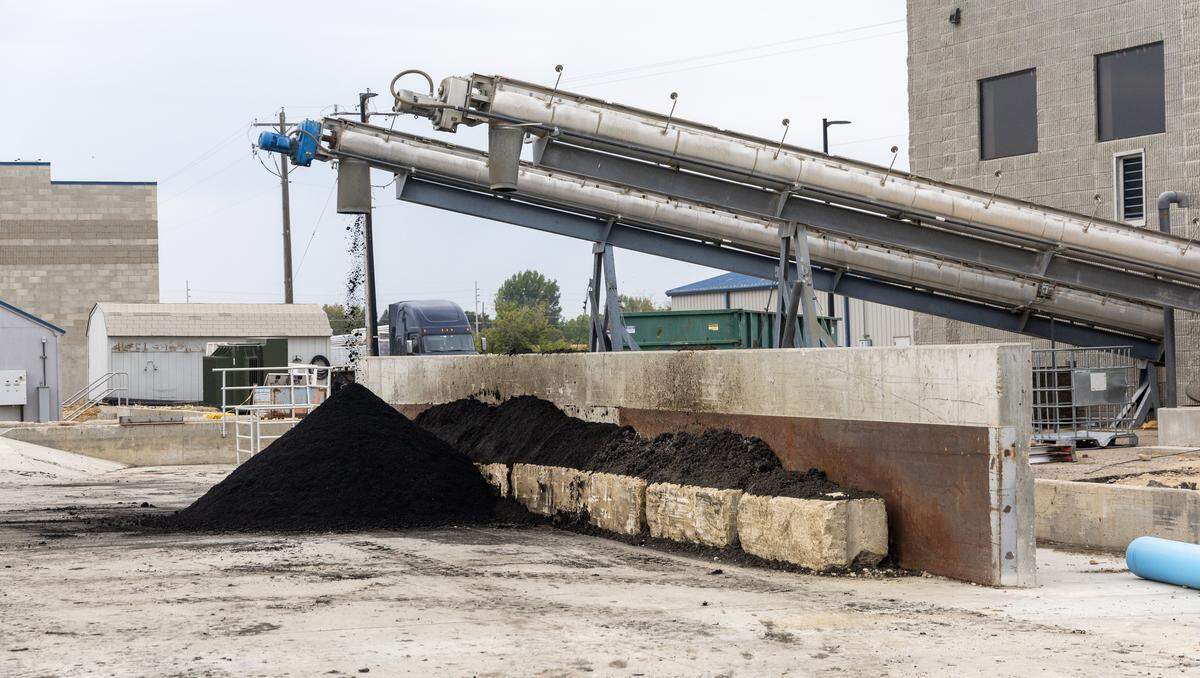
“The dryer works like a greenhouse,” she said. The sun glares through paneled windows and heats the biosolids, evaporating more moisture. The real innovation, McVey said, is a new technology that uses gas byproducts from the digestion process to heat plates on the floor of the dryer.
Second of their kind in the country and first in the state, the biogas-heated floor plates are expected to further reduce moisture, McVey said. Less moisture means fewer — and lighter — loads of what needs to be trucked to the landfill, she said.
“Today, we take about seven semitruck loads of biosolids to the landfill” per week, she said. “After the dryer, it will reduce down to one to two truck trips.”
$7M project to offset rising operational costs, official says
That means savings in fuel and staff time spent trucking waste, but also in disposal costs at the landfill, which charges by weight, McVey said.
“That’s where the majority of the savings comes in,” she said.
Disposal rates at the landfill have gone up in recent years, McVey said.
Rebecca Weeks, the landfill’s education and outreach manager, told the Statesman by phone that the landfill charged $29 per ton in 2021 and charges $33 per ton today. Weeks said the landfill has taken pains to keep those rates low as growth and inflation have loomed. Before 2021, it charged by yardage, and rates had remained effectively unchanged since 2018, she said.
In an email to the Statesman, Weeks noted that biosolids are difficult and costly to deal with once received at the landfill, and taking in fewer of them could “make the handling of this material easier for us.”
McVey pointed to another anticipated benefit to the landfill: “Indirectly, we’re extending the life of the landfill by not bringing as much waste there,” she said. The landfill is projected to fill up nearly 50 years early, also thanks to population growth, the Statesman previously reported.
In all, the city expects to save $300,000 a year in operational costs with the new dryer, McVey said.
That won’t necessarily translate into reductions on sewer and water bills for Meridian residents, she explained. “But what it does do is ... it allows us to keep some of our costs at least stable,” she said.
.png "Monthly Customer Water and Wastewater Bills as of Jan 2026 (2).png")
The dryer is expected to be up and running in about a month, according to BreAnna Clifford, Meridian’s public information officer for the public works department.
“Meridian has the lowest water and sewer rates in the whole Treasure Valley,” McVey said. “We’re able to do that because we’re doing these types of things behind the scenes and keeping costs low.”
This story was originally published May 21, 2026 at 4:00 AM.