Pink moon, meteor shower to light up sky above Boise. Here’s when to watch
Want to wish on a shooting star?
Sky watchers can spot a pink moon, a meteor shower and more in the night sky above Idaho in April.
Here’s what’s in store for Boise-area stargazers:
When’s the best time to see the full moon in April?
The next full moon arrives on Wednesday, April 1 — April Fool’s Day, according to the Old Farmer’s Almanac.
In Boise, the moon will reach peak illumination at 8:11 p.m. Wednesday, according to online clock Time and Date.
The moon shines its fullest when it’s positioned on the opposite side of the earth from the sun.
According to the almanac, the new moon will follow a couple weeks after on Friday, April 17.
The bright night orb becomes entirely shaded during its new moon phase when it moves between the earth and the sun.
Why is April’s full moon called the pink moon?
April’s full moon is commonly known as the pink moon.
However, it doesn’t give off a pinkish glow — unless you’re wearing rose-colored glasses.
“The name comes from the early spring bloom of a wildflower native to eastern North America: phlox subulata, commonly known as creeping phlox or moss phlox,” the Old Farmer’s Almanac said.
The wildflower is commonly known as moss pink because of its vivid fuchsia appearance.
Another name for April’s full moon is the Paschal moon, the almanac said, noting that it sets the date for the Easter holiday.
The Old Farmer’s Almanac said the full moon in April goes by several other names, many referencing the first thaw after winter.
Some Native American tribes refer to the April full moon as the breaking ice moon, the frog moon, the sucker moon and the budding moon of plants and shrubs.
When can I watch Lyrid meteor shower?
The Lyrid meteor shower will be visible in the night sky from Friday, April 17, to Sunday, April 26, NASA said, peaking on Tuesday, April 21, and Wednesday, April 22.
“The best time to watch is after midnight and before dawn,” EarthSky said.
“The Lyrids have been observed for 2,700 years,” NASA said, making the meteor shower the oldest known to humans. “The first recorded sighting of a Lyrid meteor shower goes back to 687 BC by the Chinese.”
Under ideal viewing conditions, you can expect to see 10 to 15 shooting stars per hour, with up to 100 meteors per hour possible during “uncommon surges,” according to EarthSky.
“Lyrids are known for their bright and colorful meteors, sometimes even producing fireballs” that “outshine the planet Venus,” the astronomy website said.
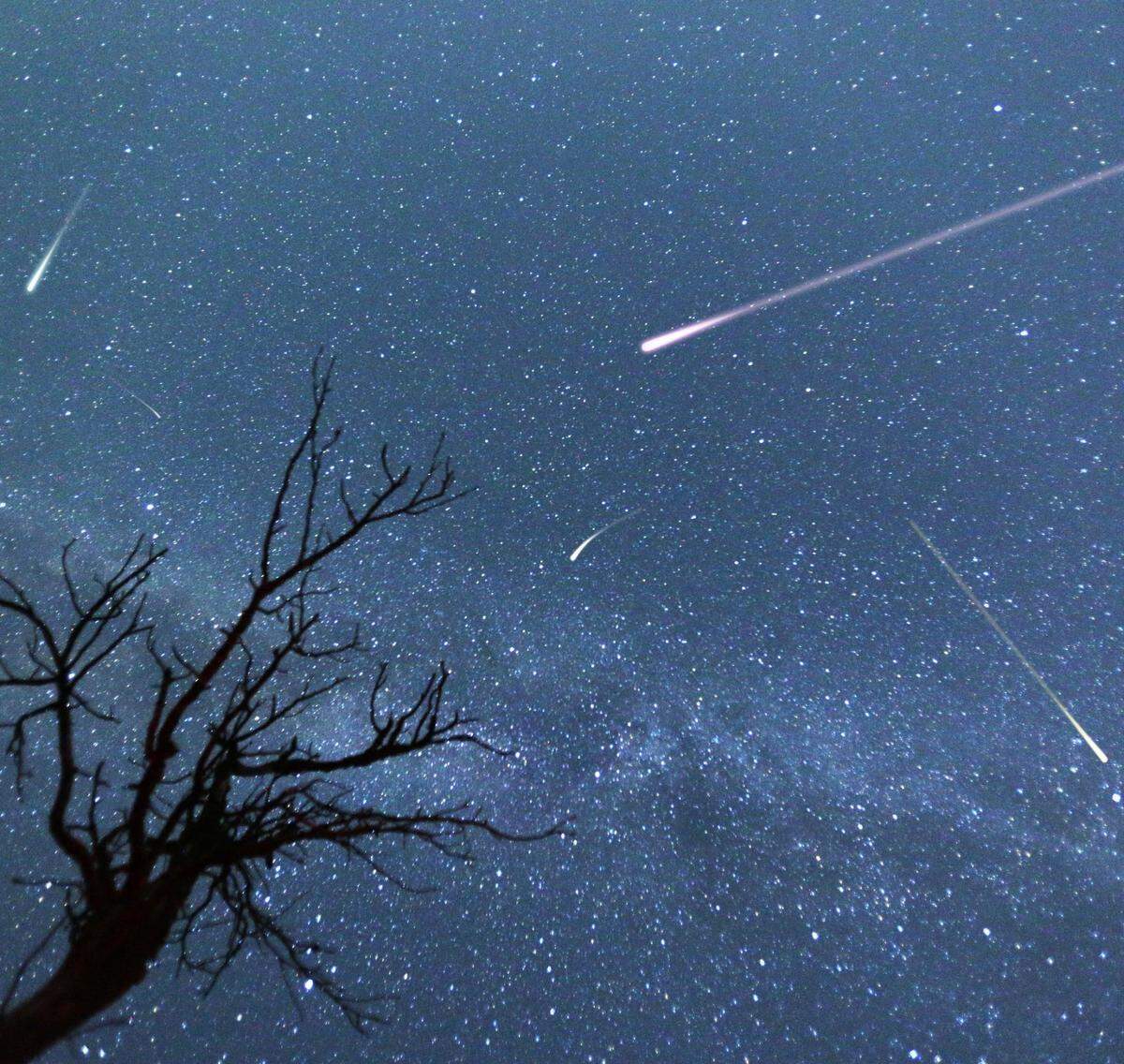
What are meteor showers?
“Meteors come from leftover comet particles and bits from broken asteroids” that erode as they orbit the sun, NASA said. When these particles are caught in the earth’s atmosphere, they burst into flames as they disintegrate from pressure.
Meteor showers such as the Lyrids can be tracked yearly, because the debris flying through the night sky in fiery streaks is coming from the same comet.
Earth catches chunks Comet from Thatcher’s debris path every year as our planet orbits the sun.
What’s the best way to view shooting stars?
To see shooting stars, get far from the city lights and “lie flat on your back with your feet facing east and look up, taking in as much of the sky as possible,” NASA said.
It may take about 30 minutes for your eyes to fully adjust to the dark before you can spot the Lyrids, the space agency said.
“Be patient,” NASA said. “The show will last until dawn, so you have plenty of time to catch a glimpse.”
This story was originally published March 31, 2026 at 4:00 AM.