Daylight saving time is nearly here. Why does Idaho still ‘spring forward’?
As the first week of March comes to an end, it’s nearly time to spring forward.
This weekend, Idaho residents will set their clocks and watches ahead by one hour in observance of daylight saving time.
What are the origins of daylight saving time — and hasn’t Idaho abolished the practice?
Here’s what you should know:

How does daylight saving time work?
Twice a year, people across the United States adjust their clocks, according to the Old Farmer’s Almanac.
We “spring forward” one hour on the second Sunday in March, then “fall back” by an hour on the first Sunday in November.
“Through the summer months, the period is called ‘daylight time’,” the Old Farmer’s Almanac said. “When daylight saving time ends, we return to ‘standard time’.”

When do we change clocks in 2026?
Clocks in Idaho and most of the country will skip ahead an hour at 2 a.m. on Sunday, March 8.
People will lose an hour of sleep that night, but sunset will happen one hour later once the time shift takes place.
“There will be more light in the evening and less light in the morning,” online clock Time and Date said.
What are origins of daylight saving time?
According to the Old Farmer’s Almanac, Founding Father Benjamin Franklin was one of the first to propose “saving” daylight.
His satirical essay, “An Economical Project for Diminishing the Cost of Light,” written in 1784, advocated laws to “compel citizens to rise at the crack of dawn to save the expense of candlelight,” the almanac said.
Daylight saving time was later implemented to save money and energy, The Sacramento Bee previously reported.
During World War I, countries briefly pushed clocks forward to reduce fuel use, according to the Johns Hopkins Bloomberg School of Public Health.
Germany adopted the practice in 1916, and the United States followed suit in 1918.
The United States ended the practice of daylight saving time in 1920 “due to opposition from dairy farmers,” the almanac said. “Cows ignore clocks.”
It didn’t return until 1941, due to concerns about energy conservation during World War II, according to the Astronomical Applications Department.
In 1966, Congress passed the Uniform Time Act, “establishing consistent use of daylight saving time” in much of the United States, The Old Farmer’s Almanac said.

Does everyone observe biannual time switch?
Under the Uniform Time Act, states can choose to follow daylight saving time practices or stay in standard time all year.
Hawaii and most of Arizona observe permanent standard time, according to History.com.
Didn’t Idaho get rid of DST?
Legislators across the country have proposed eliminating the practice of changing the clocks.
In 2018, then-U.S. Sen. Marco Rubio introduced the Sunshine Protection Act, seeking to make daylight saving time “the new, permanent standard time.”
The bill has been reintroduced several times, most recently in 2025, but has failed to become law.
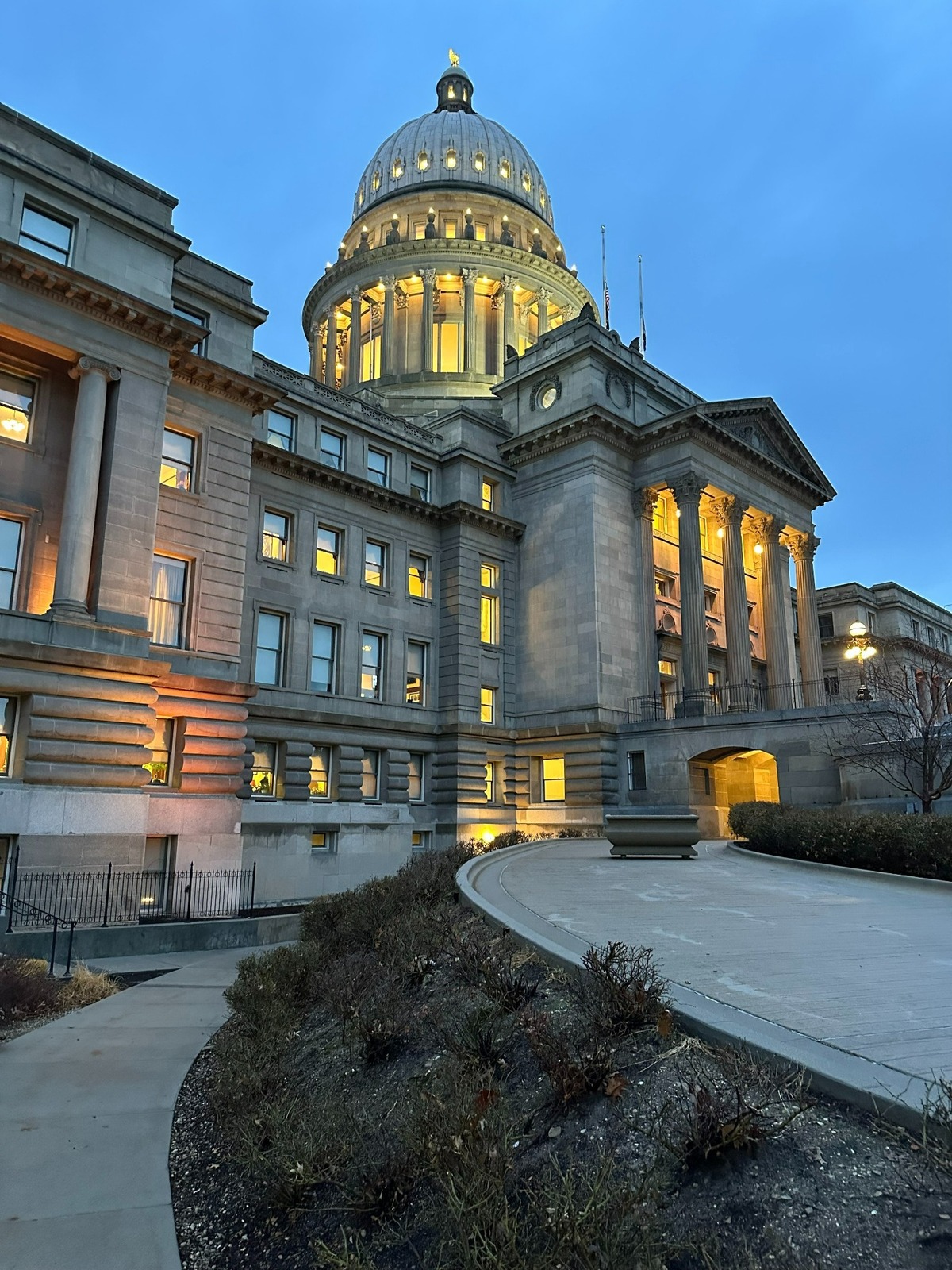
In 2020, Idaho Gov. Brad Little signed a bill into law that would enforce “Pacific daylight saving time” year-round in parts of Idaho, the Idaho Statesman previously reported. That only affects the section of the state on Pacific time.
However, that law wouldn’t go into effect unless Washington state enacts similar regulations.
Idaho lawmakers introduced a bill in 2025 to put Idaho on standard time permanently that would only take effect if similar actions were taken in Oregon and Washington. That bill died in committee, the Statesman previously reported.
This story was originally published March 6, 2026 at 10:42 AM.