After a year of COVID-19 crisis and death, Idaho health care workers start to see hope
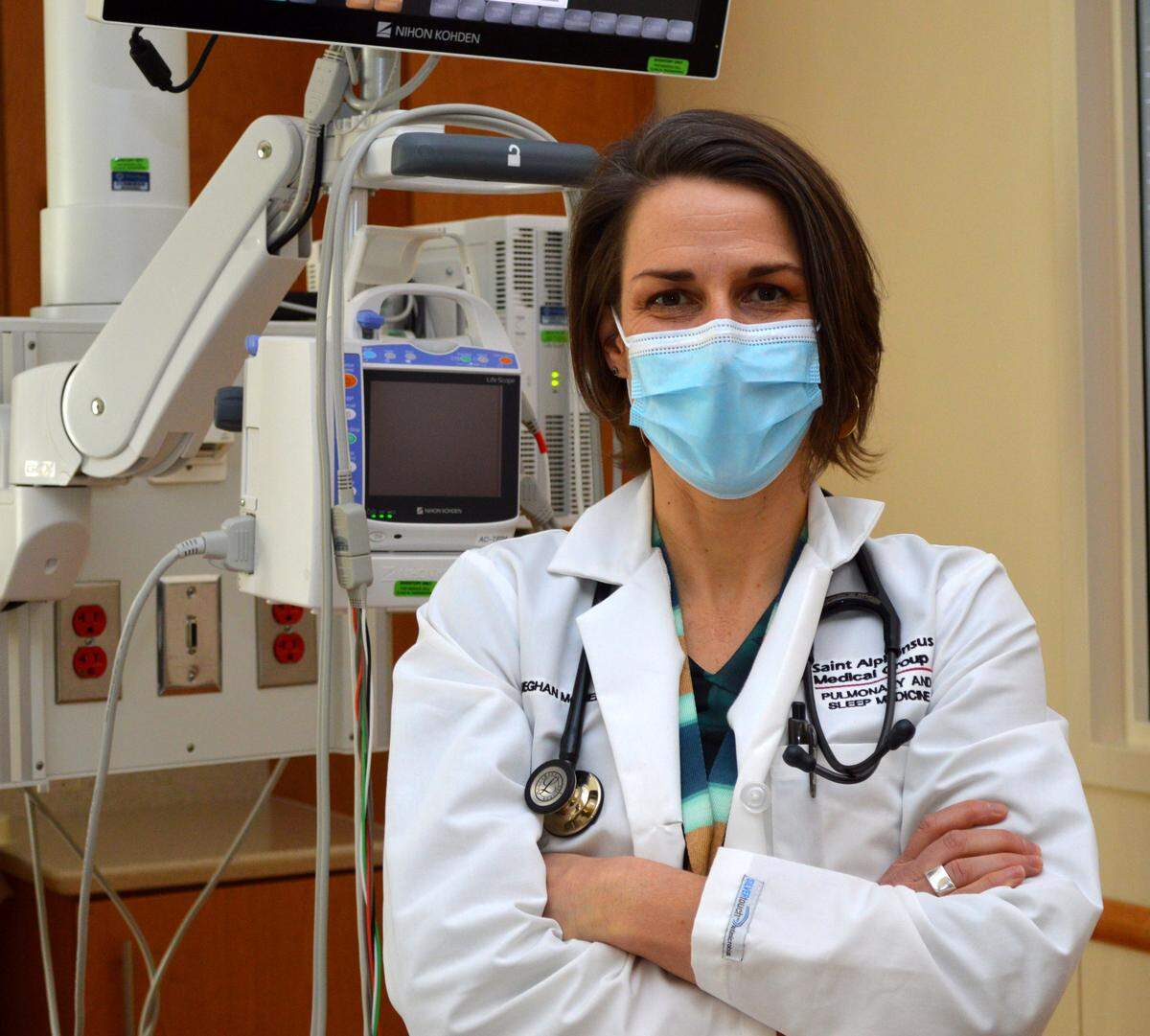
In the final weeks of 2020, Meghan McInerney was juggling two very different realities. On one hand, she was elated, “floating for days” because she was one of the first Idahoans to be vaccinated against COVID-19 when supplies arrived on Dec. 14.
On the other hand, the Saint Alphonsus intensive care unit director and her colleagues were facing the peak of Idaho’s coronavirus surge, with health care officials around the state warning that their hospitals were reaching the breaking point — and so were their employees.
“I recognized the symbolism of it. I recognized that getting a vaccine was the first step for a way out of this pandemic,” McInerney said in a phone interview.
It was a much-needed light at the end of a bleak tunnel that had left McInerney and other health care workers exhausted, terrified and isolated for months.
Even before the coronavirus arrived in Idaho last March, many health care workers were scrambling to prepare for when it eventually hit. A year later, they’re encouraged by the vaccine but wary of celebrating too soon, and wondering what life will look like as the aftereffects of the pandemic come into focus.
‘This is what it looks like to be in a pandemic’
McInerney was part of the team that treated the first COVID-19 patient that needed critical care at Saint Alphonsus Regional Medical Center in Boise.
“He was so sick. We had to put him on the ventilator … and put him in the prone position (on his stomach),” McInerney said. “There were six of us in the room because you have to manually flip somebody over onto their belly. And I remember looking around at everybody and just, you know, overanalyzing if their masks were on right, looking so carefully to make sure everyone’s PPE (personal protective equipment) was on correctly. (I was) just so nervous for my team.”
More than anything, McInerney said, she remembers feeling scared — that her colleagues would get sick, that they didn’t know how to heal COVID-19 patients. She said the seriousness of the situation started to sink in when the hospital began pulling in specialists from other teams to cover shifts in the ICU.
“That’s when I thought, ‘OK, this is what it looks like to be in a pandemic,’ ” she said.
The optimism she felt at the onset — that things might be under control by summer of 2020 — started to fade as Idaho added more cases of COVID-19.
“We realized this is not a sprint. This is a marathon,” she said. “You just have to be willing to get up and do it again.”
Like any marathon, the fight against the coronavirus has been grueling. And amid the constant pressures, McInerney and many other health care workers have been without their support systems. She said she hasn’t set foot in a yoga studio — something she once did several times a week — in a year. She hasn’t traveled, or attended gatherings, or seen family that live on the East Coast for fear that, if she got sick, her absence would be another strain on an already stressed medical system.
That stress, along with the grief of constant illness and frequent death in the ICU, has been a heavy burden for health care workers.
“It’s the emotional toll,” McInerney said. “My team and I, nurses, respiratory therapists, (certified nursing assistants), pharmacists, we’re at the bedside with these patients who are very sick and many of whom die.”
It’s not that death is unheard of in an ICU, McInerney added. But the sheer volume of death has increased. To make matters worse, patients are often lonely and isolated when they die, as hospitals have had to restrict visitation to prevent spreading the virus. McInerney and the rest of the staff have spent the last year consoling their patients’ loved ones as they try to determine the right treatment plan.
“I think that a lot of people don’t have a concept of what it feels like to talk to multiple families every day and have them sobbing on the end of the line because they’re afraid that their loved one’s going to die and they can’t see them,” she said.
Hospital staff support each other, patients and families
The pandemic has been a catalyst for bonding in Boise’s hospitals. McInerney said she’s connected with her coworkers over their shared sadness and an understanding that she can’t always find outside of the realm of health care.
As some Idahoans have rejected the realities of COVID-19 and pushed back against public health measures like face masks, it’s been comforting to have a community inside the hospital.
“When you hear people saying things like COVID is not real, or it’s only a flu, it is devastating to hear them say that,” McInerney said. “And so you tend to — or at least I tend to — turn inward toward my team who understand that that is not true and see the reality like I do.”
Conner Hall, a board-certified chaplain at Saint Alphonsus, has had to focus more than ever on supporting his colleagues emotionally and spiritually over the last year.
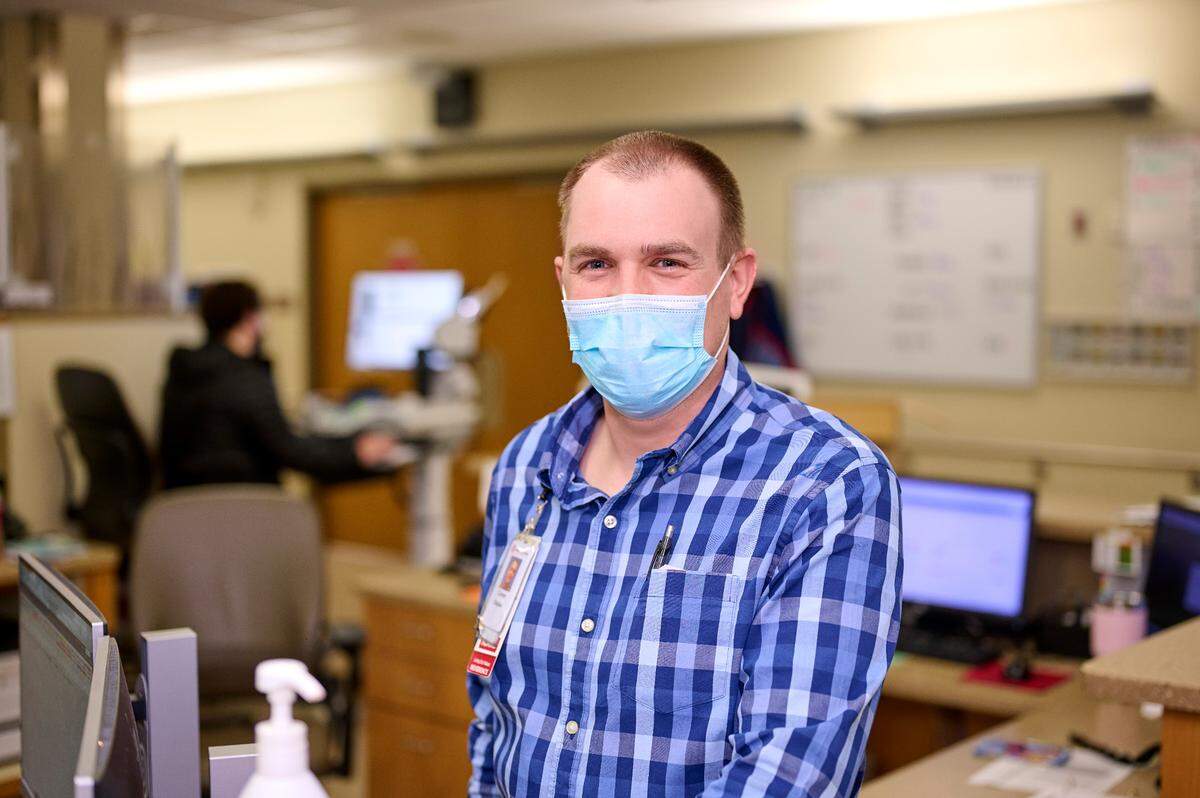
“We do a lot more staff support now because there are so many nurses and team members who are getting burned out because the work has been extra stressful due to COVID-19,” Hall said in a phone interview.
He said he finds joy in checking on staff, making their days brighter and bringing purpose and energy to his own work. He also acts as a liaison between nursing staff and patients’ families, and he offers emotional and spiritual comfort to dying patients. That work has also been more difficult during the pandemic, as fewer family members can come into patient rooms.
“A lot of patients and families have been frustrated because they’re not connected to their churches (right now),” Hall said. “So when they have a chance to have somebody come and pray with them … it’s a different type of ministry.”
Hall also spends time helping families set up virtual goodbyes or explaining why they may not be able to spend time in a loved one’s room at the end of their life.
“Sometimes it’s more difficult than others,” he said. “Sometimes you’re a horrible person (to them) and sometimes families are just grateful.”
Hospitals scrambled, staff innovated
Idaho’s first case was announced in Ada County on March 13. For most Idahoans, that marks the start of the pandemic in Idaho, but health care workers were preparing weeks before that.
“Our hospital set up what’s called an incident command structure in January to start mounting and coming up with our response to the pandemic in anticipation that it would arrive in Idaho,” McInerney said. “And from that moment that we started meeting for incident command, it was constant preparations and meetings and reading about infection prevention, going around the hospital and figuring out places where we should put COVID patients, trying to get enough masks in the hospital, enough people ready, educating our staff about what to do when (COVID-19 patients) might come.”
And when the patients arrived, the workload just got heavier. McInerney said high volumes of patients in the ICU meant calling in twice as many doctors as usual. Staff sometimes went weeks without a day off, working 12-hour shifts on top of the nonstop work week.
Away from patients’ bedsides, all hospital staff felt the crunch of trying to prepare. Saint Alphonsus and St. Luke’s health care systems set up new teams and protocols, launched clinical research and initiated innovation in areas like telehealth that otherwise could’ve taken years to progress.
In the hospitals’ labs, it was a mad dash for supplies.
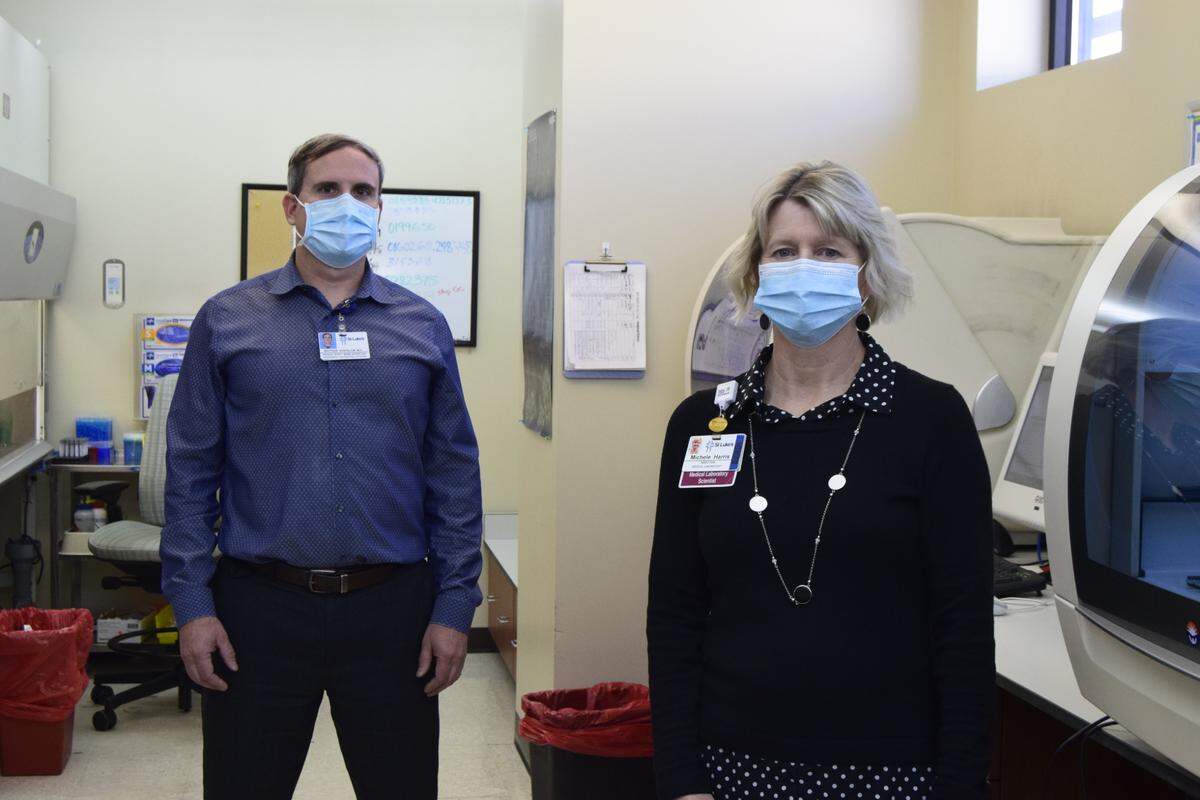
“One person in the media used the term ‘The Hunger Games,’ where each individual laboratory really did have to find their own testing solutions,” said Matthew Burtelow, executive medical director for St. Luke’s Health System laboratories.
The labs struggled to compete for basic necessities like swabs and reagents (chemicals that make COVID-19 tests viable). Initially, the bulk of tests were sent to the state lab or commercial labs for results. It took about six months for St. Luke’s to be able to process its own tests in-house, Burtelow said.
Thousands of health care workers got COVID-19
Jennifer Riha, an ambulatory nursing manager at St. Luke’s, was part of a team tasked with setting up COVID-19 testing centers last March. They started planning on the 16th, opened a drive-thru center at the health system’s Meridian campus by the 17th (it was “a zoo” as people streamed in for testing, Riha said) and within days had testing sites in Boise and the Wood River Valley, too.
It was after returning home from Blaine County that Riha started to feel incredibly fatigued. She thought it was the result of numerous long days at work, but after waking up in the middle of the night with a fever and chills, her supervisor urged her to be tested for COVID-19. She tested positive.
Riha was one of more than 9,600 health care workers in Idaho who have contracted COVID-19, according to Idaho Department of Health and Welfare data. She was quickly hit with some classic COVID-19 symptoms — loss of smell, shortness of breath, coughing.
“I walked downstairs to grab water and I was so out of breath by the time I got to the bottom of the staircase, I was worried about how I would get back up,” she said in a phone interview. “It was just alarming to me how rapid that decline was.”
She made it back to her upstairs bedroom and didn’t go back downstairs for at least a week. She was afraid to sleep for fear she’d stop breathing and never wake up. For weeks, she continued to test positive for COVID-19, so her husband lived in an RV for two months and her youngest son went to live with her daughter in Meridian to avoid spreading the virus.
It took nearly three months before Riha felt well enough to return to work, starting off part time before moving back to full time. She still has “long haul” symptoms of COVID-19.
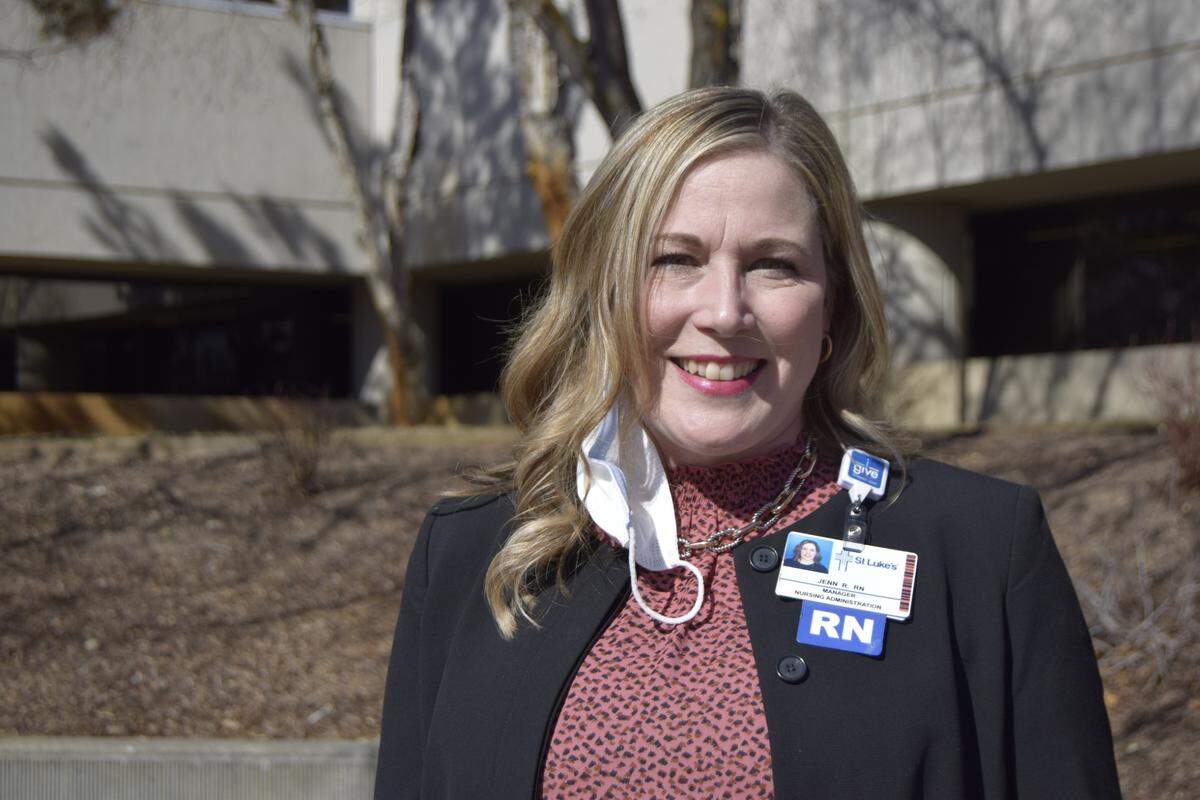
She said her experience with the coronavirus helped her see things through patients’ eyes and gave her a new appreciation for her colleagues at St. Luke’s.
“I am so thankful that I am alive,” Riha said. “I can appreciate things now that I maybe didn’t a year ago. … I didn’t die because I was clearly meant to do more.”
A year later, PTSD from pandemic becomes a priority
A year ago, Riha said, she thought we’d be OK by now. In recent weeks, Idaho’s case count and hospitalization numbers have dropped, but the pace at local hospitals hasn’t let up entirely. Staff at labs have been able to resume some of the duties they put off during the fall surge.
“We’re probably even busier now than we were during COVID, because we had slowed everything down for COVID testing,” said Michele Harris, director of the St. Luke’s laboratory center of excellence.
St. Luke’s and Saint Al’s are treating fewer COVID-19 patients these days — about 4% and 9% of their total patients over the last two weeks, respectively — but the patients they still have are just as sick as the first man McInerney treated.
“I just left a room where we had to intubate a COVID patient and put them on a ventilator,” she said. “And every time I do that and I talk to their loved ones or I look into the patient’s eyes and I see that we’re about to put them on life support, I know that it’s very likely that they won’t come off.”
As the frenzied workload fades, health care workers are being left with scars unlike anything they’ve seen before.
“I think the next phase of this pandemic is figuring out how to take care of our health care workers who are at risk of PTSD,” McInerney said.
Looking back at the last year is painful, but looking forward offers some hope.
“I feel like we’re turning a corner,” Riha said. “And I hope in the deepest bowels of my heart that we really are turning a corner.”