Sold at gas stations, blamed for deaths: Idaho lawmakers debate kratom ban
AI-generated summary reviewed by our newsroom.
- Supporters say kratom relieves pain. Opponents cite deaths from synthetic versions.
- House committee weighs whether to regulate kratom or ban it entirely.
- Committee held the bill until March 25 after members sought more time.
State legislators want to do something about kratom, but they haven’t decided exactly what yet.
The House Health & Welfare Committee heard hours of testimony Wednesday and Thursday on a bill that, as written, would ban kratom in Idaho. Kratom is an herbal substance that can produce opioid- and stimulant-like effects, according to the National Institute on Druge Abuse.
The bill would reclassify kratom as a Schedule I controlled substance, meaning it would be illegal to sell or buy the drug in the state.
But several lawmakers on the committee expressed interest in taking a less-heavy-handed approach to the drug, which is sold in gas stations and smoke shops. Some residents, including former military members, testified to the drug’s ability to help them manage pain, especially after back, shoulder and knee surgeries.
Mason Mollette, who said he is a fourth-generation Idahoan, testified that a ban would make criminals out of people who rely on the drug.
“Kratom saved my life, plain and simple,” Mollette said. “It is not a dangerous new drug. I use it every day and it gives me the ability to be a functioning father. It makes it so that I can actually throw my kids in the air and not be reliant and dependent on dangerous narcotics which have been shown to kill people.”
Others told legislators that whole-plant kratom is not the same as its synthetic derivatives, which are more potent and have been linked to overdose deaths, leading the Food and Drug Administration to call it a public health threat.
Another Idahoan, Tia Rustici, told the committee that her daughter dropped out of college and died after using kratom for two years. She said a toxicology report showed that her daughter’s organs had “turned green” from kratom use.
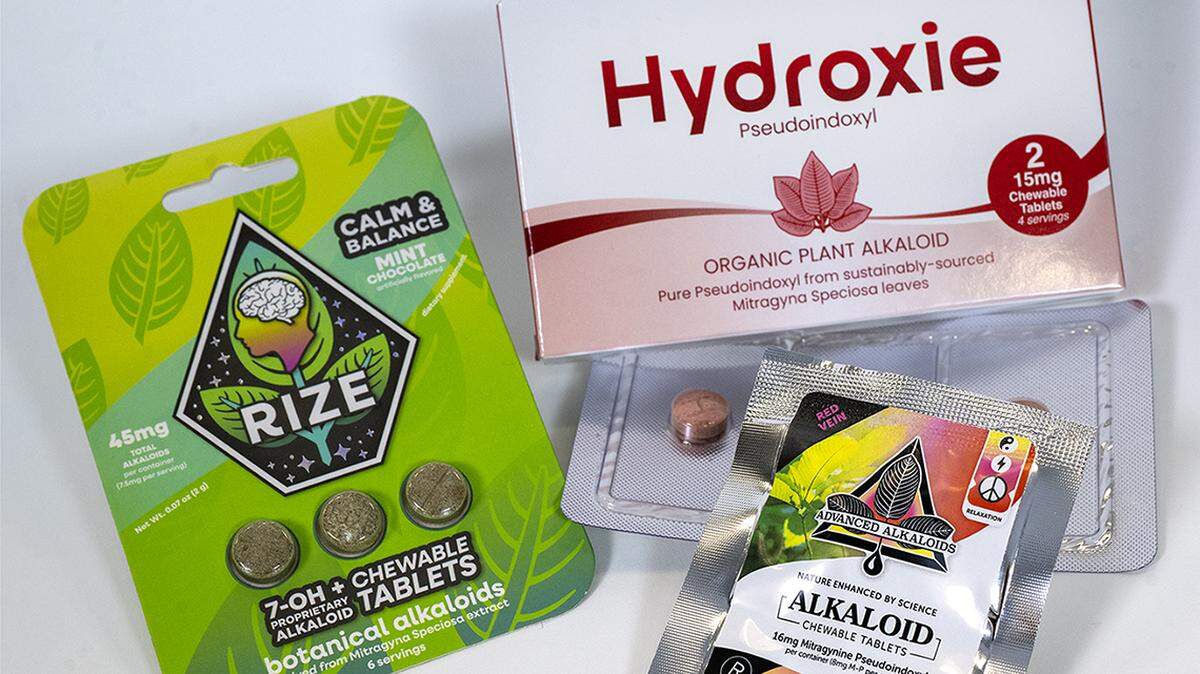
John Chavez of Bridge the Gap Botanicals in Boise, one of the largest bulk and retail suppliers of kratom in Idaho, said 7-hydroxymitragynine, also known as 7-OH, a semisynthetic compound derived from kratom, is the problem.
Stateline reported that 7-OH emerged on the market in late 2023. Kratom itself has been available for decades.
“The problem I’m dealing with is that kratom has been available in Idaho for over 20 years, and we’ve never heard of any type of serious injuries or deaths up until the emergence of this synthetic 7-OH that’s come to the market,” Chavez said. “These pills that are being marketed and sold as advanced kratom alkaloids, which are a synthetic, they’re not full-leaf.”
Tracy Basterrechea, chief of Meridian Police and a member of the Idaho Chiefs of Police Association, testified in favor of a full ban. He said Washington, D.C., Kansas and and several other states and municipalities such as San Diego have already banned the drug.
“We’ve heard testimony portraying kratom as a cure-all, offering relaxation, energy, pain relief and more,” Basterrechea said. “The pattern is familiar. We heard it with spice, we heard it with bath salts, and we still hear it with marijuana — substances that are marketed as harmless, even beneficial, only for the long-term consequences to emerge later, often at a great cost to individuals, families and our communities.”
Curt Bramble, a lobbyist with the American Kratom Association, a group that says it represents millions of kratom customers around the country, advocated for regulation over prohibition. He said that several years of research indicate whole-plant kratom does not meet the criteria needed for scheduling.
“The American Kratom Association aggressively supports regulating kratom,” Bramble said. “We would like to see labeling requirements, content disclosures, warnings and age limits for violations. It absolutely needs to be regulated, because of the bad actors.”
The committee ultimately decided to hold the bill until March 25. Rep. Ilana Rubel, D-Boise, said she wouldn’t be comfortable with a full ban, but said holding the bill would give lawmakers a little more time.
“I feel that the current status quo is totally unacceptable,” Rubel said. “I’m not comfortable with making felons out of army veterans who are dealing with severe chronic pain, but I’m also really not comfortable with leaving it for sale unregulated in gas stations.”
Several others on the committee also expressed an interest in finding a middle ground.
This story was originally published March 20, 2026 at 4:00 AM.