Lawmakers revisit Idaho definition of candy, soda in SNAP ban confusing grocers
AI-generated summary reviewed by our newsroom.
- Idaho ban on candy and soda for SNAP triggers confusion and added labor.
- Grocers must inspect individual product ingredients and separate items.
- Lawmakers have proposed clarifying candy and soda definitions after questions.
Oreos. A Twix bar. Twizzlers. Hostess Donettes. These are some of the items Idaho residents can still buy using taxpayer-funded grocery assistance funds, even after the state banned candy from the list of eligible items.
Some products that consumers might not consider candy are now restricted from the state’s Supplemental Nutrition Assistance Program, or SNAP, formerly known as food stamps. They include: fruit and nut bars, kettle corn, protein bars and some trail mixes.
The new rules, which took effect Feb. 15, have created confusion for retailers like Clayton Cook, who owns a chain of seven local discount stores in East Idaho and Utah named Big Deal Outlet.
Cook’s stores buy some food in bulk from manufacturers, but a large portion of what the business sells it gets from closeouts, overstock and liquidation sales from bigger grocery stores and distributors including Walmart and Sam’s Club, Target and Costco, often because of label changes, old dates or damaged packaging.
The random assortment of products come to his stores in mixed banana boxes. Employees then sort through them, manually tag individual items with a price sticker and display them in a bin of similar products for customers to sift through.
“We are able to sell it for less than 50% off the grocery store prices,” Cook said in an interview with the Idaho Statesman. “It’s a huge draw for low-income families trying to stretch their grocery budgets.”
But the additional labor required to adhere to the changes to SNAP has made Cook reconsider whether it’s still worth it for his business to continue participating in the program. SNAP purchases make up less than 5% of total sales at his stores, which process thousands of items a day, he said.
Cook’s stores don’t often receive an inventory list or any digital information on the liquidation products. And they don’t use a computer system to track each universal product code, or UPC, at the register, which larger retailers use to track inventory. Big Deal Outlet cashiers type in each price point manually from the sticker.
Now, his employees have to parse out what items are no longer eligible under the new SNAP regulations and separate them from what remains eligible. But it’s not so easy to figure out, Cook said.
“We love our SNAP customers. We want to keep serving them,” he said. “But the more complicated it gets, the less incentive we have to continue to offer SNAP benefits, which I don’t think is what anybody intended.”
The confusion has spurred the Idaho Legislature to revisit the definitions.
On Monday, a House committee voted to introduce a bill that would clarify what constitutes candy and soda for the purposes of the state’s food-assistance program.
“As the department began implementing the program … it became clear that the existing statutory definitions of ‘candy’ and ‘soda’ were difficult for retailers and consumers to interpret and could lead to inconsistent application,” read the draft legislation’s statement of purpose.
‘So vague there’s no way to enforce it’
Last year, Gov. Brad Little signed a bill into law that barred candy and soda from the government’s food assistance program, aiming to encourage families who use it make more nutritious choices at the supermarket.
The law identified soda as any nonalcoholic beverage that contains natural or artificial sweeteners. Drinks that contain more than 50% fruit or vegetable juice by volume also are not considered soda, according to the law.
It defines candy as a “preparation of sugar, honey or other natural or artificial sweeteners combined with chocolate, fruits, nuts or other ingredients or flavorings in the form of confections, bars, drops or pieces.” The restrictions don’t include items that need to be refrigerated or contain over 10% flour by weight.
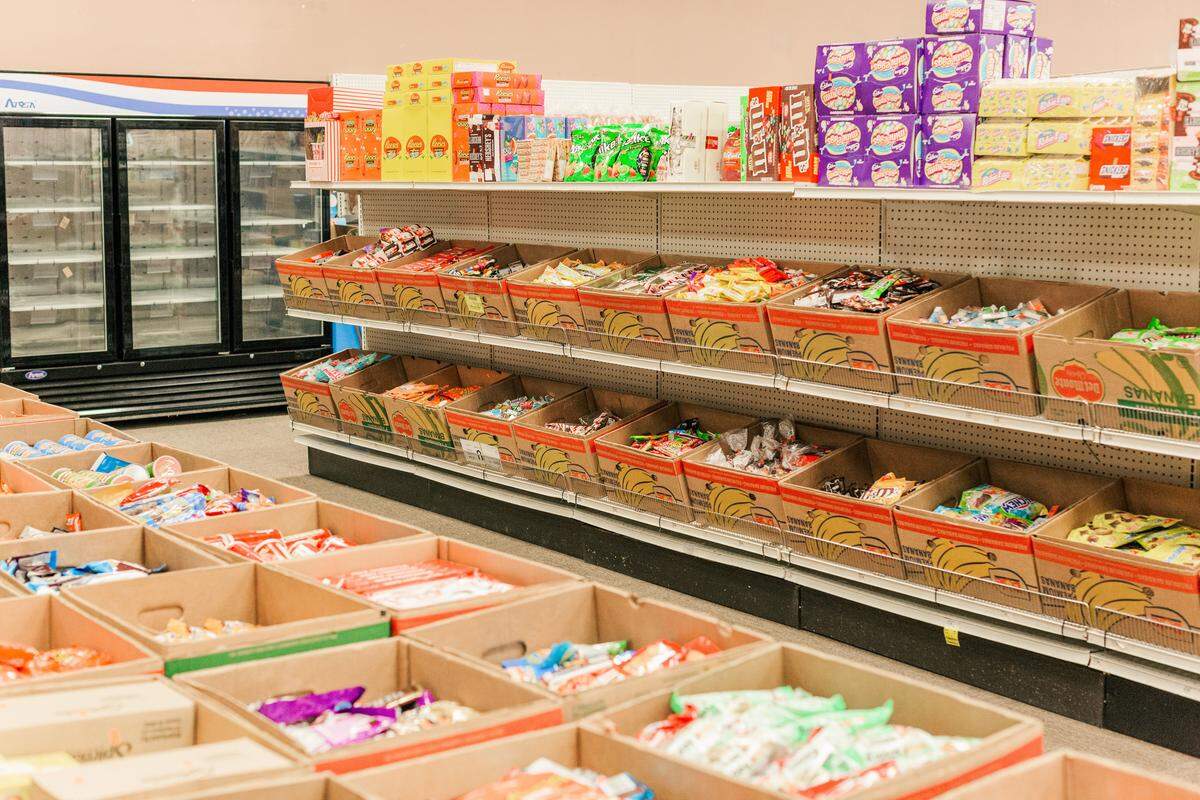
The Idaho Department of Health and Welfare says any sweetened bar, drop or piece with flour, including any amount of wheat, rice, oat and almond flour, is eligible to charge to a customer’s SNAP card. Ditto if the food requires refrigeration.
But the government doesn’t provide a list of what products are no longer eligible. That’s up to grocery operators to figure out.
“Honestly, the Idaho standard is so vague there’s no way to enforce it, and there are no resources given to retailers to justify an infraction,” Cook said. “It’s impossible to comply with. I think most people assume that there’s this giant database of retail products to where we have access to it, and it’s already sorted into what counts as candy and what doesn’t. But that’s not the case.”
Different states, different rules
The definitions made Cook think about what other foods have a sweetener, no flour and come in pieces: coconut flakes, dried cranberries, sweet and salty sunflower seeds, marshmallows, sprinkles, and so on.
He emailed Health and Welfare for clarification and was told multiple times to refer back to the above definitions. He forwarded the exchange to the Statesman.
Cook asked: What about a bag of popcorn with added sugar? Refer to our definitions, a SNAP program manager replied. He attached a picture of two trail mixes and asked whether they were correct to exclude one because it contains dextrose. (Dextrose is simple sugar made from corn or vegetables.) Refer to our definitions, the manager responded. And what about breath mints? Refer to the definitions, they said.
But Cook had already referred to the definitions. He said he hoped a SNAP inspector would come by one of his stores, just so he could get the chance to ask for advice.
“I think the biggest problem that we find is defining candy as something that does not contain flour,” Cook said. “For example, a KitKat has a wafer, or an Oreo has a cookie, they both contain flour and therefore are not considered candy and are SNAP eligible. It’s our job to go through every item that we sell and check the ingredients list, and if it contains flour, then it needs to be separated from the other candy.”
Part of the trouble for Cook has been differentiating between separate bans in Idaho and Utah on buying candy with SNAP. The neighboring state has defined candy differently. Other states have taken varying approaches, too.
The push to remove candy and soda from the list of items eligible to be purchased with SNAP has been championed by Robert F. Kennedy Jr., President Donald Trump’s health and human services secretary who spearheads the so-called Make American Healthy Again, or MAHA, movement.
“I agree with the intent of the law,” Cook said. “I think all of us should be healthier. I love that my tax dollars are going toward something that’s encouraging people to be healthy. I just don’t think the way the law is written and the way that candy is defined is accomplishing that purpose.”
He also worries that the ban on candy has been a cause of embarrassment for some shoppers enrolled in SNAP.
“Our customers are really confused,” Cook said. “A lot of times they try to be discreet about paying with a SNAP card, and so for a cashier to say, ‘Oh, I’m so sorry, this one isn’t eligible,’ and then they have to put it back on the shelf … it makes for a poor customer experience, which is really unfortunate.”
This story was originally published March 17, 2026 at 4:00 AM.