
Will Boise-area home sellers finally have to ‘play nice’ with buyers in ‘26?
AI-generated summary reviewed by our newsroom.
- Realtor.com forecasts Boise area home sales to rise 3.4% and prices to fall 0.8% in 2026.
- New construction now makes up 51% of Boise listings, pressuring median prices.
- Months-of-supply rose to 2.8 in Ada County, but market remains seller-dominant.
New inventory is finally gaining on demand for homes in the Boise area — a trend that could help rebalance the Treasure Valley’s housing market in 2026.
That’s according to a new forecast by economists for industry website Realtor.com, which projects total home sales to grow and prices to dip next year as the persistent boom in new builds starts to pull the median home cost down. The projection is good news if you’re shopping for a home in the Treasure Valley — but don’t expect the shift to end the Valley’s 10-plus years as a seller’s market.
“After a challenging period for buyers, sellers and renters, 2026 should offer a welcome, if modest, step toward a healthier housing market,” Danielle Hale, chief economist at Realtor.com, said in a statement accompanying the 2026 Housing Forecast. “It’s not a dramatic reset, but it’s a meaningful shift that moves the market back toward balance.”
Realtor.com expects home sales to grow 3.4% in the Boise market during 2026, mirroring a national trend as a tight housing market begins to loosen. But the report projects local prices to fall by 0.8%, reversing a decade-long trend in what Realtor.com Senior Economist Joel Berner calls “a natural reaction” to historically high figures.
Much of the dip has to do with the ever-expanding inventory of new homes in western and southern Ada County, Berner said. As of August, new builds represented 51% of all home listings in the Boise metro area, Berner told the Idaho Statesman. That’s by far the highest percentage of any major market he studied, and it is triggering a curious phenomenon: New homes, on average, are selling for less than old properties.
“What if new cars were cheaper than used ones?” Berner said in an interview. “That doesn’t make any sense. It’s not a sustainable long-term equilibrium.”
Realtor.com places Ada, Canyon and portions of adjacent smaller counties in the Boise metro area.
Berner and his colleagues expect new construction to slow in the year ahead, but “even a small slowdown is a lot more activity than we see in other parts of the county,” he said. “It just comes from such an elevated level.”
“Boise remains one of the hot spots in the West, in terms of demand for homes from other places,” Berner said.
Boise still a ‘seller’s market’
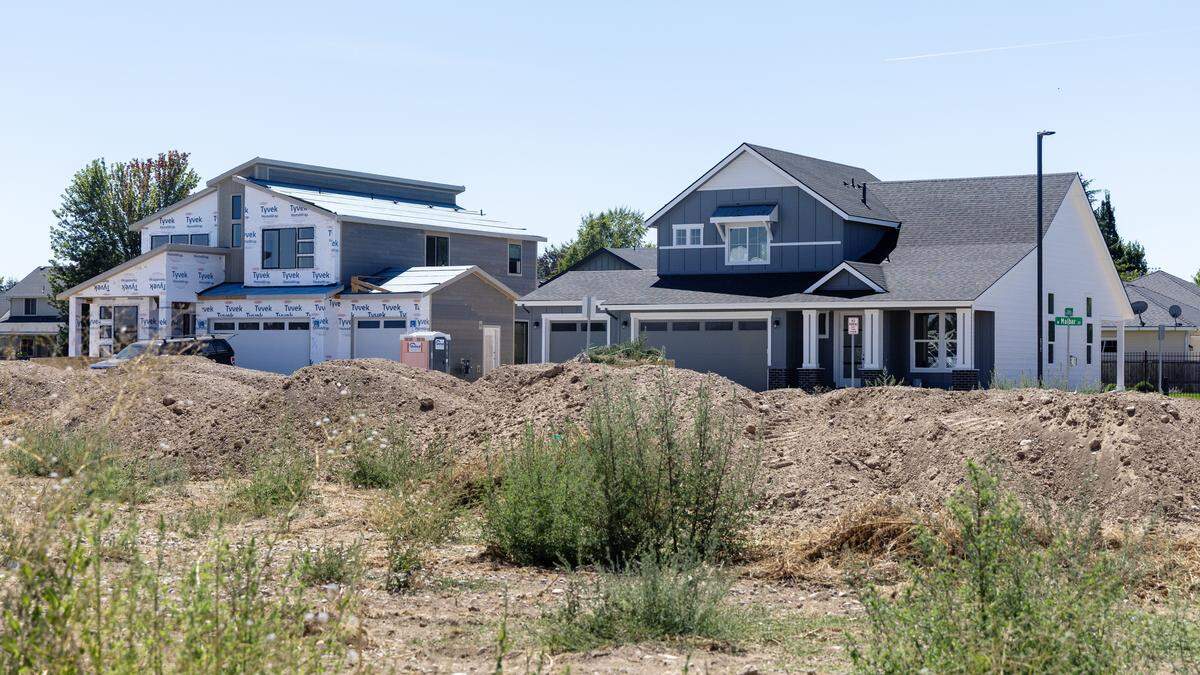
Boise’s market has favored sellers since the end of the Great Recession, according to Boise Regional Realtors President Elizabeth Hume, a broker at Sotheby’s. That’s unlikely to change if Berner’s projections come true in 2026: a 0.8% drop in prices won’t make much of a dent in historic highs, nor will a 3.4% growth in sales mark a major shift in housing availability. But, “it does seem to be leveling out,” Hume told the Statesman.
“We are starting to see some buyers tiptoe back into the market,” she said.
Hume has seen inventory creep up in what’s now the lower end of the Boise metro’s single-family home market, around $400,000 or less. This year, though, many in the market for a “starter home” have been boxed out by high interest rates, she said.
Make no mistake: Inventory is still low. A key real estate metric is months of supply — how many months, at the current rate of sales, it would take for every home on the market to sell. In October, Ada County had 2.8 months of supply, according to Boise Regional Realtors data. That’s up 11% from the previous October, but well below the four to six months of supply you see in a balanced market.
Hume has a simpler definition for a balanced market: “It’s any time buyers and sellers have to play nice with each other,” she said.
Buyers are gaining leverage, she’s found, but sellers have most of the power.
“We’re still a popular place,” she said.
Heading into year’s end, hazy outlooks on interest rates, inflationary pressures, consumer sentiment and the labor market make real estate hard to project in 2026, said Katrina Wehr, a past president of Idaho Realtors, the statewide board, and a broker at Stack Rock Realty. Those were Wehr’s takeaways from a presentation by National Association of Realtors Chief Economist Dr. Lawrence Yun at the organization’s national conference in November. The extended government shutdown also suppressed home sales, Yun told the group, which could trigger a slight rebound now that the government has reopened.
In Idaho, Hume sees a lot of room for demand to grow. She notes that, nationally, the average age of a first-time home buyer has reached 40 years old, according to the National Board of Realtors. That’s well above Idaho’s median age, and it leaves a largely untapped market of millennials who could choose to buy in.
“If you think of all the people under 40 who haven’t bought homes, there are a lot of buyers that could come into the market if prices and rates align.”
For his part, Berner will be monitoring construction trends to see how builders position themselves in the market during the year to come
“We’re happy with these projections, but they’re just projections,” Berner said of his forecast. “If we’re right as often as the weatherman, we’re happy with that.”
This story was originally published December 5, 2025 at 1:28 PM.