Boise-area developer scraps ‘economically unviable’ apartments. Are they onto something?
A Treasure Valley developer is bucking the trend to max out density on a residential development in a Meridian growth hot spot.
Instead, the developer asked the city to pivot away from already-approved apartments in favor of single-family homes, citing difficulty in finding a partner to make the apartments pencil out.
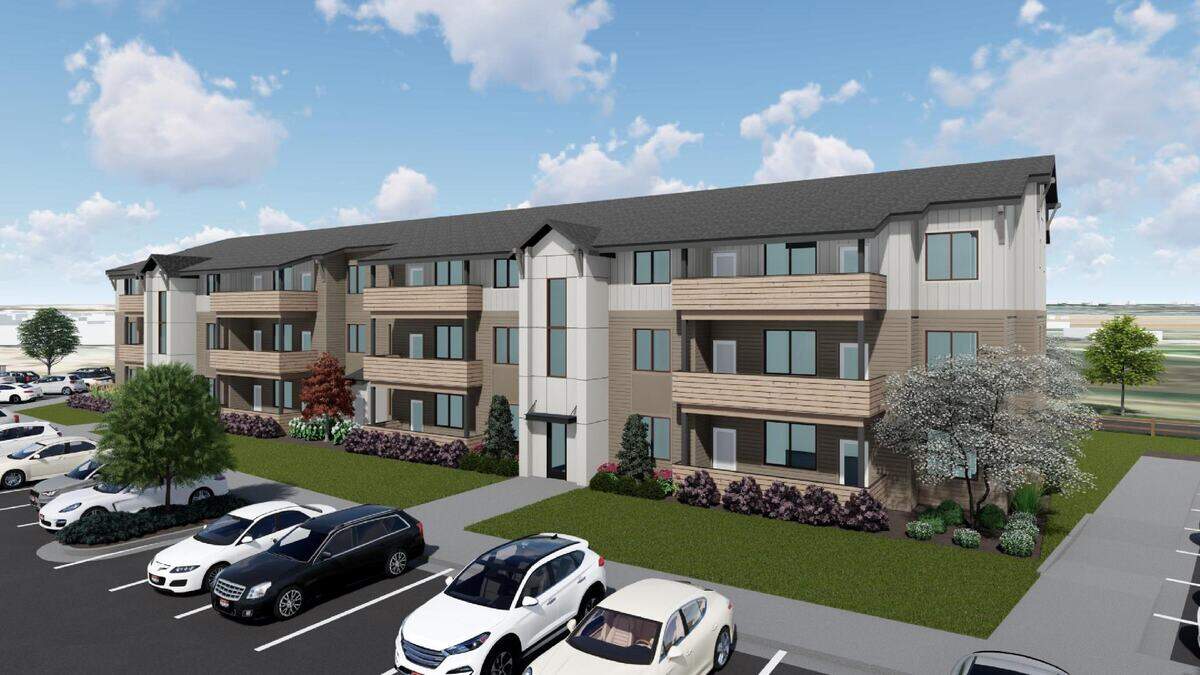
The development, headed by Jim Conger’s Conger Group, had previously been approved by the city for 216 apartments and 62 single-family homes on 21 acres of land on Franklin Road near the Ten Mile Interchange.
At the time, part of the project’s appeal was its mix of single-family and multifamily dwellings, which developers believed would “add to the housing mix within the surrounding neighborhoods and will add diversity of Meridian’s available housing opportunities,” the Idaho Statesman reported on the plan filed with the city in 2022.
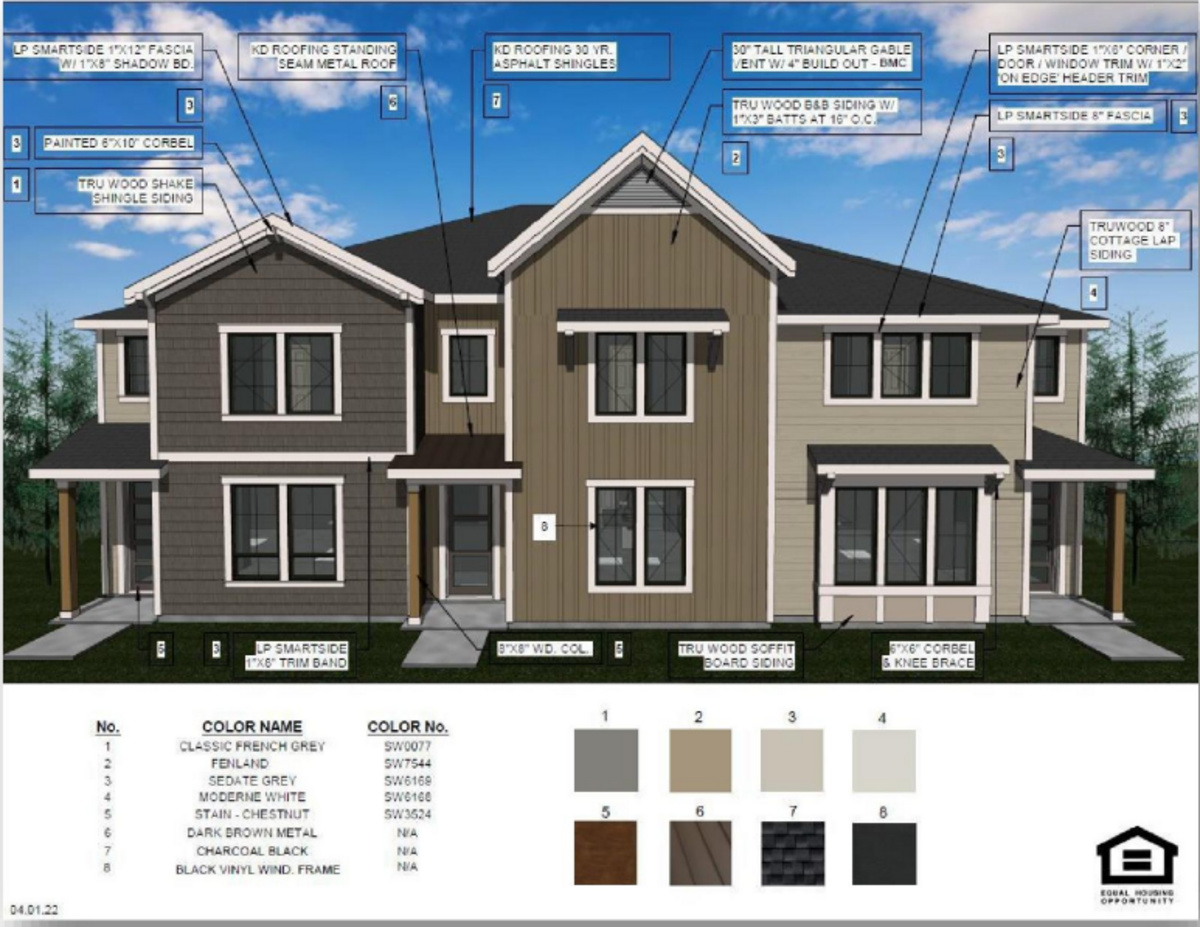
Developers also believed the small size of the apartments and accompanying “chalet” homes — 44 duplexes and 18 three-plexes — were attractive because they’d have a minimal impact on nearby schools, often a concern for residents in fast-growing areas like the Ten Mile Road area north of I-84.
The plan, called the Newkirk neighborhood, got the OK from city officials in April 2023.
Two years later, Conger Group is changing course — and the city is going along.
Developers ditch ‘economically unviable’ design
The Boise developer, most known for single-family residential developments throughout the Treasure Valley, filed a new request with the city nixing Newkirk’s multifamily component. Under the new plan, the 216 apartments would be replaced with 95 single-family homes, while the original “chalet” component would remain as previously approved.
“After two years, we have yet to find a partner to build and manage the 216 apartments component,” new plans filed with the city said.
The request went on to say that the developer met with “several reputable local apartment development companies” and that those discussions revealed “a few fatal flaws” in the apartment component’s design.
First, Conger Group wrote that satisfying tenants in “projects of this caliber” would require “an extensive amenity package” that would be supportable only by a much larger complex — with 400 units or more.
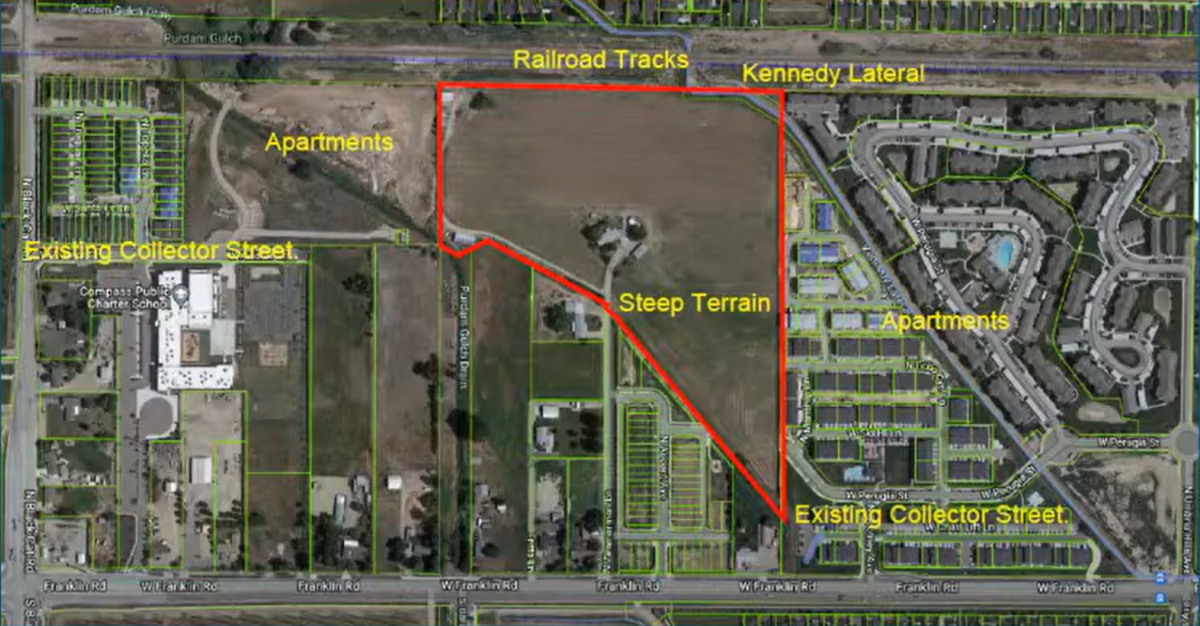
Second, the original plan for the apartments lacks “street visibility” from either a major road or intersection that would be needed to advertise a complex of that size. The developer plans to build a new collector road, North San Marco Way, which would diagonally cross the development on the north side of Franklin Road between Black Cat and Ten Mile roads, but expects that this new road would not have been enough to generate the necessary visibility.
Without scrapping the apartments, the plan said, the second component of the development would be “economically unviable” and would “remain vacant land.”
So developers instead asked for a primary plat for the new plan’s 95 single-family homes, as well as a development agreement modification that would allow them to make the switch.
The additional single-family homes would sit on roughly 10 acres on the east side of the overall development and would be built in a second phase, after the original 62 duplexes and three-plexes, which have received final plat approval and are awaiting building permits.
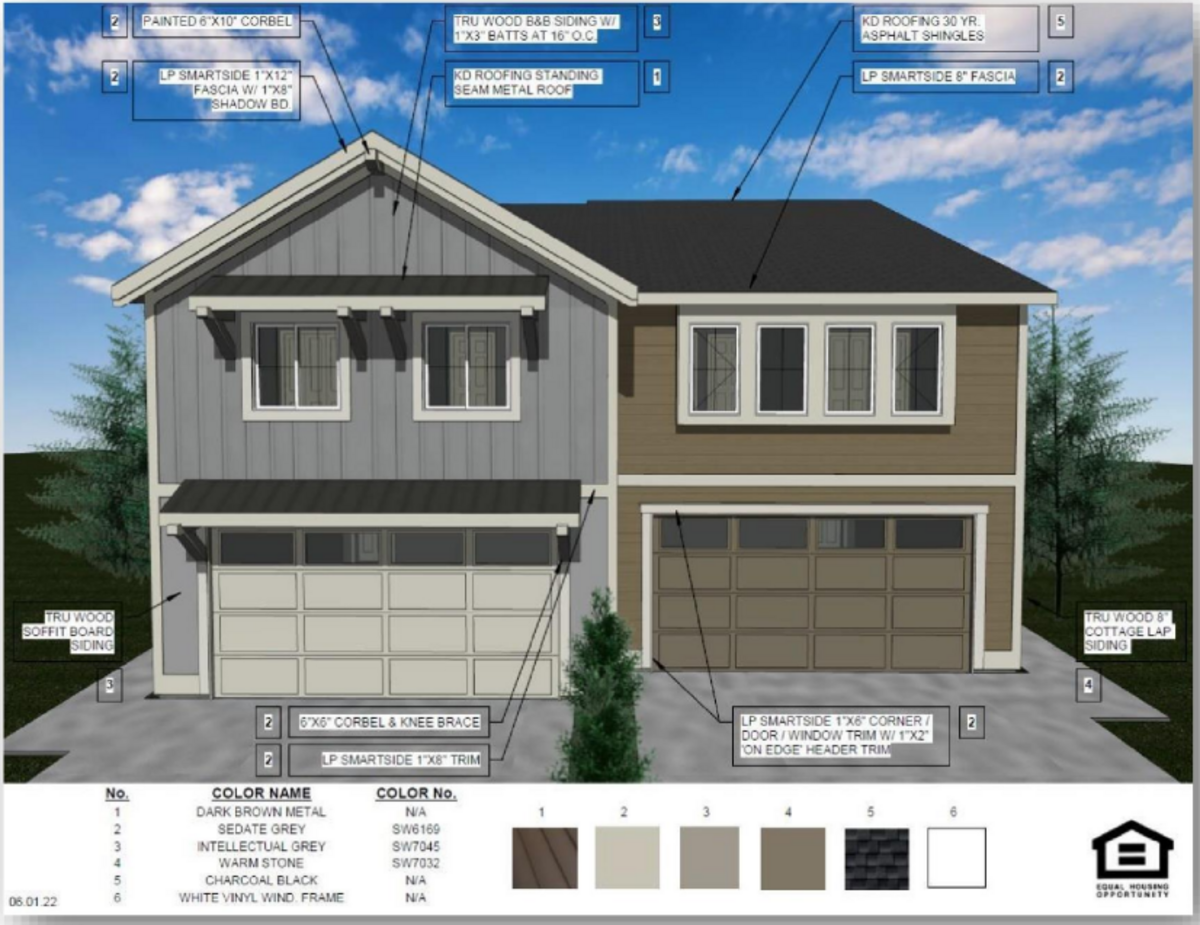
The new single-family homes would include 88 single-family, two-story homes and seven three-plexes with alley-loaded garages.
Unusual request follows market ‘downturn’
According to the city’s deputy director of community development, Caleb Hood, a request to reduce already-approved density in a residential project is uncommon.
“More typical is development attempting to get more density per acre, not less,” Hood told the Statesman in an email.
In the past roughly five years, Hood said he’s seen “people push for more and more density.”
“We went through a pretty hot wave there” with multifamily development, Hood said in a phone interview, though he observed anecdotally that the market seems to be “cooling off.”
As more multifamily units have come onto the market in Meridian and surrounding areas in recent years and rents stabilize, developers may find the prospect of building an apartment complex less attractive and may choose to “look at a different product type,” Hood said. Interest rates, which remain high, factor in as well.
“We’re seeing a downturn in multifamily, certainly, and that’ll go on for a while, likely,” Hood said, though he said that didn’t mean the city would stop seeing any applications for multifamily developments altogether. “Markets shift and change ... That’s real estate essentially. It’s up and down and all around.”
In Hood’s estimation, Newkirk may have “missed the peak” in terms of the multifamily market, for now.
A multifamily downturn in Meridian was also raised at a public hearing on March 4, where the City Council heard Conger Group’s request to drop the apartments from its plan.
“Do you feel like the market’s becoming kind of oversaturated with multifamily?” Council Member Liz Strader asked Hethe Clark, a lawyer representing the developer.
“Certainly the permitting activity for multifamily has fallen significantly compared to even one or two years ago,” Strader said.
Clark responded that the decision to drop the apartments was more about their lack of street visibility, but noted that there are “micro to macro” considerations.
“What I’m hearing anecdotally is that we’re starting to burn through the multifamily supply,” Clark told the council. “Folks are watching interest rates really closely to decide whether they’re going to jump back in ... Right now, I think a lot of things are in the air.”
Strader told the Statesman in an email that the decrease in multifamily application activity she’s observed “reflects a natural change in the real estate cycle considering the interest-rate environment, the high cost of land, and the high cost of construction.”
“We had a period of high activity and have a lot of inventory that likely needs to be worked through the market overall,” Strader said.
A TOK Commercial market report for the first quarter of 2025 showed that the Boise-area real estate market experienced a “moderate slowdown” in 2024 compared with 2023, with total transaction volume dropping 16%. The multifamily market led in terms of sales volume, recording $162 million last year. Still, capitalization rates, an indicator of how profitable a property would be for an investor, were lower for the multifamily market than other sectors including office, industrial and retail.
According to data from the city of Meridian, the number of multifamily units for which building permits were issued fell from 968 in 2022 to 840 in 2023, then fell again to 175 in 2024. No building permits have been issued for multifamily units yet in 2025.
Apartments scrapped in Meridian, stalled in Boise
The Newkirk neighborhood is one of a handful of residential developments changing course in the Treasure Valley in light of shifting market factors.
Last year, CenterCal, the developer responsible for The Village at Meridian, announced that it no longer planned to add 549 “luxury” apartments to the popular shopping center. The plan for the complex, which included two six-story apartment buildings connected by a sky bridge, was approved by the City Council in January 2023.
But Hugh Crawford, CenterCal’s vice president of property management, told the Statesman in December that the apartments wouldn’t come to fruition.
“Market demand for multifamily ... construction costs, lending costs — all that played into, you know, we’re going to move away from the residential component,” Crawford said by phone.
CenterCal would instead build more retail, restaurant, and entertainment, he said.
In Boise’s West End, plans for more than 400 apartments have stalled or stopped altogether, the Statesman recently reported. This includes plans for a seven-story, 272-unit apartment building that the city approved for 2600 W. Fairview Ave with the expectation that construction would start in spring 2023. According to Karl Maier, the listing agent at Platinum Idaho Real Estate at Silvercreek Realty Group, the development company in charge of the apartments ditched the plans, putting part of the site up for sale, because of poor market conditions.
An additional 169 apartments were approved at 2801 W. Fletcher St., with plans headed by Boise developer Jay Story. In 2021, the landowner tried unsuccessfully to sell the property, and the building permit has since expired.
The future is also uncertain for another development on Fletcher Street approved in 2021 to bring 358 apartments along the Boise River Greenbelt.
DeChase Miksis, a Eugene, Oregon, developer with an office in Boise, also had plans to build an 88-unit, six-story building in the neighborhood in 2022 but has pushed the pause button to wait for better market conditions. According to Dean Papé, partner at deChase Miksis, the development is still on the table and they’re working with the city to keep its approval in place.
“(We’re waiting) until the time is right when construction prices support it and the financial markets support it,” Papé told the Statesman. “The market has been pretty volatile the last couple of years.”
Another Boise developer, Roundhouse, won approval from Boise City Council in 2022 to build nearly 170 apartments called the Avens in the West End. Then the market fell out, said Patrick Boel, managing director of development for Roundhouse. The developer pivoted last year and now plans to build a 40-unit affordable housing complex instead — with the help of federal subsidies.
Density in Ten Mile area guided by plan
Members of the City Council and the Planning and Zoning commission were largely supportive of Conger Group’s request to decrease the project’s density, noting their preference for single-family development in Feb. 6 and March 4 hearings.
“I like this move,” Council Member John Overton said at the March hearing. “I like the single-family houses. I like the fewer units. I think it’s a far better fit.”
Still, from a planning perspective, the change may pose some challenges, because the area Newkirk is planned for was originally designated for denser growth.
The area is guided by the city’s Ten Mile Interchange Specific Area Plan, part of the city’s larger Comprehensive Plan. Adopted in 2007, the area plan called for development that would “look, feel and function differently than a typical commercial area or residential subdivision,” and provide “an exciting atmosphere for residents.”
Now, planners anticipate future services that would also make higher-density development more practical.
“We envision bus service along Franklin and someday something on the railroad tracks, right?” Hood said. “A light rail, bus rapid transit, commuter rails, something like that, that can move people via public transport. So that’s why the (comprehensive) plan has higher density there.”
Hood pointed out that the planned Newkirk neighborhood adjoins the railroad tracks and would be not far from a station that planners “envision” someday existing on the other side of Black Cat Road.
”The idea is, let’s get some more people within walking distance or biking distance to these train stations that can someday take that down to Boise State, or to their jobs in downtown Boise, or wherever, you know, wherever they’re trying to go,” Hood said.
Hood said the city “encouraged” Conger Group’s initial proposal for the Newkirk apartments when it was originally presented, given some of these density goals.
In the Ten Mile Interchange area, Hood said, the city’s plans include medium-high density housing — which can be accomplished through “a mix of dwelling types” — as well as a mix of commercial uses and open space. So developers have “flexibility” in demonstrating how their proposals contribute to the city’s Comprehensive Plan, because, Hood said, “That’s what the community expects.”
The city’s overall target density for the Ten Mile Interchange area is 12 units per acre, according a city planning staff report. The plan for Newkirk approved in 2023 provided 13.2 units per acre; the new plan offers a total of 7.2 units per acre for the two phases. This includes 9.4 units per acres on the new plat for Phase 2.
Nearby developments don’t seem to meet that target either, according to an analysis by city planning staff. Their analysis shows 529 units approved in five nearby developments, noting that the previous Newkirk plans would contribute to an overall density of 11 units per acre, still below target. The new plans bring that overall density to nine units per acre.
Many of the surrounding units, though approved, have not yet been built.
Bill Parsons, planning supervisor in the city’s planning division, told the Statesman he’s not concerned that residential development in the area is below target density. He pointed an area south of the planned Newkirk development which has become more residential than anticipated.
“Looking at the way the overall area is developing, there’s actually more residential uses in this area than anticipated ... So the land uses themselves are a little bit unbalanced from what the vision was originally intended to be,” Parsons said.
Though the new plans for Newkirk won’t boost density in the immediate vicinity, developers argue their design would still “add diversification” to South Meridian’s housing stock, according to the application narrative.
Council Member Strader agreed, noting that the attached duplexes and three-plexes provide “the right kind of middle ground” for the area.
The council unanimously approved the plan March 4.
Conger Group did not respond to the Statesman’s request for comment.
Reporter Nick Rosenberger contributed.
This story was originally published March 20, 2025 at 4:00 AM.