Idaho food company drivers asked for vote to drop Teamsters union. Here’s the result
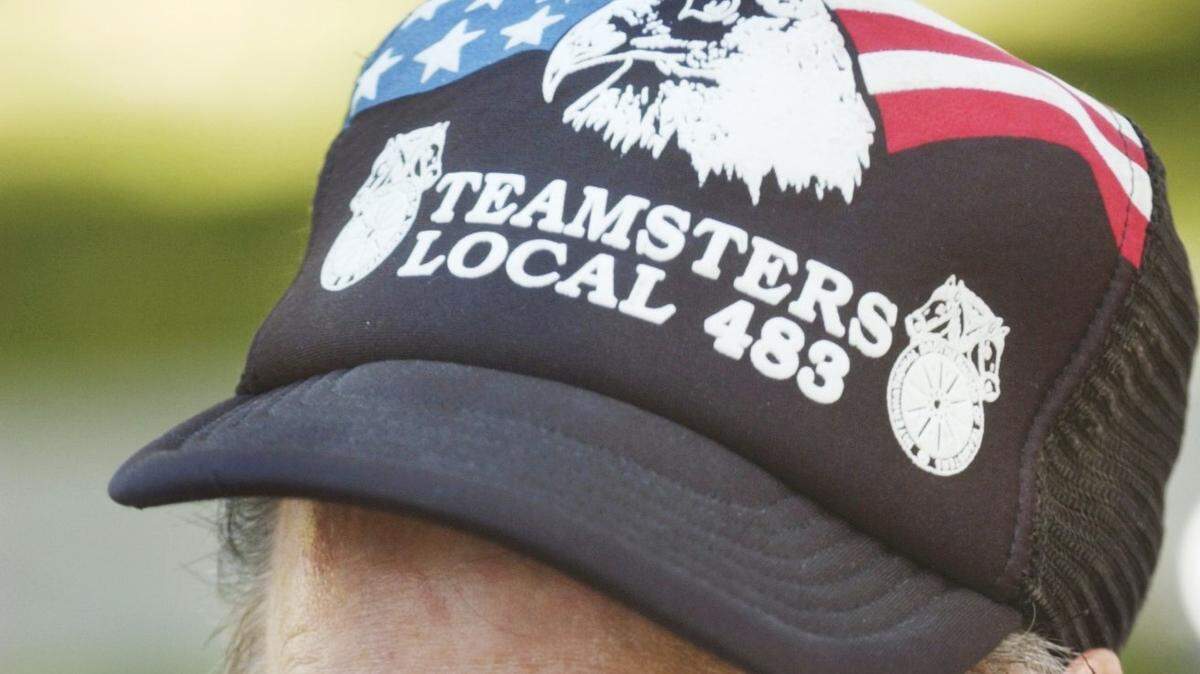
Raymond Stamp said he looked forward to a day when his salary driving a truck for a Meridian food products company would get boosted by more than $3 an hour and the company would contribute nearly $10 an hour to his pension account.
Two years ago, Stamp and his fellow drivers at Food Services of America agreed to representation by the International Brotherhood of Teamsters, which represents more than 3,000 workers in Southwest Idaho. After the company that supplies meat, produce and other products to restaurants and other industrial clients in the greater Boise area twice changed hands, the union days are no more.
Earlier this month, the drivers, now employees of Phoenix-based Shamrock Foods, voted to drop representation by Teamsters Warehouseman and Helpers Local 483. Stamp was one of just four drivers to vote to retain the Boise-based union. The 26-4 vote was nearly identical to the one two years ago in which drivers agreed to the union representation, Stamp said.
Shamrock didn’t want a union, Stamp said by phone, and managers planted doubts in people’s minds about the benefits of having one.
“They got into everybody’s heads thinking that the union’s gonna stop us from working 40 hours, the union’s gonna stop the overtime and all this other stuff,” Stamp said.
The Shamrock worker who petitioned for the union decertification, Curtis Thomason, was the same person who originally petitioned for the union to represent him and the other workers, Stamp said.
Thomason could not be reached for comment. A phone number listed for him in Twin Falls said the line was disconnected.
Shamrock has long been viewed as anti-union, and it once illegally fired a warehouse worker in Phoenix who was involved with a union drive. In 2019, the 9th Circuit Court of Appeals upheld a decision by the National Labor Relations Board that Shamrock committed “numerous unfair labor practices” during the warehouse organizing drive by the Bakery, Confectionery, Tobacco Workers and Grain Millers International Union.
The NLRB found that Shamrock had illegally threatened, interrogated and conducted surveillance on workers, promised a benefit to discourage union support, and confiscated and prohibited the distribution of union literature, among other violations.
After it was ordered to reinstate the worker, Shamrock paid the man $214,000 to waive reinstatement. Last year, the NLRB upheld the payout because the employee did not waive any of his rights under the National Labor Relations Act.
Effect of no Teamsters representation
By decertifying the union, the Idaho Shamrock drivers likely will lose out on at least $3 more an hour in pay and $9.61 in hourly contributions to the drivers’ pension plans, said Darel Hardenbrook, president of Teamsters Warehouseman and Helpers Local 483 in Boise.
Those figures, Hardenbrook said, are based upon the contract the union has in Idaho, Oregon and Washington with U.S. Foods, which sold the former Food Services of American operation in Idaho following antitrust concerns. The union believed it could negotiate equal terms with Shamrock, he said.
“Ultimately, it was up to the 37 workers who were eligible to vote,” Hardenbrook said by phone. “The biggest part of this — these employees, because they didn’t want to be certified, are at-will employees that could be fired for any or no reason, as long as it’s not in violation of state or federal law.”
The secret-ballot vote was conducted by the Denver office of the NLRB. Because of the coronavirus pandemic, the vote was conducted by mail rather than in-person. Thirty of the company’s 37 drivers in Meridian and Twin Falls returned ballots, and the results were tabulated Feb. 1 by an NLRB officer in Denver.
The vote had been delayed for months because of a change in company ownership to Shamrock. That change triggered an NLRB rule known as the “successor bar,” preventing a decertification vote for up to a year.
The workers were represented by the National Right to Work Legal Defense Foundation, a Virginia nonprofit that works to advance so-called right-to-work laws in the United States.
Idaho is one of 28 states with a right-to-work law. It prevents workers from being required to join a union or pay union dues to work for a unionized employer.
The foundation challenged the successor-bar precedent.
Tracking the anti-union drive in Idaho
In September 2019, U.S. Foods Holding Corp. bought FSA’s parent company, SGA Food Group, for $1.8 billion. Amid antitrust concerns by the Federal Trade Commission, U.S. Foods agreed to sell FSA warehouses in Idaho, Seattle and Fargo, North Dakota.
Shamrock Foods bought the Treasure Valley operation, including a depot in Twin Falls. It hired most of Food Services of America’s employees and recognized the Teamsters local in Boise as the bargaining representative of the Meridian drivers.
Under an Obama-era restriction, a new owner must bargain with a union for a reasonable amount of time before workers can try to vote out the union. The restriction follows rules dating back to the mid-1950s that limit decertification votes to the final 60 to 90 days before a union contract expires.
Under former President Donald Trump, the NLRB issued a number of decisions making it harder for workers to unionize and easier to remove existing unions from a workplace. Three of the four members of the present board are Republicans.
The Teamsters opened negotiations with Food Services of America on an initial contract for its Meridian and Twin Falls drivers in June 2019. Representatives for U.S. Foods joined the negotiating team after U.S. Foods announced it was buying the company. Several bargaining sessions were held, but an agreement was never reached.
After Shamrock took over the Boise and Twin Falls operations, it said it would not recognize any prior bargaining with Food Services of America or U.S. Foods.
Shamrock and the union met in December 2019 and in February 2020. Both parties exchanged written proposals and agreed to meet again in late March 2020, but those sessions were canceled because of the coronavirus pandemic.
Thomason and the other workers filed their petition seeking a decertification vote on May 26, 2020.
Last June, the NLRB agreed to review the legal precedent that protects unions from being ousted while a collective bargaining agreement is in force. In January, the NLRB board in Washington, D.C., ruled that issue moot, after the Denver office ordered the decertification vote to move forward.
Pay and benefits for drivers
U.S. Foods drivers in Idaho, Oregon and Washington are paid $27.10 per hour, plus the $9.61 an hour contributed to each employee’s pension fund, Hardenbrook said. That’s the scale that was being negotiated with Shamrock.
Drivers would have also qualified for credit for up to 10 years of driving for the previous owners. The amounts, starting at $2 an hour and increasing 50 cents per year, would be added to the pensions for each year of future employment.
Shamrock pays most of its nonunion drivers from $22.50 to $24 an hour in base wages, with one driver paid $24 an hour, according to a pay schedule provided to the union in August 2020 and given to the Statesman. The company also contributes about $500 per driver per quarter in a 401(k) retirement plan match, Hardenbrook said.
A spokesperson for Shamrock Foods declined to comment.
In another case involving Shamrock Foods, the National Labor Relations Board ruled in July that the company could ban employees from linking to Shamrock’s website in their personal blogs. That overturned a decision by an administrative law judge who found that the policy effectively discouraged employees from communicating with each other and the company about work-related concerns and disputes.
The makeup of the NLRB is expected to change. President Joe Biden fired the board’s top lawyer, Peter Robb, a Trump appointee disliked by labor unions. Robb, whose term was not scheduled to expire until November, was dismissed on Jan. 20 after he refused to resign.
His replacement, Acting General Counsel Peter Sung Ohr, already has reversed a number of guidance memorandums issued by Robb.