Meridian workers tried to oust Teamsters union. Government said no. Here’s what happened
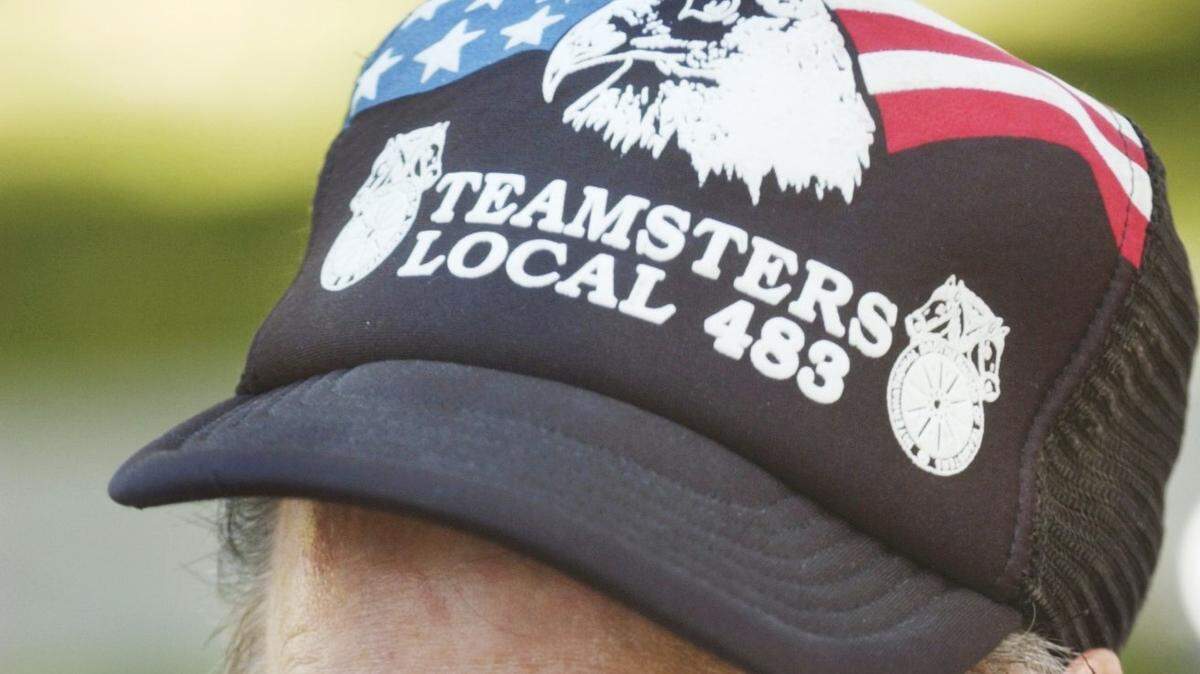
A delivery driver for a wholesale food company with a Meridian office is challenging a National Labor Relations Board ruling that prevents employees from voting on whether to continue to have a labor union represent them.
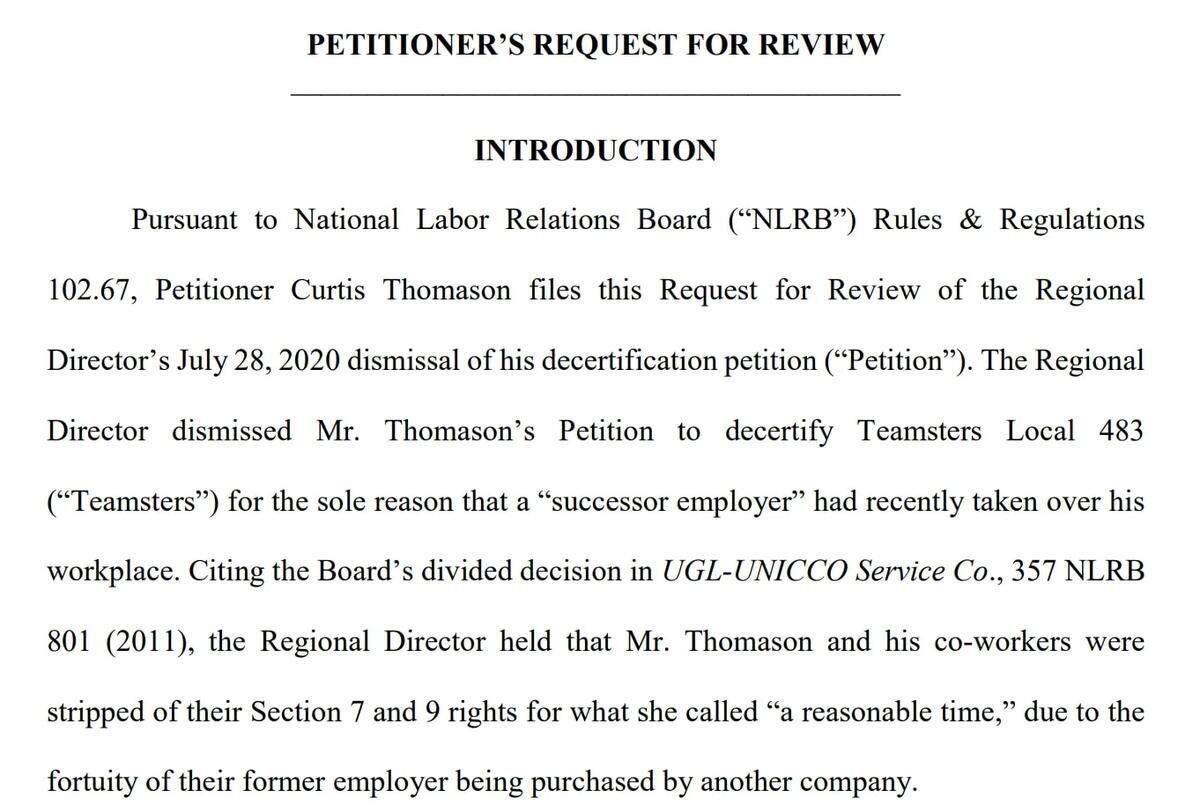
Curtis Thomason, a driver for Shamrock Foods, filed an appeal after Paula Sawyer, the NLRB’s regional director in Denver, dismissed a petition filed by Thomason and most of his 34 co-workers seeking to decertify Teamsters Local 483. Thomason is seeking review by the full NLRB in Washington, D.C.
Neither Thomason’s petition, nor a separate appeal filed by Shamrock Foods, says why the workers seek to decertify the union.
Workers have a right to vote to obtain representation by a labor union or to have a union removed. The hangup for the Shamrock Foods employees is that the company ownership recently changed, triggering an NLRB rule known as the successor bar, preventing a decertification vote for up to a year.
“Under NLRB rules and regulations there exists compelling reasons for the board to grant review and reverse the successor bar, which arbitrarily saddles Curtis Thomason and his fellow employees in Idaho with an unwanted incumbent union simply because the employer name on their paychecks has changed from U.S. Foods to Shamrock Foods,” the appeal claims.
Food Services of America previously operated food warehouses in Meridian and Twin Falls, supplying meat, produce and other supplies to restaurants and other institutional clients.
In September, U.S. Foods Holding Corp. bought Food Services of America’s parent company, SGA Food Group, for $1.8 billion. Amid antitrust concerns, U.S. Foods agreed to sell Food Services of America warehouses in Boise, Seattle and Fargo, North Dakota.
Shamrock Foods, based in Phoenix, Arizona, bought the Boise operation that same month. It hired most of Food Services of America’s employees and recognized the Teamsters local as the bargaining representative of its workers.
The Teamsters had opened negotiations with Food Services of America on an initial contract for its drivers in June 2019. Representatives for U.S. Foods joined the negotiating team after it announced it was buying the company. Several bargaining sessions were held, but a collective-bargaining agreement was never reached.
After Shamrock took over the Boise and Twin Falls operations, it said it would not recognize any prior bargaining with Food Services of America or U.S. Foods, according to the NLRB’s Tuesday, July 28, decision.
Shamrock and the union met in December and in February. Both parties exchanged written proposals. They agreed to meet again in late March, but those sessions were canceled because of the coronavirus pandemic.
Thomason and the other workers filed their petition seeking a decertification vote on May 26. A union bargaining session scheduled for May 28 was canceled in light of the petition filing. Meanwhile, attorneys representing the union and Shamrock exchanged a series of emails explaining their positions on various contract items.
Under an Obama-era restriction, a new owner must bargain with a union for a reasonable time before workers can try to vote out the union. The restriction follows rules dating back to the mid-1950s that limit decertification votes at a workplace with an existing contract to the last 60 to 90 days before the contract expires.
Under President Donald Trump, the NLRB has issued a number of decisions making it harder for workers to unionize and easier to remove existing unions from a workplace. All three members of the present board are Republicans.
Thomason is represented by the National Right to Work Legal Defense Foundation, a conservative group that backs challenges against unions and lobbies for pro-business labor practices.
“It is ridiculous that the NLRB has let union bosses block employees’ right to a secret-ballot vote on whether or not a union deserves to stay in power at their workplace based merely on a change in employers,” Mark Mix, the foundation’s president, wrote in a news release. “If anything, changes in ownership of a company should be automatic grounds for a decertification vote, because to the extent there was ever support for the union, it was to deal with the previous employer, not the new ownership.”
A call to Darel Hardenbrook, president of Teamsters Local 483 in Boise, was not returned.
Shamrock has filed a separate appeal, since the regional director’s ruling kept the Teamsters in place.
In June, the NLRB agreed to review the legal precedent that protects unions from being ousted while a collective bargaining agreement is in force.
Employees at a Delaware chicken processor, Montaire Farms, voted in July on whether to decertify the United Food & Commercial Workers Union. The NLRB ordered the ballots sealed until it reviews the so-called “contract bar” that shields the union from being voted out during the three-year collective bargaining agreement.
On July 6, the NLRB invited stakeholders to weigh in on whether the contract bar doctrine should remain as written, be rescinded or modified.
In 2018, the foundation asked the NLRB to remove three precedents that make it harder to remove a union, including the contract bar.
In January, the NLRB held that Shamrock did not violate the National Labor Relations Act by offering $214,000 to an employee unlawfully fired for organizing workers at a Phoenix food warehouse. The worker accepted the payout rather than be reinstated.
This story was originally published July 30, 2020 at 7:43 PM.