Boise developer plans 12-story senior-apartment tower across street from main library
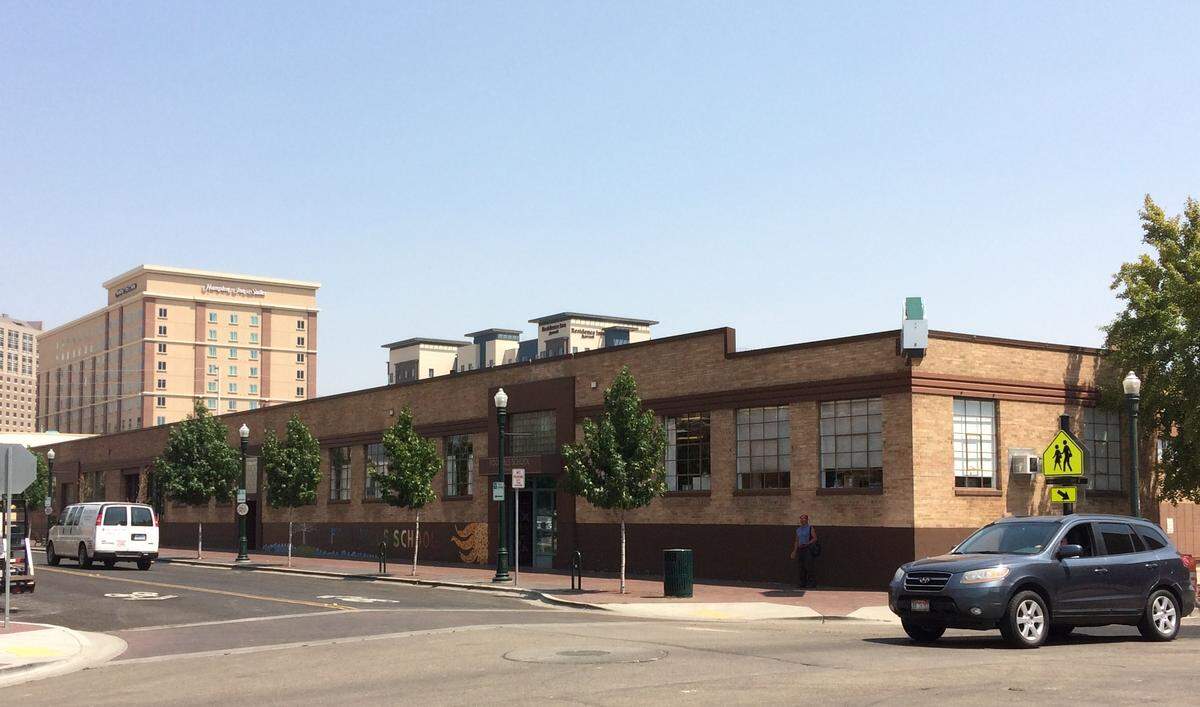
Two years ago, Boise city leaders sought to make a deal with a family-owned development company that owned an old, one-story warehouse across River Street from Boise’s main library.
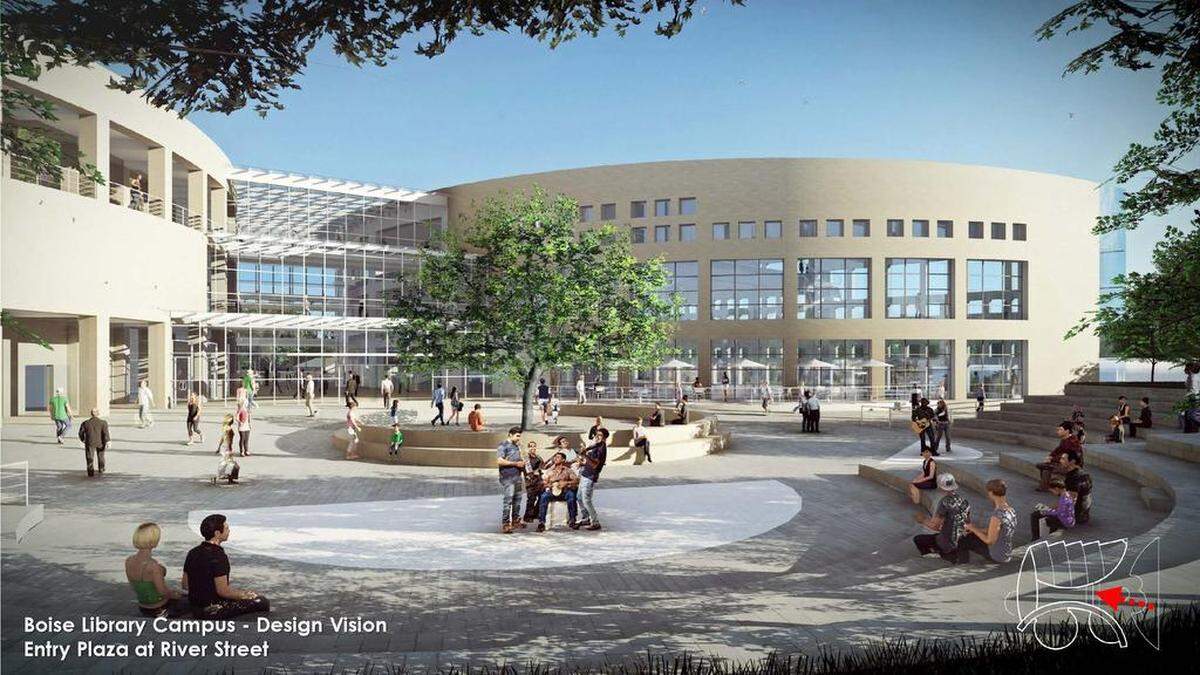
Mayor David Bieter and the City Council wanted to build a grand new library to replace the main library (itself an old warehouse). The new library, designed by a world-renowned architect, would need plenty of parking. The one-story warehouse at River and 8th Streets, known for housing the Foothills School of Arts and Sciences and annual Friends of the Library book sales, would make a good site for a parking garage.
Then angry voters messed things up. No, you cannot build a $100 million library without getting our permission first, Boiseans decreed last November, as they passed an ordinance to require a citywide election on any such thing. No, you cannot have a fourth term, they told Bieter, the new library’s champion, in a December runoff election.
Lauren McLean rode a wave of disaffection to the mayor’s job. She and the chastened City Council quietly set most talk of a new library aside. But city leaders still want one. Their reticence has left many questions unanswered. One of them is: What about that old warehouse across River Street?
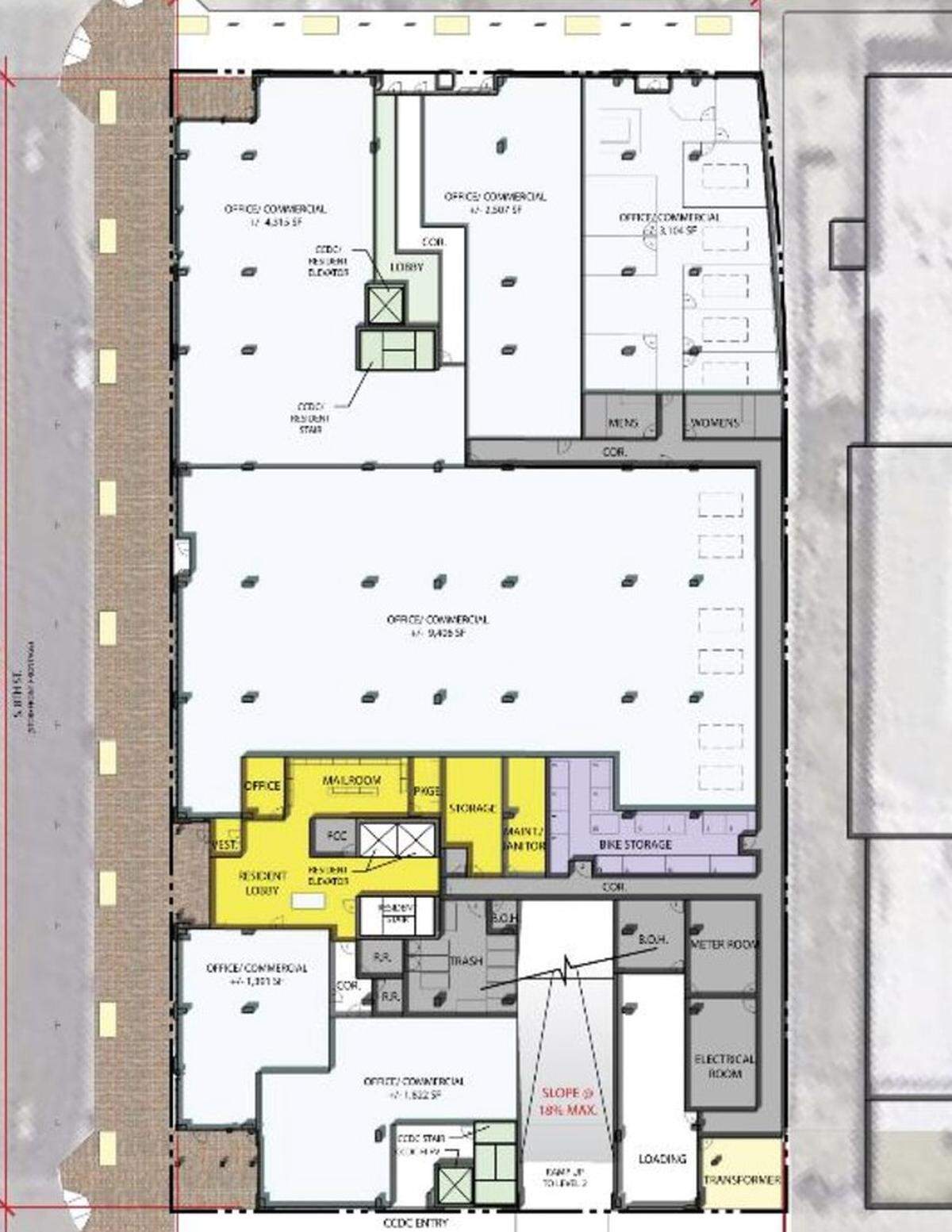
An answer is starting to emerge. The Boise family that owns the warehouse has teamed up with a developer of senior housing to tear down the warehouse and put up a 12-story building. It would include parking for the main library.
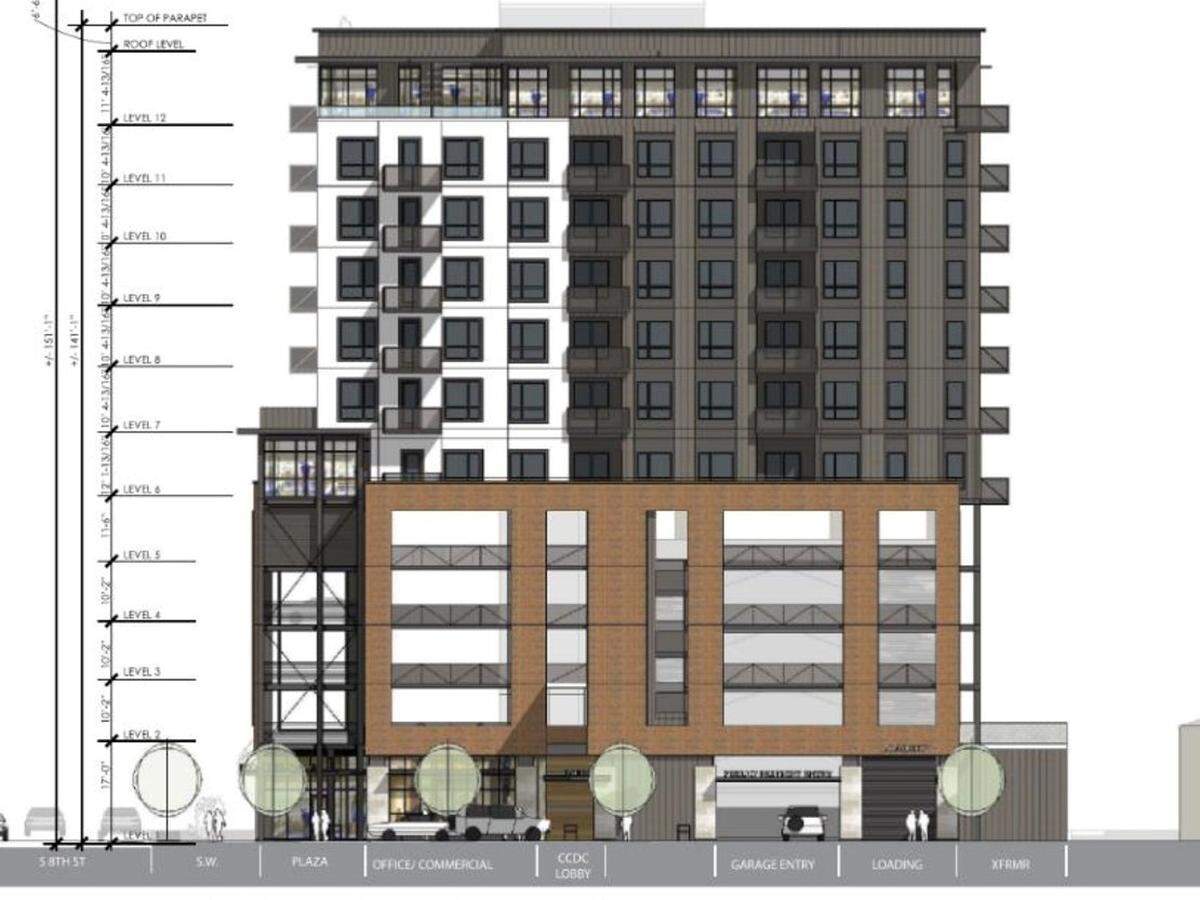
.jpg "Jordan Wilcomb senior housing 8th Street side view - 9-11-20 from CCDC widescreen (3).jpg")
The building would have 160 market-rate apartments on seven floors for people ages 55 and older, four floors of parking underneath them, and a ground floor for an anchor office tenant, plus smaller restaurants, stores or offices.
It would take up the entire half block along 8th Street between River and Fulton streets. It would cost an estimated $53 million.
The board of Boise’s urban renewal agency, the Capital City Development Corp., or CCDC, plans to take up the proposal Monday. The developers and the board will consider whether the agency should cough up $6.5 million to buy 210 of the project’s roughly 300 parking stalls for public use, plus $750,000 for infrastructure and streetscape improvements.
That’s similar to what the Wilcomb family — whose Wilcomb LLC owns the warehouse, and whose Jordan-Wilcomb Construction Inc. would build the tower — was discussing with the city two years ago, before voters spoke up. The tower’s public parking would still serve the main library. That presumes, just as the old discussion did, that a replacement library, if built, would go up on the current library grounds.
“We’ve kind of always seen opportunity for mixed use on 8th Street,” Timothy J. Wilcomb told the Idaho Statesman in August 2018. He is member of Wilcomb LLC and vice president of Jordan-Wilcomb Construction Inc. “Seeing the library and what it’s going to be gets us excited about what that area can become.”
Wilcomb did not return phone and email messages seeking comment on the new proposal. A partner in the senior-housing company said he was not ready to talk. A spokesperson for McLean said city planners had received no application for the project. The director of the urban renewal agency did not return a phone message.
The warehouse is mostly empty now; the Foothills School moved out last year. The building has stayed in Wilcomb family ownership since Timothy J. Wilcomb’s great-grandfather and grandfather built it in 1946.
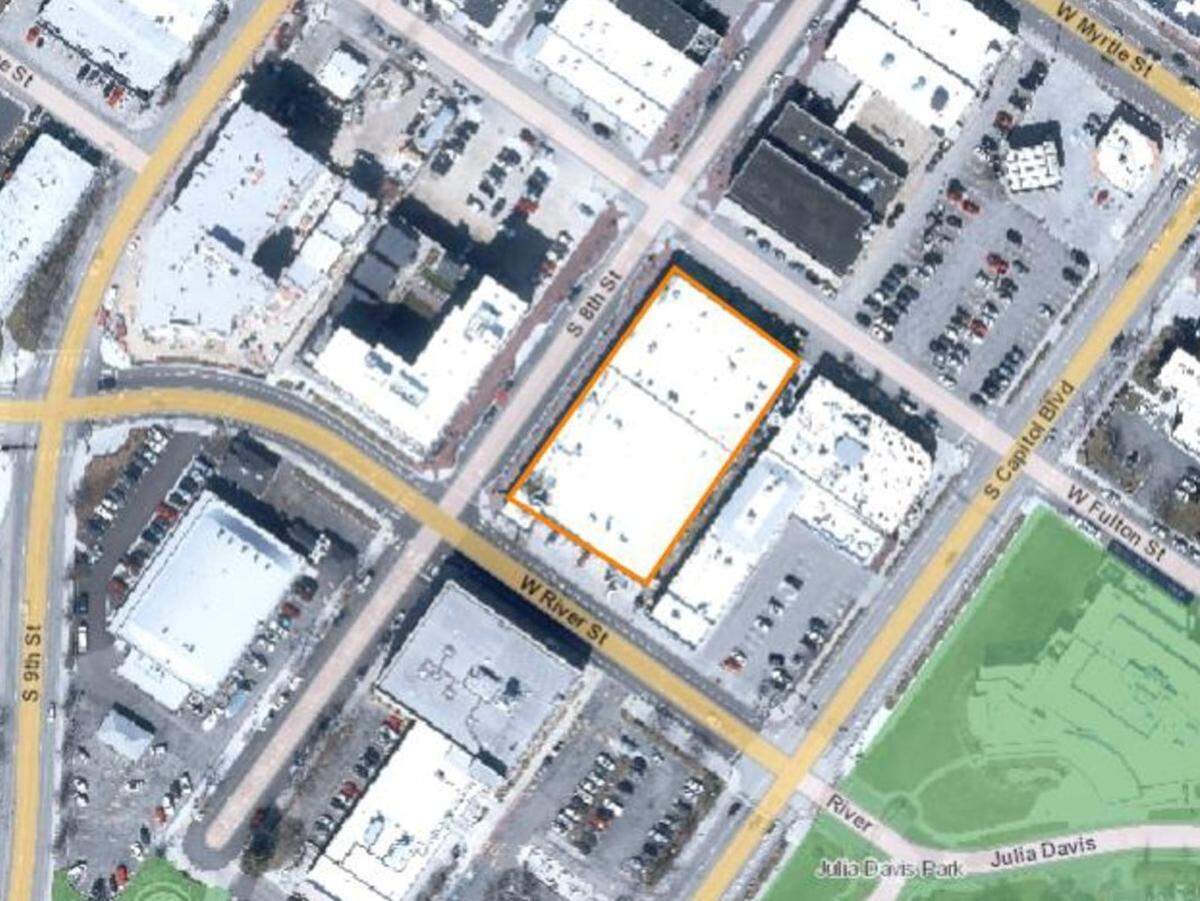
Then, that corner of downtown Boise was not the sought-after place it is now. Boise developer Michael Hormaechea’s The Afton condominiums have already capitalized on the neighborhood’s appeal: A one-bedroom, fourth-floor unit across 8th Street from Wilcomb’s old warehouse was being advertised Thursday for $659,000. The Boise River Greenbelt, the Anne Frank Memorial, The Cabin and Julia Davis Park make the area attractive for condos or apartments.
The apartments would be what the senior-housing industry calls “active adult” units. That means the businesses commonly offer residents amenities and social programming, but no services such as communal dining, housekeeping, transportation and emergency call systems, according to Seniors Housing Business, a trade publication.
“Call them age-targeted, age-restricted, 55-plus or active adult,” the publication wrote in 2017. “Just don’t call them independent living.”
The urban renewal agency embraced the concept.
“CCDC supports the proposed project, especially regarding the Active Adult Community Platform,” the agency’s staff said in a memo to board members posted online Friday. “This platform will serve a unique downtown demographic that is currently not found in existing and proposed projects in the River Myrtle Old Boise District.
“Additionally, the public parking will serve community resources such as the Library, Boise Art Museum, the Greenbelt and Julia Davis park, as well as neighboring businesses in an area with minimal on-street parking capacity.
“Lastly, transforming the vacant, existing warehouse into the proposed project will increase the county’s tax rolls on the site potentially as high as $45 million.”
The public parking would become part of the ParkBOI garage system that the agency runs. CCDC wants the tower’s parking levels to look nice, so their exterior appearance would require the agency’s approval. “CCDC desires an attractive façade of precast concrete, brick, or metal panels, or other quality materials,” the memo said.
About one-third of the apartments would have two bedrooms, half would have one, and one-sixth would be studios.
The proposed rents were not disclosed. The median monthly Boise rent for apartments now on the market is $1,050 for a one-bedroom and $1,240 for a two-bedroom, according to Zumper, a real estate listing service. But downtown apartments often cost more.
And apartments marketed as active-living senior units are scarce. Apartment.com listed just eight vacancies citywide on Friday, including two- and three-bedroom units at the Parkview Apartments on Crescent Rim Drive for $1,700 to $2,025 per month, and studio and two-bedroom units at Affinity at Boise on Baldycress Drive for $1,404 to $1,982 per month.
Jordan-Wilcomb Construction has been in business for 110 years. Its buildings include St. Joseph School on Fort Street, the Egyptian Theatre, C.C. Anderson’s Golden Rule Department Store that ultimately became a Macy’s and is now home to Athlos Academies; Garfield Elementary School, North Junior High, St. Mary’s Catholic Church on State Street, the old Ada County Courthouse east of the Capitol, and the Treasure Valley YMCA on State Street.
Wilcomb’s partner in this proposal is Global Senior Housing, a San Diego company founded by Ron Walsh and his son Nick, both Treasure Valley natives. Their projects include the Village Bungalows, a 74-home subdivision of $400,000 houses for people 55 and older at 2545 E. Ustick Road, about half a mile west of Eagle Road in Meridian.
CCDC’s staff said the agency can authorize the proposed spending through a program under which it deems the project “a significant public facility” that is “transformative in nature and of benefit to the community at large.”
The tower is located in an urban renewal district the City Council created that encompasses much of the western, southern and southwestern parts of downtown.
An urban renewal district relies on property-tax revenue. No new taxes are added, but a district siphons all increases in property-tax collections above the levels that existed at its creation for the next 20 years. For all other taxing agencies, revenue generated from taxes on property inside the district remains flat for those 20 years.
In addition to parking-garage partnerships downtown, CCDC typically entices private development in Boise’s five urban renewal districts by paying for streetscapes, utility connections and other improvements whose costs otherwise could deter investment.
This story was originally published September 11, 2020 at 4:00 AM.