Flu cases surge in the Boise area ahead of New Year’s Eve. What to know
AI-generated summary reviewed by our newsroom.
- Boise-area flu activity surged in December, with clinics reporting high positivity.
- State and wastewater data show very high community spread across southern Idaho.
- Health officials urge vaccination now; vaccines and antivirals remain available.
Did you get sick over the holidays? If so, you weren’t alone.
Cases of the flu are surging in the Boise area and across southern Idaho, according to the state Department of Health and Welfare’s weekly flu tracker.
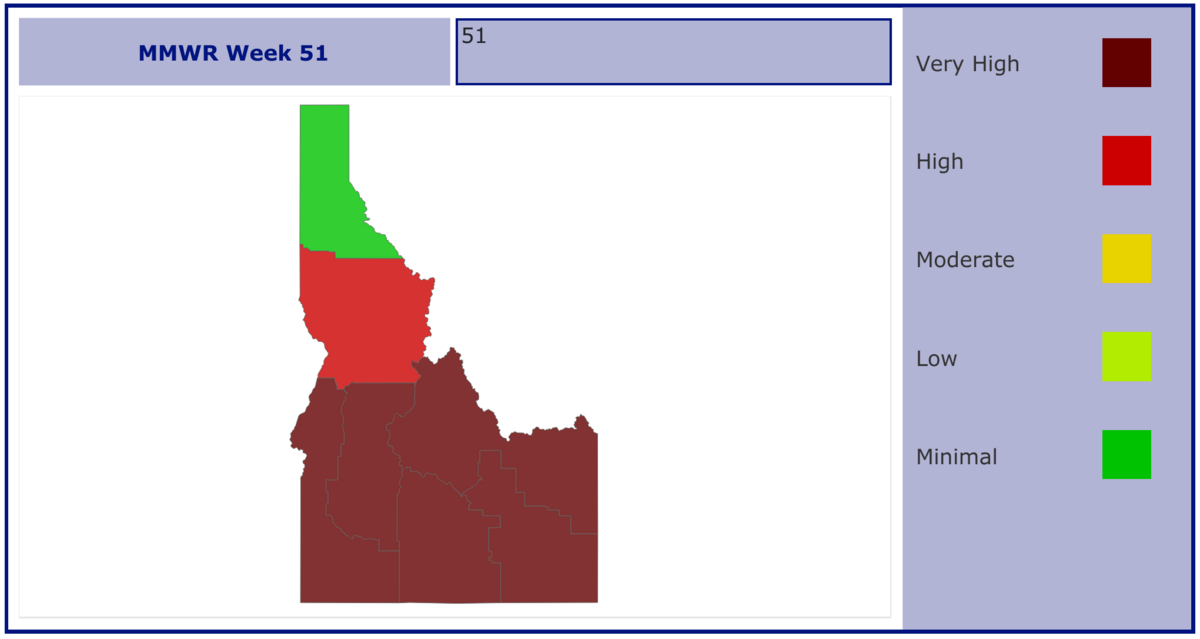
The most recent state data, for the week ending Dec. 20, shows a map categorizing a broad swath of the southern part of the state, spanning the Treasure Valley to the Tetons, as having “very high” levels of flu activity, marked in dark red. Central Idaho has “high” levels shown in crimson and North Idaho has “minimal” levels in green.
Dr. Ann Weiss, clinical director for Primary Health Medical Group, which has 24 clinics in the Treasure Valley, said in a news release Friday that flu has “skyrocketed” over the past week.
The medical group reported a 50% positivity rate and nearly 500 cases at its clinics for that week. Wastewater analysis sites in the area are also showing high levels of the flu, “meaning it is very prevalent in the community right now,” Weiss said.
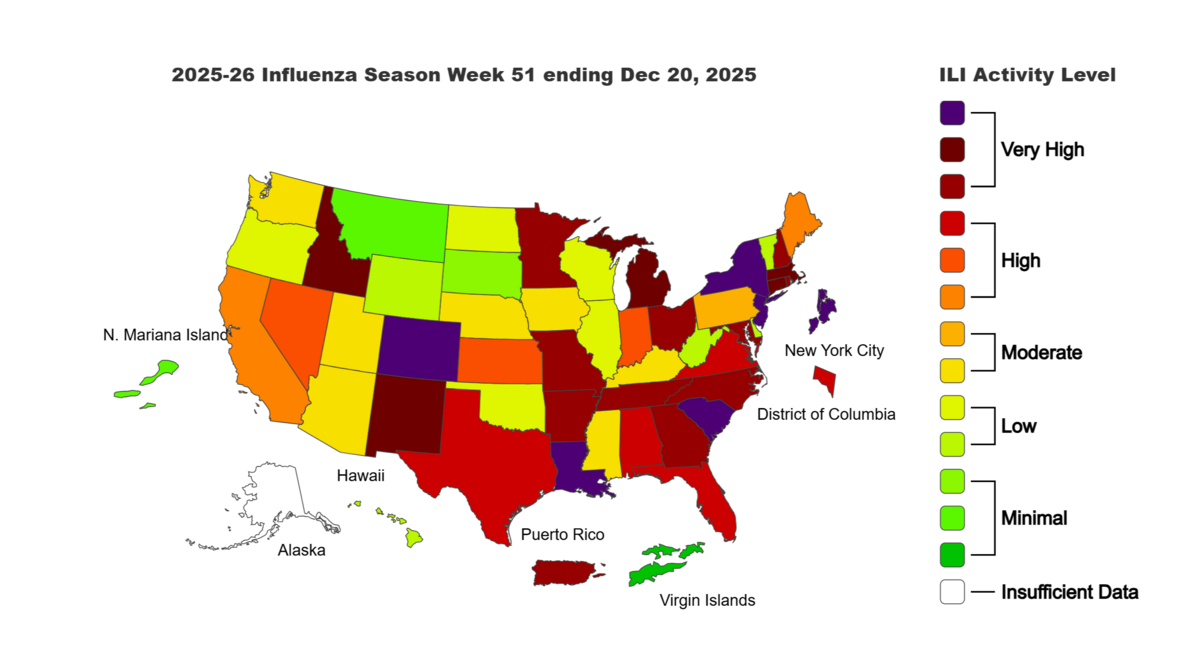
Idaho stands out in dark red among its neighboring states on the U.S. Centers for Disease Control and Prevention’s weekly flu map, which shows the worst of flu season impacting the East Coast and some southern states, and of course Idaho.
St. Luke’s Health System told the Idaho Statesman that it’s primarily seeing cases of influenza A in the regions that it serves, which include the Treasure, Magic and Wood River valleys plus Mountain Home, McCall and Fruitland. Infections began rising sharply in early December, spokesperson Christine Myron said.
Several pediatric patients with influenza and respiratory symptoms have been admitted to St. Luke’s Children’s Hospital in Boise, Myron said Tuesday by email. Infections typically peak in January, she added.
“Providers report that the flu vaccine is helping reduce the severity of illness among those who do become infected,” Myron said. “In contrast, unvaccinated individuals are more likely to experience high fevers and significantly elevated heart rates. Clinics are also noting increased gastrointestinal symptoms and dizziness, features that differ somewhat from what we’ve seen in recent flu seasons.”
Public health experts say it’s not too late to get the vaccine
The flu, or influenza, is caused by flu viruses, according to the CDC.
The viruses spread through tiny droplets made when people with the flu cough, sneeze or talk. The droplets can land in the mouths or noses of people nearby, the CDC says. People can also get sick after touching a contaminated surface and then touching their own mouths, noses or even eyes.
The CDC says that wearing a mask can help an infected person reduce the spread of the virus to others and help protect wearers from breathing in virus droplets from people around them.
Flu symptoms include cough, sore throat, runny or stuffy nose, headaches, muscle or body aches, fatigue, and fever or chills.
While many people recover within a few days, the flu can lead to serious complications and even death. Central District Health, which covers Ada County, reported last week the third flu-related death in Idaho this season. The woman who died was in her 90s and lived in the Boise area, according to a news release.
Dr. Christine Hahn, medical director at the Idaho Division of Public Health, said it’s not too late to get the flu vaccine, which is available at pharmacies, doctors’ offices and local public health districts. Most insurance providers will cover it, she said.
The flu vaccine is available to Idaho children under the age of 19 at no cost or a significantly reduced cost.
“It keeps people from getting really sick with the flu in many cases, and that’s really what we want that flu vaccine to do, is keep people out of the hospital, keep people out of the emergency department, keep people from feeling so sick that they’re going to miss a week or more of work or school,” Hahn said Tuesday by phone.
The flu vaccine is also available in the form of a nasal spray, under the brand name FluMist, which is now available to order and administer at home. The FDA approved its self-administered use in late 2024.
Flu season is ‘peaking right now,’ medical director says
Hahn said that she worries the area will see another surge among kids after they head back to school following the winter break.
“Don’t feel like the flu season is over,” Hahn said. “It’s not behind us. It’s definitely peaking right now, and it’s still worth getting the vaccine. And of course, just staying healthy in all the other ways that you can to protect yourself, like getting enough rest, eating healthy, washing your hands, staying away from other people who are sick, that kind of stuff.”
If you do get a bad case of the flu, especially for elderly or immunocompromised people, there are antiviral medications that can help, Hahn said. She encourages people to call their health care provider ahead of time to check eligibility.
Primary Health said in its release that patients who catch symptoms early may qualify for the treatment after being tested and evaluated in urgent care.
“That can really nip it in the bud,” Hahn said.
This story was originally published December 31, 2025 at 4:00 AM.