
Idaho brewery closes, put up for sale. Will others survive coronavirus? ‘It’s sad to see.’
When the coronavirus hit Boise, Clairvoyant Brewing was forced to make drastic changes.
Like other service-industry businesses, the neighborhood brewery at 2800 W. Idaho St. laid off all its employees. With taproom drinking shuttered for social distancing, Clairvoyant’s owners reduced hours, focusing squarely on to-go beer.
Kegs already full, they stopped brewing.
Weeks later, Clairvoyant’s beer sales are maybe 15 percent of what they were, co-owner Ryan Kowalczyk guesses. Still open, Clairvoyant has settled into a “holding pattern,” he says. They plan to brew beer again next week.
Clairvoyant, opened in 2017, is fortunate, he figures.
“We didn’t take any loans out,” Kowalczyk explains. “We started out with our own capital. So we don’t have that burden over our heads, which is great for us. I think we’re a little more able to weather the storm.”
Across Idaho, breweries are navigating the downturn with varying degrees of success.
“The breweries are really struggling,” says Stacy Connelly, owner of online beer portal Boise Beer Buddies. “It’s really sad to see.”
Debt level and business model determine whether a pint glass looks half full or half empty — and draining fast.
At least one Idaho brewery is a casualty. Bertram’s Brewery in Salmon recently announced that it was closing “owing to COVID-19.” Opened in 1998, the brewpub is for sale.
Will other local breweries meet a similar fate? Any brewery previously on the verge of failure could be pushed over the edge, Connelly says.
“There’s some of them that have such low margins,” she says. “... Most have had to lay off employees and there are many hoops to jump through for the Paycheck Protection Program.”
Economic challenges
Daniel Love, founder and CEO of Idaho’s largest-producing brewery, Mother Earth Brew Co. in Nampa, says that closures because of the coronavirus will boil down to finances.
“If you’re an over-leveraged business, you are at risk of losing it,” Love says. “Any business.”
Breweries that rely heavily on draft beer sales face a steep, uphill battle. With restaurants, bars and taprooms shut down, there are few places to pour product.
“If you are depending on what your taproom does, and what other restaurants and taprooms do, then you’re in for a tough haul,” Love says.
Taproom sales made up 90 to 95 percent of sales at Clairvoyant before the pandemic, Kowalczyk says. Loyal customers have helped by purchasing takeout beer in cans and growlers — or even buying gift cards. “The public support’s been really great,” he says. “We really thank them for that, because I think it does help keep the doors open.”
Breweries with a restaurant component — like Bertram’s — face equally stiff, if not more daunting, challenges.
After staying open with to-go food and beer, Boise’s oldest brewery, Highlands Hollow Brewhouse, 2455 N. Harrison Hollow Lane, announced April 7 that it was closing for a few weeks.
Edge Brewing Co. shuttered its downtown brewpub in March, then followed suit with its brewery and restaurant at 525 N. Steelhead Way on April 9, including curbside service and delivery. Edge has indicated that both closures will be temporary.
Idaho’s second-biggest brewery, Sockeye Brewing, 12542 W. Fairview Ave., reduced hours but continues to sell beer and food for takeout and delivery. Like Mother Earth, Sockeye produces large quantities of canned beer, which is distributed across Idaho.
Grocery store boom
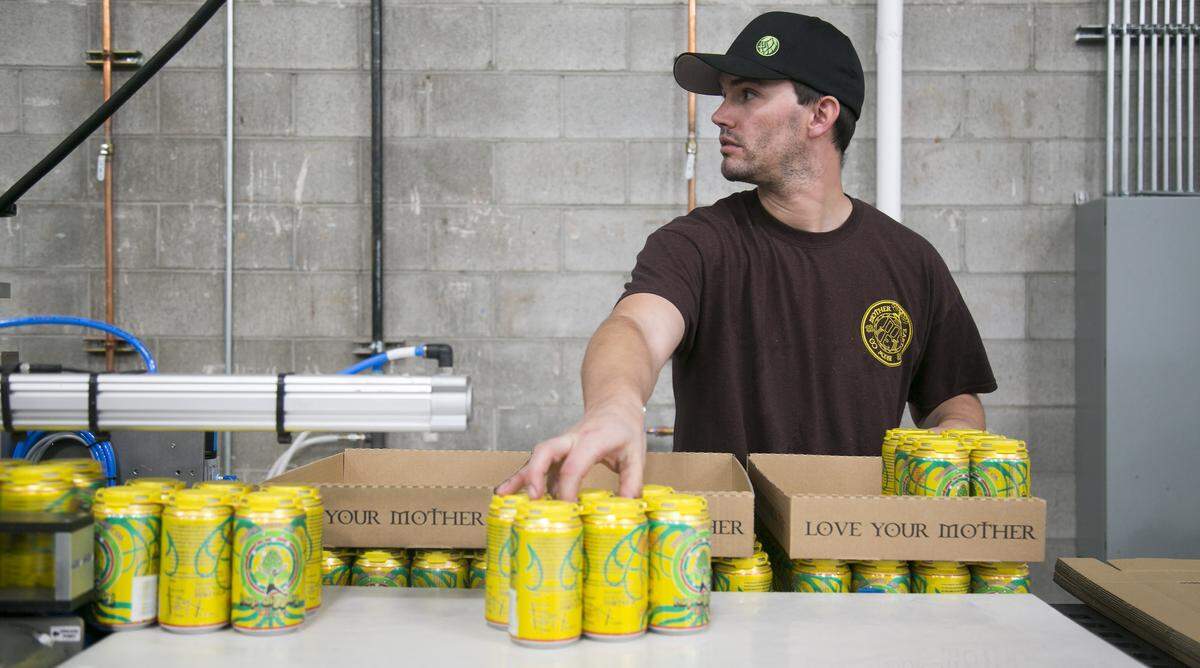
Overall, sales at Mother Earth have dropped around 40 percent, Love says. Mother Earth brews about 70 percent of its beer in Nampa and 30 percent in Vista, Calif., where a separate taproom also operated until recently.
The good news? “Grocery is saving our ass,” Love says. “We have the advantage of 10 years in the business, so we’ve had an opportunity to get our product in grocery all over the place.”
When the pandemic hit, canned beer sales at grocery stores exploded as customers bought goods in volume. “Week one was outrageous,” Love says. Since that first week, grocery store sales are an average 30 percent higher than normal, he adds.
About 60 percent of Mother Earth’s sales are off-premise — meaning grocery, convenience and liquor stores. Consequently, Mother Earth has not laid off any employees in Nampa; it’s actually hired two, Love says.
“We’re still brewing and packaging for 18 states,” he says.
In Vista, where Mother Earth provides draft-only product for Southern California and Hawaii, the brewery and tasting room staffs were laid off — “about 26 people,” Love says.
The grocery-store bump was so big that Woodland Empire Ale Craft, 1114 W. Front St. in Boise, quickly shuttered its taproom after initially offering takeout and delivery. Overall, sales are down 60 to 65 percent at Woodland Empire, president Rob Landerman says.
“Dollars for donuts it didn’t make sense to keep the taproom operating,” he says. “Overhead versus revenue didn’t pencil. We made the decision to temporarily cease deliveries due to inventory issues. Grocery store sales boomed, so we’ve been moving all of our inventory there. One we get back up and running full production we will hopefully resume deliveries for the duration of the shutdown.”
Woodland Empire’s taproom will reopen when it makes business sense. Until then, grocery-store sales are a “double-edged sword,” Landerman adds.
“Canning is our biggest expense, lowest profit-margin product we can produce and sell,” he explains. “So while it’s some money coming in, it’s also at a great cost.”
Getting creative
During the pandemic, local breweries are showing they are open to innovation.
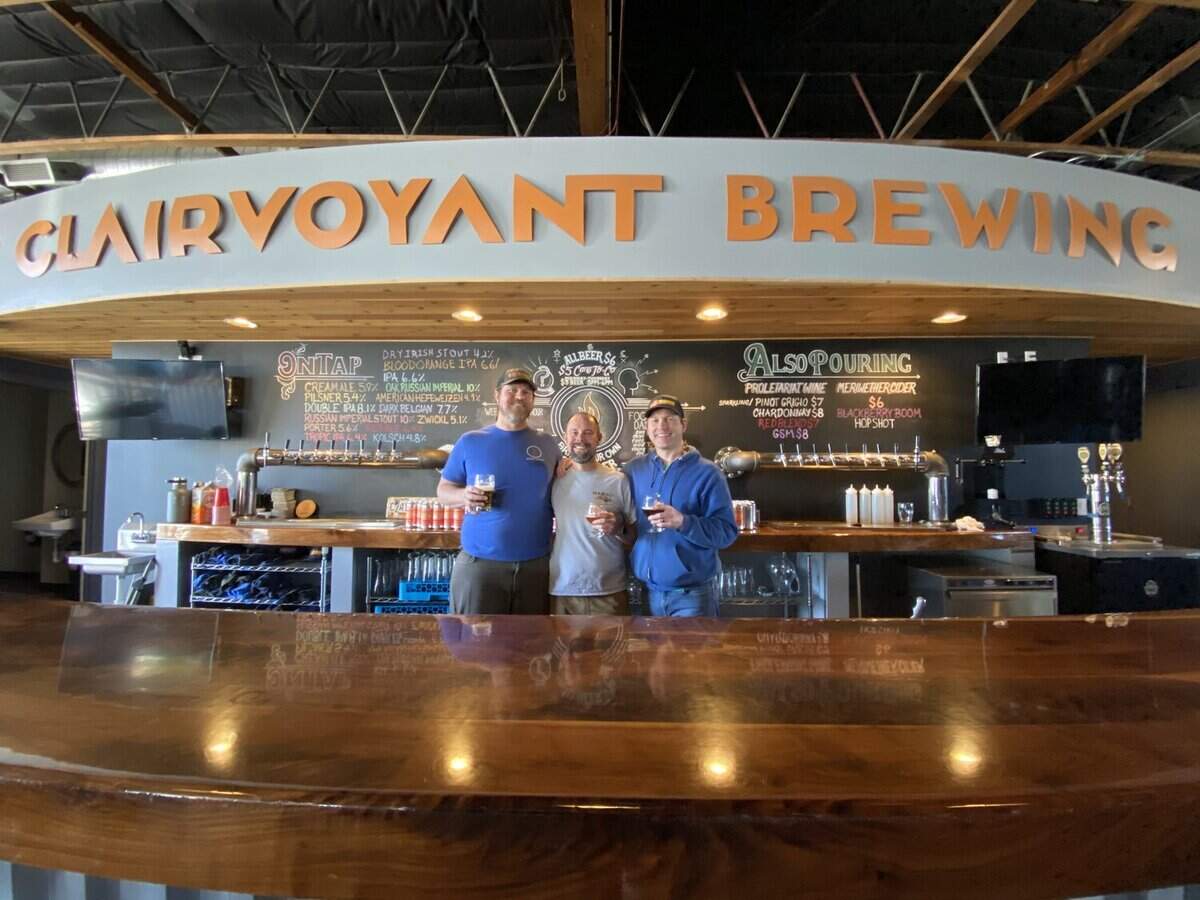
One of Clairvoyant’s co-owners, Tim Carter, is a chemist. So the brewery secured a military contract to make hand sanitizer recently, Kowalczyk says.
Clairvoyant also plans to use the slow time to improve its taproom and plan future growth. “It does give us time to do general maintenance things, clean up the place,” he admits. “That’s kind of nice. We’d rather be serving patrons beer, but we’re trying to make it positive here.”
Clairvoyant recently got the nod from the city to turn its parking lot into a patio, he adds. “We want to get started on it this week, if possible.”
Connelly, who works closely with dozens of breweries and restaurants through the Boise Beer Buddies discount card program, says it’s been encouraging to see creativity in the industry.
Bear Island Brewing, 1620 N. Liberty St., has been hosting a virtual happy hour through Facebook and Zoom on Thursdays, Connelly says. Boise Beer Buddies hosts a similar event on Fridays.
It’s not a brewery, but the beer-friendly Lounge at the End of the Universe offers online sales of growler beer with a yesteryear twist: You leave an empty growler on your step, and they deliver a full one.
“Pretty creative. Just like an old milkman,” Connelly says.
Local breweries face immense challenges right now. But most are alive — and need your help, she says.
“Crooked Fence is actually releasing a new beer in a couple of weeks, so they’re still brewing,” Connelly adds. “Go to the breweries if you can. Buy a gift card. .... Drink more beer.”
This story was originally published April 15, 2020 at 12:17 PM.