
Buy this $10 meal, Boise: Local collective to feed hungry, will employ restaurant workers
When dine-in restaurants were forced to close last month, Kris Komori got to work.
His new downtown restaurant, Kin, had been days away from opening for the first time. Instead, Komori starting making family meals in the gleaming, commercial kitchen. Along with co-owner Remi McManus and a volunteer crew of ex-staffers, he’s been having them delivered among Kin’s 20 laid-off employees, plus a couple of small businesses.
“It’s not a ton,” Komori said, “but it’s helping. And it’s connecting us, still, through the way we know how — which is food and service.”
Now, along with a handful of partners, Kin is driving a similar, more ambitious concept in Boise: City of Good. The grass-roots initiative launched its website Friday at cityofgood.com.
City of Good’s purpose is threefold, its founders say: to feed Idaho residents challenged by food insecurity and isolation during the coronavirus pandemic; to give jobs to former restaurant employees; and to find a path forward in an economy thrown into chaos by COVID-19.
“The whole point of this is not just a donation of a free meal,” Komori said. “It’s that we’re getting people back to work.”
A box meal can be donated for $10. A meal kit, which costs $100, includes two or three days worth of food for two people, including heat-and-eat options and fresh food with recipes.
For the time being, City of Good meals must be picked up. Delivery is planned later this month. Also coming soon: Consumers will be able to purchase meals for themselves, knowing it helps a good cause.
Some of City of Good’s logistics are still being worked out, said Mo Valko, director of marketing and merchandising for the Boise Co-op, one of City of Good’s founding partners.
“We’re flying by the seat of our pants,” Valko said, “but we’re making good progress.”
City of Good has filed paperwork to become a 501(c)(3) nonprofit, she said. In addition to seeking small donations, City of Good also is looking for larger-scale support.
The North End Neighborhood Association contributed $3,000. And the first $5,000 in contributions made through charitable-giving app Cauze will be matched by the Boise startup. “We’re already starting to see some donations come through Cauze,” Komori said.
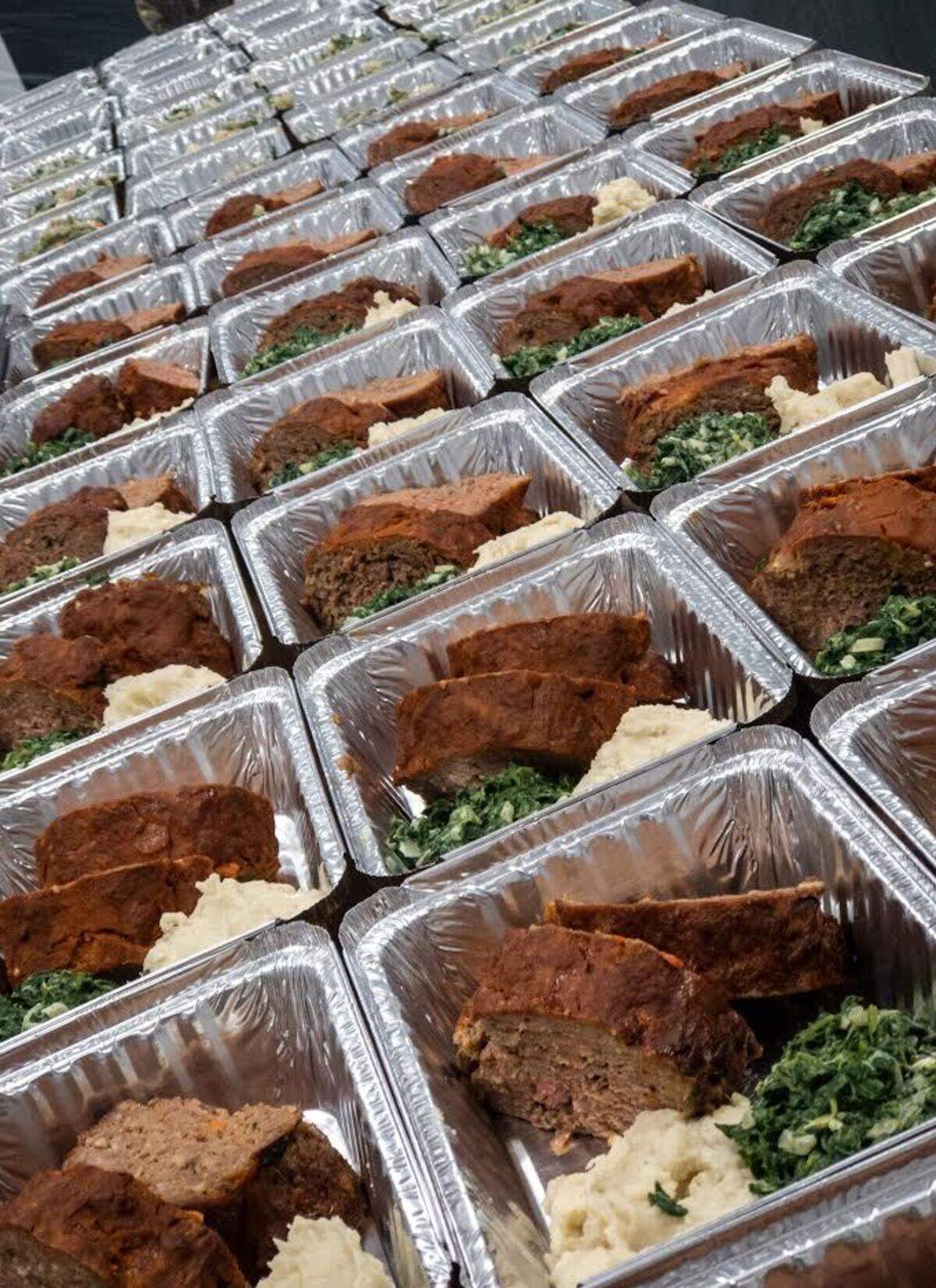
Bittercreek Alehouse, another founding partner, is making meals for homeless shelter Interfaith Sanctuary. The Co-op will start cranking out City of Good grub soon. “Our hope,” Valko said, “is to actually be feeding people out in the community beyond Interfaith Sanctuary by later this week.”
Many of those needy mouths will be ex-workers from the hospitality industry. Some of the laid-off employees at Kin still haven’t seen unemployment checks, Komori said.
Service-industry staffers brought on to work at City of Good will make $15 an hour. “Which is higher than a lot of places pay,” Komori said, “but we want to establish that as a baseline now. Because it’s kind of a new world in the food industry, right? We want to set a higher baseline.”
City of Good also plans to enlist more volunteers, Valko said, whether it’s helping with delivery or organizing orders for pickup.
Several restaurants that have signed on with City of Good aren’t actively participating yet. “At this point, they’re waiting for us,” Valko said.
Komori is hopeful that Boise will embrace City of Good.
“If it gets legs and the ball gets rolling,” he said, “we really are looking for other restaurants to come in. It’s meant to be collaborative with other kitchens. If they want to participate, we want to throw them some meals, get their people back to work, and also maintain the identity of these businesses.”
City of Good also will help keep farms rolling. The plan is to create meals using as much produce from local farmers as possible, said Komori, who was nominated for James Beard Awards in 2016, 2017 and 2018.
“We need to find out what they have in excess. We’re just going to make meals as nutrient-dense and as approachable as we can. This is very different than what we’re used to. We’re trying to get quantity out.”
Davis McDonald, co-owner of Fiddler’s Green Farm near Boise, said that Komori and the Kin crew already have proved to be valuable customers. They’ve even harvested damaged crops themselves and bought them.
“They got 80 pounds of spinach the other day that got holes in it or looked a little funky,” McDonald said, “but they’re going to cook it down and put it in a quiche or something. It’s not something we could have sold in a half-pound bag in the Co-op that would have been presentable as a green salad.”
It’s all part of adapting and helping. Teamwork is a valuable survival tool during the pandemic, Komori said. City of Good’s other two founding partners, branding agency Oliver Russell and Treefort Music Fest, also have played a big part in the initiative.
“One really humbling but also good thing in this,” Komori said, “is every restaurant in every town in the state, in the world, has been affected dramatically by this. Knowing that you’re not alone, and that you’re together in figuring this out, is really interesting.
“A lot of places always talk about wanting to collaborate and do this and do that, but sometimes it needs a bigger issue to really force you to do that. And this City of Good has been about collaborating with not just restaurants, but a lot of other businesses in the city.”
This story was originally published April 14, 2020 at 5:00 AM.