Boise State unveils bold plan for new athletic facilities, stadium and arena upgrades
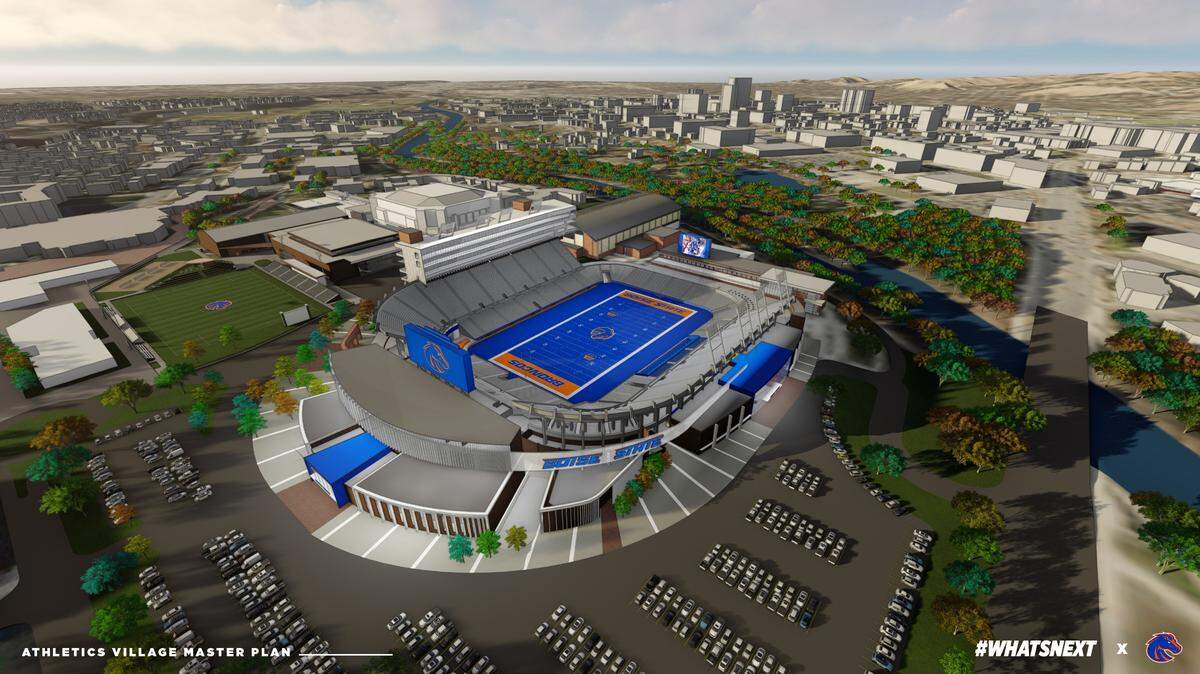
Leaders of Boise State’s athletic department have never been afraid to dream big.
Former athletic director Gene Bleymaier decided to install blue turf in Albertsons Stadium in 1986, even though many around the country laughed it off as a gimmick. The Bleymaier Football Center, which the Broncos still call home, is named in his honor, and the team’s field is now iconic.
Jeramiah Dickey, Boise State’s current AD, and his staff are thinking big, too.
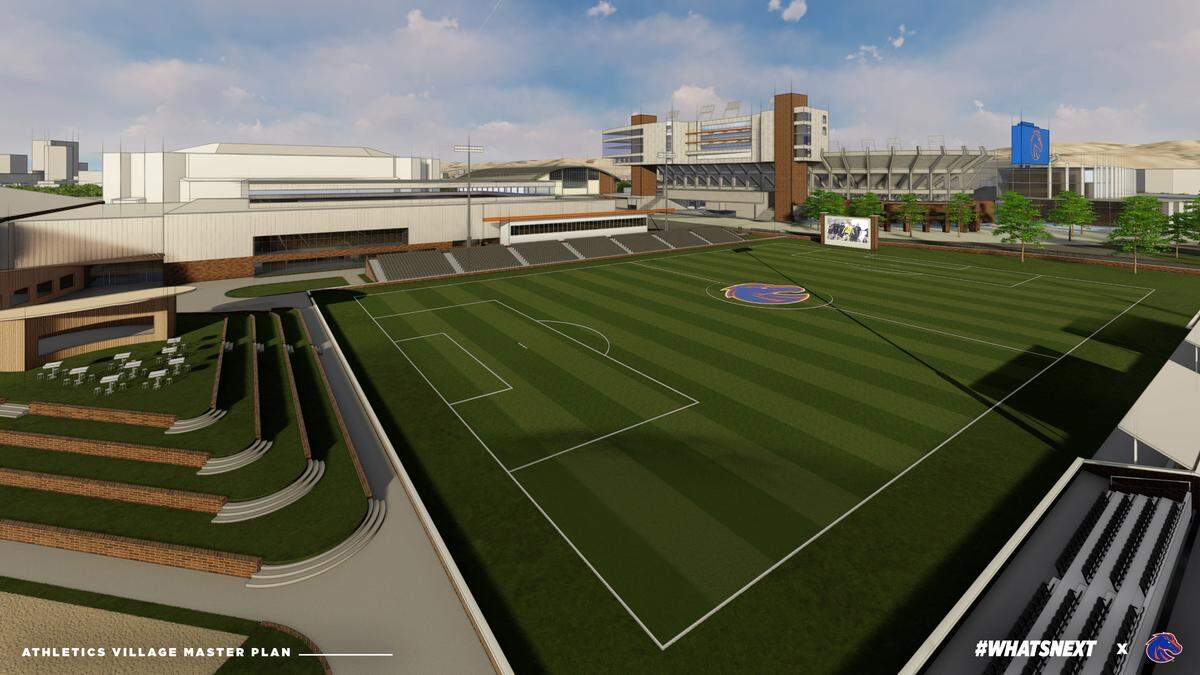
On Thursday, the school unveiled an ambitious vision that includes a new village for athletics on campus near University Drive, which is where most of the Broncos’ athletic facilities are located. The project would include the construction of a new soccer stadium and a 5,000-seat arena for Olympic sports programs.
The plan — much of which was the result of a facilities review done by outside consulting firm AECOM — also includes major renovations to Albertsons Stadium and ExtraMile Arena.
Boise State announced it was partnering with AECOM’s sports practice to conduct a comprehensive facilities analysis in August 2021. Included in the review were recommendations for how much square footage each team needs to accommodate players, coaches, staff and equipment.
“We said in August that this would be our first step in determining what our programs need in order to be successful, and to be able to recruit and compete at a national level across the board,” Dickey said in a statement. “Now our mission is to prioritize AECOM’s recommendations and determine what the future of Bronco Athletics is going to look like.”
Dickey shared the plan with Boise State’s coaches during a Zoom call on Tuesday. It was presented to university leaders on Wednesday morning, and then released for public consumption on Thursday.
But this is all still very much in the planning phase.
No timetable for completion or estimated costs were included. The project still has to go through a rigorous approval process, which includes getting the go-ahead from the Idaho State Board of Education and multiple committees at the university level, and securing permits from the city of Boise.
Dickey and his staff also still have to find donors to fund the projects.
Dickey was part of similar efforts to upgrade facilities when he was deputy athletics director at the University of Houston. That project included the construction of a new football stadium, and he said the whole thing took about 10 years to complete.
Boise State’s athletic director knows the risks that come with announcing such a grandiose plan before having approval and funding. He’s willing to take them because of how important upgrading Boise State’s facilities are to the future of all its athletic programs.
Shiny venues and new facilities are likely to attract more fans to games and events, which means added revenue for the university. State-of-the-art buildings could attract more recruits, which translates into more competitive teams. More wins and new facilities also could make Boise State more attractive to Power Five conferences, such as the Big 12, when talk of conference realignment heats up again.
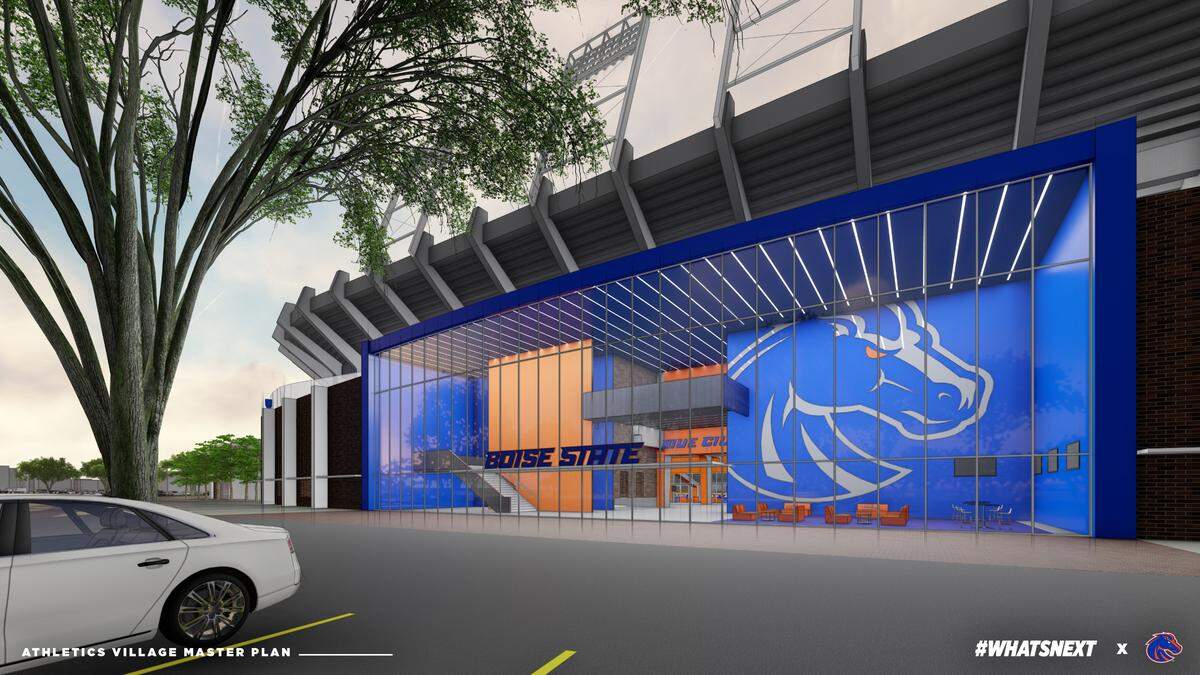
Albertsons Stadium
The most significant of the upgrades to the football stadium would be the construction of a new four-story Varsity Center, which would include a weight room, a nutrition center and offices for coaches, administrators and staff. It would require the demolition of the current varsity center at the south end of the stadium.
Other planned renovations include expanding the lower concourse on the east side to add more vendors and make it more accessible for fans. The plan is also to close in the north end, which would create a bowl effect and connect the upper concourse all the way around the stadium. The main concourse would see updated bathrooms and concessions.
The plan also includes the construction of a field-level club, where fans could have a drink while enjoying an up-close view of the game. Of course, the floor of the club would be the same shade of blue as the turf.
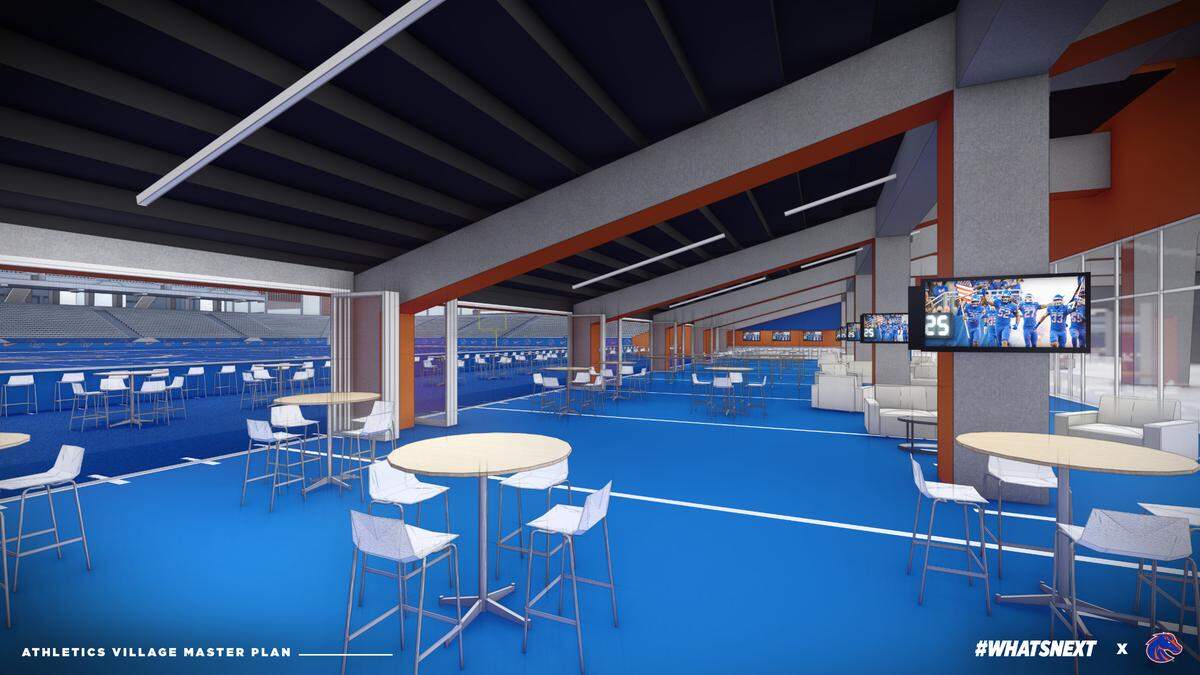
Added premium seating and loge boxes in the stadium are also part of the plan, and so are updated offices and a “war room” in the Bleymaier Center at the north end of the stadium.
Dickey said the seating capacity in the stadium would increase from a little more than 36,000 to 40,000. He also said the goal is to eventually be able to accommodate 60,000 fans.
Boise State previously announced that it’s seeking approval to add the largest video board in the Mountain West to the south end of the stadium. That project is being funded by a $4.5 million gift from Melaleuca, a health product manufacturer based in Idaho Falls.
It would be the first major upgrade to Albertsons Stadium since completion of the Bleymaier Center and installation of the video board in the north end zone in 2013.
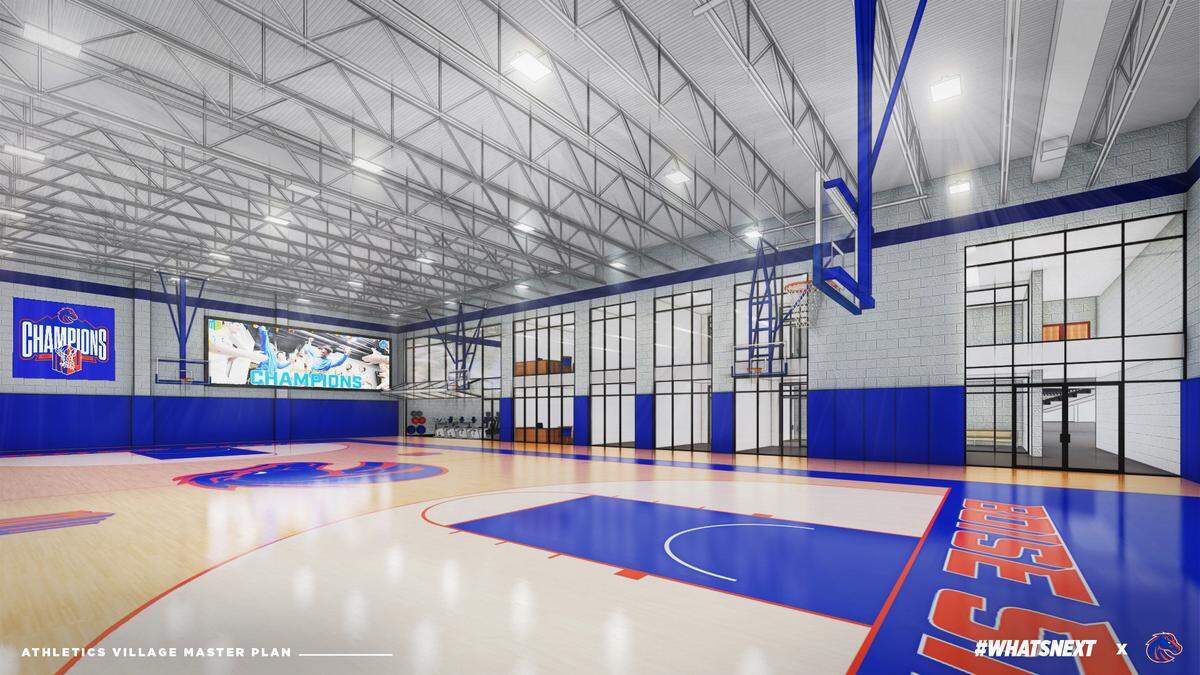
ExtraMile Arena
Planned upgrades to ExtraMile Arena and the Arguinchona Basketball Complex include transforming old racquetball courts into offices for the men’s and women’s basketball coaches, a weight room and a training area for the players. Boise State plans to add space to the back of the arena to store the supplies that were on the old racquetball courts.
The idea is to centralize operations for both teams, which currently have to use the weight room and offices in the Varsity Center.
The plan for ExtraMile also includes more premium seating and loge boxes, a new Mezzanine level sideline club and upgrades to the main entrance.
Olympic sports
Some of the most extensive construction in the Broncos’ planned athletic village revolves around the Olympic sports.
The installation of a new soccer stadium would take place where the football team’s grass practice field sits. The location of a new football practice field is yet to be determined, but renderings show it situated near the Greenbelt between the Caven-Williams Indoor Facility and ExtraMile Arena.
The proposed soccer stadium would have berm seating on one end, separating it from four beach volleyball courts. The entrance to the athletic village on University Drive would have to be adjusted, but doing away with that entrance and adding a roundabout is already part of a master plan Boise State released in 2015.
The planned athletic village also includes a six-court indoor tennis center and the construction of an arena that would seat around 5,000 and be home to the gymnastics and volleyball teams. The arena and indoor tennis center would be connected by a concourse.
Building the new arena would require the demolition of Bronco Gym, which is where the gymnastics and volleyball teams compete now. The gymnastics team would also get a new practice facility. The floor of the new arena would be big enough to accommodate a regulation basketball court, Dickey said.
Boise State’s plan also includes the instillation of a video board, field lights, turf and indoor batting cages for the softball team, which plays away from campus at Dona Larsen Park in the east end of the city.
This story was originally published April 7, 2022 at 2:00 PM.