Boise State basketball’s season was ‘complete extremes.’ They need ‘some dawgs’
A roller coaster of a basketball season came to a shuddering halt for Boise State on Wednesday night, leaving the Broncos hanging upside-down on a loop-da-loop.
Entering this week’s Mountain West Tournament in Las Vegas, Boise State was statistically the hottest team in the conference, having won five straight games, and carried momentum into what looked like a good draw, even as the No. 6 seed.
But any excitement ended abruptly when 11th-seeded San Jose State, which won just eight games all season, defeated the Broncos 84-74 in the first round.
The term “roller coaster” is overused in sports, but there’s really no other way to describe the Broncos’ 2025-26 campaign. It started with a home loss to Division II program Hawaii Pacific way back in November, and ended with a loss to a team that won three conference games all season.
“I’ve never had a team that could play at the two complete extremes,” coach Leon Rice said late Wednesday night, after the loss to San Jose State.
That Hawaii Pacific setback immediately sent fans into a tizzy about Rice’s team and its future, including doomsday predictions that the Broncos wouldn’t win 10 games.
The ship was momentarily righted with four straight wins before a pair of losses — to USC and N.C. State — in the Maui Invitational. Those losses were then counterbalanced by a road victory against Butler at historic Hinkle Fieldhouse and a third straight win over NCAA Tournament shoo-in Saint Mary’s in Idaho Falls.
But then the Broncos started 1-5 in Mountain West play. Boise State couldn’t put together 40 minutes of solid basketball or hold on to leads, and Rice said he was the main leader in the room rather than any of his players.
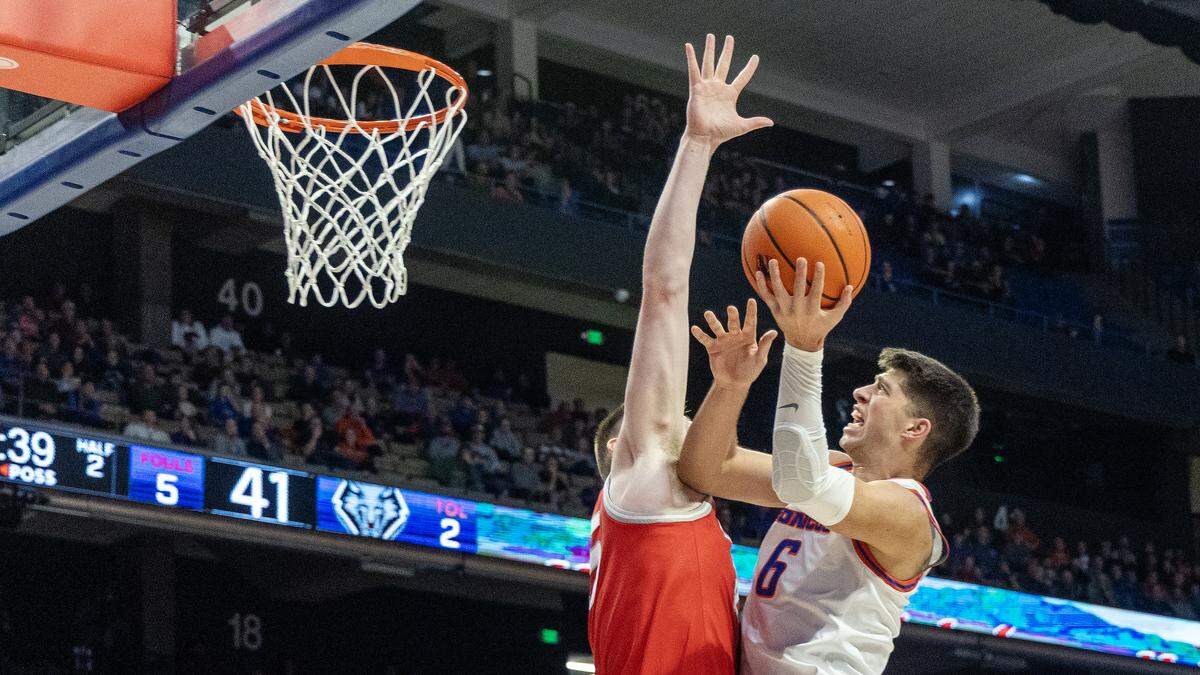
The Broncos went on to end conference play as the hottest MW team, winning 11 of their final 14 games. The finished only three games behind the league’s winner, Utah State, in what was a topsy-turvy Mountain West. And they were on the side of the bracket with higher seeds New Mexico, a team they swept, and San Diego State, a team they split games with.
It turned out that looking ahead was not a good idea when it came to this Boise State club, though.
‘The million-dollar question’ for Broncos
Boise State came into the 2025-26 season without all-time leading scorer Tyson Degenhart, and was coming off a campaign that saw a streak of three straight NCAA Tournament appearances end, but expectations were still high.
UCLA point guard Dylan Andrews made the switch to Boise State in the transfer portal, and Boise native Drew Fielder returned home from Georgetown to join a solid core of Javan Buchanan, Andrew Meadow and Pearson Carmichael.
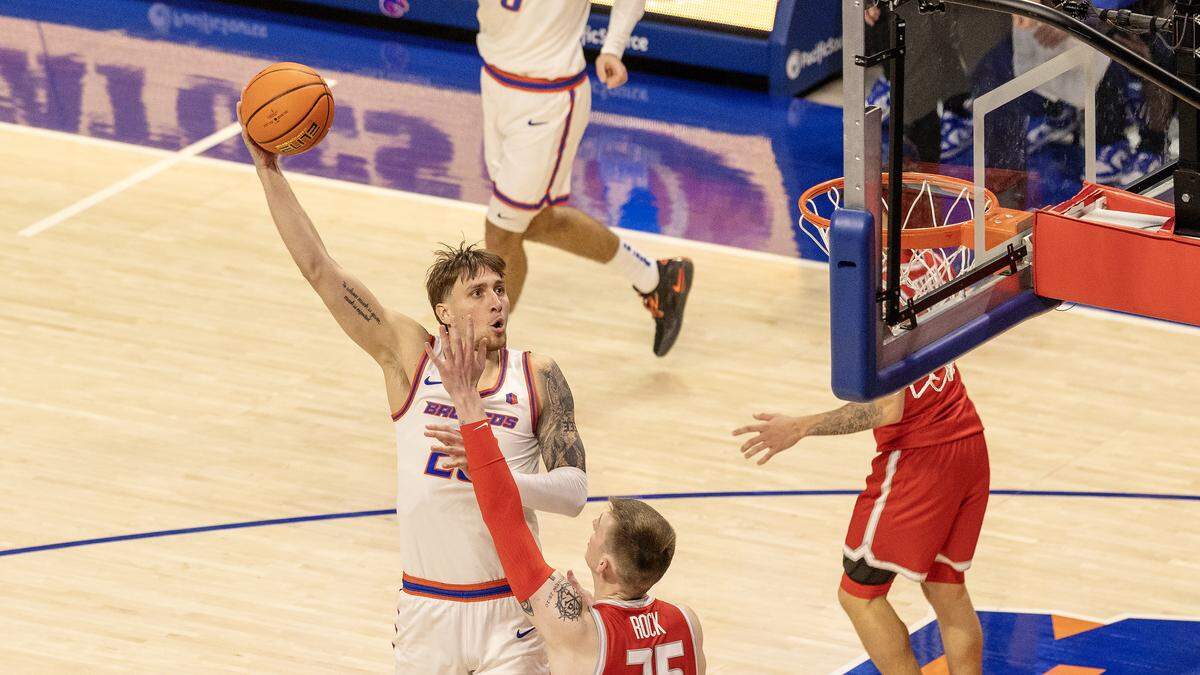
So why could the Broncos muster only a 20-12 record, go 12-8 in the Mountain West, lose at home four times, have three multigame losing streaks and entertain almost no March Madness hopes?
“That’s the million-dollar question,” Rice said Wednesday. “I’ve never had a team that develops those habits.”
There’s not really a single reason why this season was all over the map for the Broncos, who had seven double-digit losses. Fingers could be pointed at a lack of leadership, a lack of offensive creativity and even disappointing individual seasons.
But perhaps it can all be whittled down to a popular sports term in recent years: The Broncos had no “dawgs.” They lacked the alpha-male player willing to drag the team along, regardless of circumstances.
“We’re gonna have a team of people behind (scouting), and we’re going hunting for some dawgs,” Rice said.
San Jose State, despite its variety of other problems, had some dawgs. An injury crisis forced the Spartans to play just seven guys most of the season, and it wasn’t unusual for some guys to play all 40 minutes. Junior guard Colby Garland averaged over 20 points and 35 minutes played per game, and he had two 22-point performances against Boise State.
The Broncos’ leading scorer was Fielder at just 14.7 points per game. The junior forward had some great games down the stretch, but he scored just 12 against San Jose State on Wednesday, and dropped a goose egg against Fresno State two weeks ago.
Senior forward Buchanan also flashed signs of life late in the season, but he eclipsed the 20-point mark just four times.
Andrews sometimes showed why Rice and his staff made him a main priority last offseason, but that doesn’t excuse a midseason stretch in which he made just seven of 48 field goal attempts, prompting Rice to say it was a problem “only he can fix.”
“It’s crazy when you can have those high highs and then moments of just head scratching, like, ‘Who is this?’” Rice pondered about his team in the final moments of his Wednesday press conference.
What comes next for Boise State?
The unceremonious exit from the Mountain West Tournament backs straight into this summer’s entrance into the revitalized Pac-12 Conference.
The competition figures to be tougher, as games against NCAA Tournament regular Gonzaga, as well as meetings with Oregon State and Washington State, will replace games against Air Force, Wyoming and, well, San Jose State.
After 15 years at the helm of Boise State, there’s little chance Rice is headed anywhere. Of the program’s primary assistant coaches, Roberto Bergersen is the shortest tenured at four years, while Tim Duryea is wrapping up his eighth season and Mike Burns his 10th.
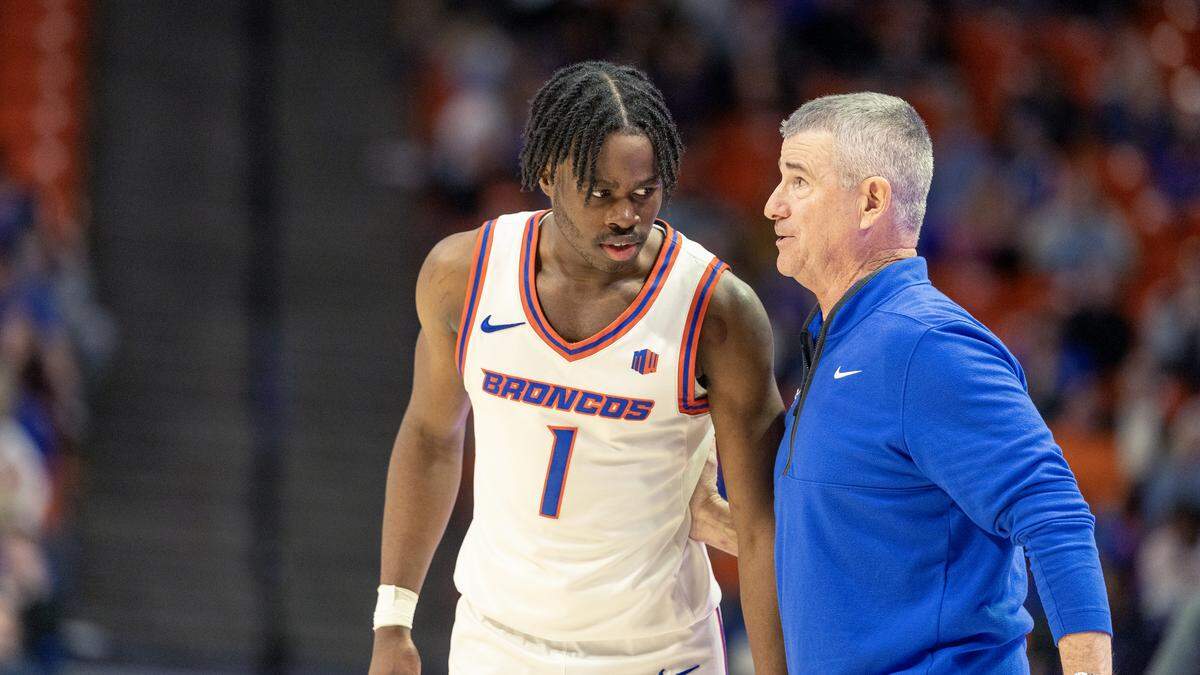
The Broncos will be losing some key starters, with Buchanan and Andrews graduating. And in this day and age, there’s no guarantee other players won’t enter the transfer portal.
Regardless, Rice and his staff will have the chance to go out and get players that can bulk up the roster. In the new Pac-12, strong and athletic guards will be needed, not just nimble 3-point shooters.
Another power forward like Fielder could go a long way, as well as a bigger point guard who’s happy to set screens and drive into the paint.
Ultimately? The Broncos need some dawgs.
“We’re gonna find them,” Rice said.