Pro soccer games at Albertsons Stadium? Boise State is planning for that
For many generations of Americans, soccer held a space in the national psyche as a game primarily played by children.
They’d learn the basics of the game in their early years, perhaps, before inevitably picking up a baseball bat or sliding on a football helmet.
Soccer was always a sport for the rest of the world to enjoy, while Americans focused on the other games.
But that’s not really the case anymore. The sport saw a 60% rise in viewership between 2018 and 2024, while a study by The Economist, released in May, indicated that soccer is now the third-most popular sport in America, overtaking baseball and trailing just football and basketball.
And all of these figures were recorded before the United States — along with Canada and Mexico — hosted the 2026 FIFA World Cup this summer.
Soccer is quickly becoming one of the country’s most-loved sports, and its growth in Boise — which in AC Boise now has a professional team, and soon will have a women’s pro team — has been evident for years.
Boise State is making sure that the university does its part not to get left behind.
As renovations at Albertsons Stadium are planned following the completion of the North End Zone Project this summer, one of the key stadium conditions that university officials want to ensure is that the field can accommodate a FIFA-regulation soccer pitch.
“We already have a wider field,” Boise State Chief Operating Officer Nathan Burk told the Idaho Statesman. “So why not lean into doing something amazing like an international friendly and tie into the Basque community and do something really cool and promote the growth of soccer in this country?”
It wouldn’t be the first time.
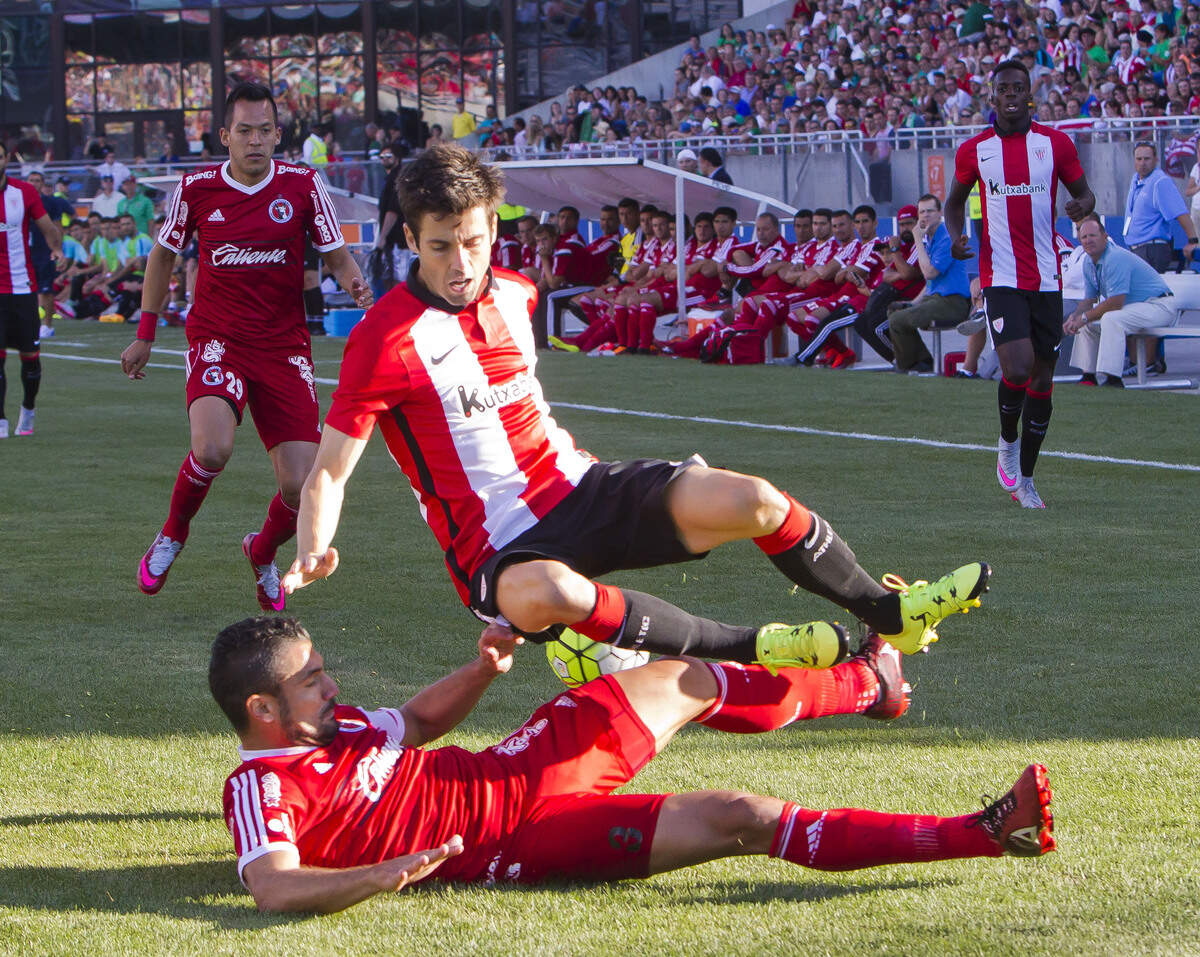
In July 2015, pro soccer made its debut at Albertsons Stadium, with Basque-rooted Spanish team Athletic Bilbao faced off against Mexican team Club Tijuana as part of the Jaialdi Basque festival celebrations in the city.

Burk said that Boise State wanted soccer to return to Albertsons Stadium for Jaialdi in 2020, but COVID-19 canceled the festival, and again in 2025, but construction around the stadium made it not feasible.
But Boise State’s goal isn’t just to host a soccer game every five years. Administrators would like to see pro soccer show up on campus at least every couple of years, with both international teams and club teams from abroad making stops in the Treasure Valley, Burk said.
“For us it’s really about just using our facilities in an appropriate manner year-round,” he said. “... The right thing to do is to find ways to use it to benefit the community.”
How does future Boise State construction fit in?
One of the future in-stadium improvements that Boise State administrators want to focus on is adding overbuilds at the bottom of both the east and west sides. The seating would extend 40 to 60 feet farther toward the field, Burk said, with plans to increase the stadium’s capacity from 36,360 to more than 40,000.
Crucially, these build-outs would still leave room for a FIFA-sized field to be placed over the blue turf. FIFA is the governing body that oversees world soccer, including the World Cup.
Somewhat like baseball fields, FIFA-regulated fields don’t have to all be the same size, but they do have to be within certain parameters. The smallest a legal soccer field can be is 109 yards long and 70 yards wide — that’s 11 yards shorter than a football field, but approximately 17 yards wider.
That, of course, means that the university has to make sure both the east and west sides of the stadium maintain some width.
“One of the guiding principles in the (stadium expansion) project was we want to be able to put on soccer games here,” Burk said. “... To be able to put in a FIFA-regulation field, that’s how we drew out the North End Zone, which then extends into the (overbuild) line that goes down the east and west sidelines.”
Don’t expect construction to start as soon as the North End Zone is finished later this year, though.
Burk said other improvements are needed on the east side of Albertsons Stadium first, specifically with the concourse to address overcrowding and fan congestion. While there’s no concrete start date for those improvements, Burk said he’d love to see both the east side of the stadium and overbuilds in place in time for either the 2028 or 2029 football season.
Grass or turf? How much will it cost?
When Athletic Bilbao and Club Tijuana played in Boise in 2015, a grass field was placed over the Broncos’ iconic blue turf — and that would be the case for any future games as well.
Burk said a protective layer would be placed over the blue turf, on which the real grass layer would be installed. It would cost approximately $300,000 to install real grass in the stadium for soccer games, and Boise State could try to get the most bang for its buck by hosting games in short succession.
Another option, Burk said, would be for Boise State to install an iron deck — the type of large, hard-floor deck used for concerts. This would also cost an additional $250,000 to $300,000, Burk said, but it could be used for music events and act as a protective barrier for the blue turf beneath. Going this route could see Albertsons Stadium host a plethora of non-football events in a short span of time.
With all these costs involved, Burk said he wouldn’t expect soccer games to generate as much revenue for the department as the Hot Wheels Monster Truck event or the Banana Ball World Series games this summer. However, it’s money nonetheless that would go toward “deferred maintenance, NIL, feeding our student-athletes, paying our coaches, retaining talented staff,” he said.
Most importantly, while the department aims to make a profit from soccer events, the games would remain family-friendly and affordable.
“This is a community event, so we want to keep ticket prices reasonable,” Burk said.
“It’s why we’re doing Banana Ball. It’s why we did Hot Wheels,” he continued. “We haven’t done those family entertainment-type events (before), and this one is kind of in that same neighborhood.”
This story was originally published July 13, 2026 at 11:57 AM.