World Sports Humanitarian Hall gets permanent home in Idaho just before founder’s death
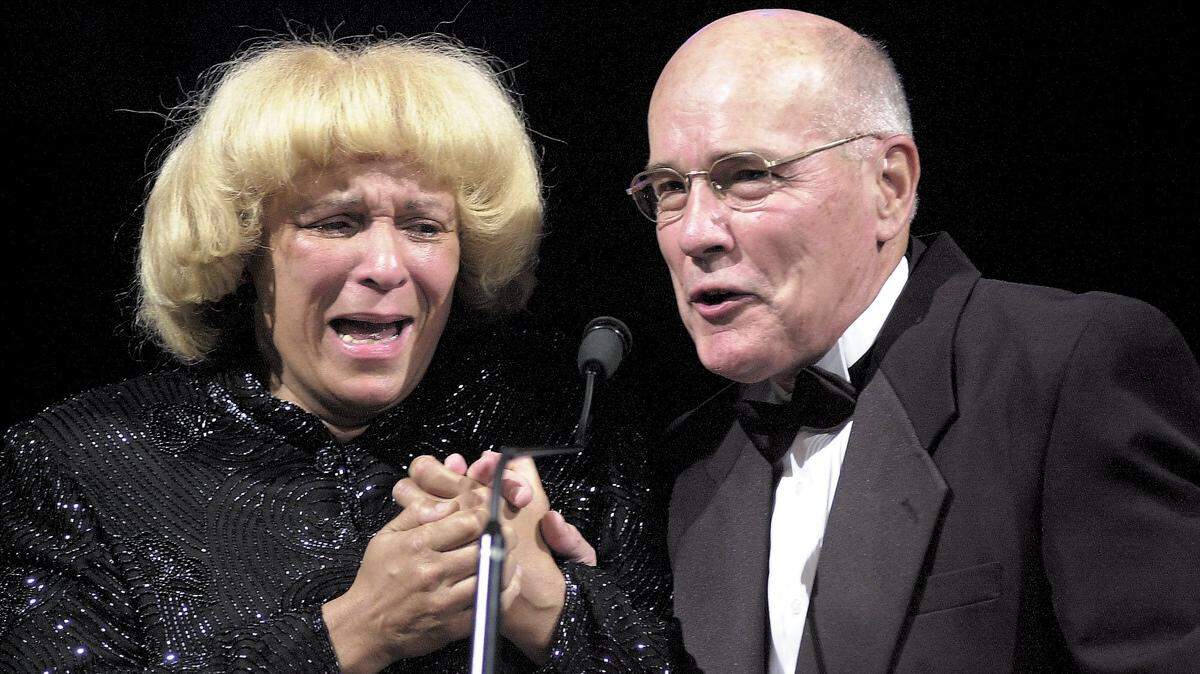
Editor’s note: Northwest Nazarene University plans to celebrate Myron Finkbeiner’s contributions as a teacher, coach and sports visionary during Homecoming week, Nov. 11-13, in Nampa. “Coffee Time with Myron’s Friends and Family” will be from 2 to 3:30 p.m. Friday, Nov. 12, in the gymnasium at Nampa First Church of the Nazarene. The university will then hold both a silent and live auction of some of Finkbeiner’s sports memorabilia on Saturday, Nov. 13, in the lower lobby of the Johnson Sports Center. The silent auction runs from 5 p.m. to 7 p.m., while the live auction begins at 6 p.m. All proceeds go to the NNU volleyball program.
Myron Finkbeiner received some unexpected but joyous news last month.
The World Sports Humanitarian Hall of Fame, which he founded in 1994, would finally have a permanent home on the campus of Northwest Nazarene University, his alma mater.
Had his health allowed it, Finkbeiner would have planned and organized every detail of the installation himself.
But the longtime teacher, coach and sports visionary passed away from lung cancer on June 27, 2021, at his home in Nampa. He was 88.
“Until his last days, Myron Finkbeiner was a man who never sat still, never met a sports story he didn’t know something about, and never gave up hope that good people could make the world a better place,” said Richard Hagood, former president of NNU and Finkbeiner’s brother-in-law. “His mind was filled with dozens of new ideas, maybe hundreds. He was constantly dreaming of new ways of doing things, new things to promote, and new ideas and people to write about. This is a man who did not like to read fiction. Give him an honest-to-truth story to read or talk about and his enthusiasm and commitment to the task was unrivaled.
“That, of course, was behind the idea of the World Sports Humanitarian Hall of Fame. He wanted to tell the stories of the good people in sports.”
The Boise-based World Sports Humanitarian Hall of Fame inducted 46 individuals between 1994 and 2010. The hall’s mission to recognize the good in sports won over former presidents Gerald R. Ford and George H.W. Bush, who served as honorary chairmen.
And Sports Illustrated writer Rick Reilly signed on as part of the hall’s selection committee and was an outspoken supporter of Finkbeiner’s vision.
“In the age of Beavis and Butt-Head, shock radio, trash TV, trash talking, taunting, driving by, getting over, rim-hanging, chest-thumping, and the helmetless look-at-me touchdown dance, a Humanitarian Hall of Fame hits me like a fresh mountain waterfall,” Reilly wrote in 1994, according to the Idaho Statesman archives.
“There are so many athletes of high character and high values, so many men and women who do not stop excelling at the foul lines or the 18th hole, so many wonderful people who have as much drive to help their fellow man as they do to achieve in sports.
“Now, those people will have a home and their deeds will be lauded every day the doors are open.”
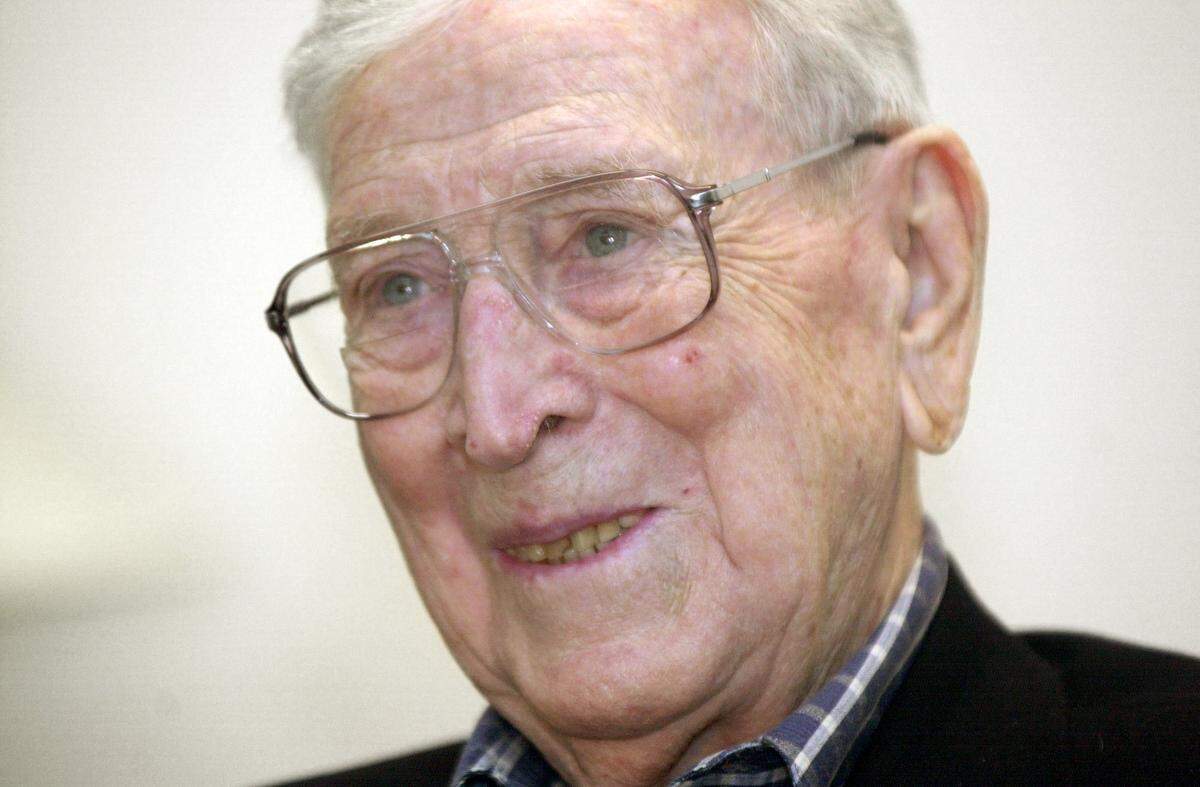
The hall’s first inductees in 1994 were golfer Chi Chi Rodriguez, tennis great Arthur Ashe and Olympic decathlete Rafer Johnson. The 16th and final class in 2010 honored Olympic speedskater Joey Cheek and baseball slugger Babe Ruth. There were no inductions in 2011, and the hall tried to reignite support in 2012 by presenting LaVell Edwards and his wife, Patti, with the Nell and John Wooden Award for Lifetime Coaching Achievement.
Finkbeiner and his wife even took out a second mortgage on their home to keep the hall afloat but were ultimately forced to sell the Humanitarian collection to a California philanthropist who had plans to revive it at San Jose State, said Larry Maneely, who served as the Humanitarian Hall’s president for about 10 years.
“The problem that we had, like all nonprofits after the financial meltdown of 2008, was raising money,” Maneely said.
Bringing the hall home to Idaho
For years now, the photos, commemorative posters and various pieces of memorabilia from the hall that were once displayed at Boise State University have been tucked away in boxes, waiting for a permanent home. The California philanthropist who purchased the collection died before the project got off the ground.
But with the help of former Boise State Athletic Director Gene Bleymaier and local philanthropist and fellow NNU graduate Duane Stueckle, Finkbeiner’s vision will once again be on public display — a lasting tribute to his legacy and the inspirational athletes he helped enshrine.
“Myron was a wonderful, wonderful person who loved athletics and loved what great athletes could contribute to society,” Bleymaier said. “He wanted to honor that and recognize that. I always believed in what the World Sports Humanitarian Hall of Fame stood for, and that’s why I got involved with it and brought it to Boise State.”
The partnership between Bleymaier and Finkbeiner helped cement a college football bowl game in Boise. The Humanitarian Bowl, now known as the Famous Idaho Potato Bowl, debuted at Albertsons Stadium in 1997, bringing national notoriety to Boise State and the hall of fame.
“Myron was a tremendous individual. He was a great man of faith. He was a family man,” Maneely said. “… He was involved in his community. He was involved in trying to make sports healthier. He is a positive connection in my life to really, really good things. I have no more respect for anyone I know than Myron for the person he was. He wasn’t just the guy who started (the Humanitarian Hall), he lived it.”
NNU officials have tentative plans to display the World Sports Humanitarian Hall of Fame collection inside the Johnson Sports Center, but the collection’s size may dictate a more expansive location somewhere else on the Nampa campus.
Regardless of its precise location, the hall’s presence is likely to attract a wider array of visitors to the university, which Finkbeiner likely would have appreciated. His time at Northwest Nazarene helped solidify his love for sports and coaching, and he devoted a great portion of his adult life to assuring others could have the same experience, including funding a scholarship for the Nighthawks’ women’s volleyball program.
“Myron was an unwavering supporter of NNU Athletics, and his presence at games and events will be greatly missed,” Northwest Nazarene Athletic Director Kelli Lindley said. “He and (his wife) Gwen were lifelong season-ticket holders who consistently gave of their time and resources to support the student-athletes.
“Myron had such a love for sports, but he also cared deeply about how the student-athletes were doing academically, socially and spiritually. It was always obvious that he was willing to invest wherever there was a need. He truly epitomized what it meant to be a servant leader.”
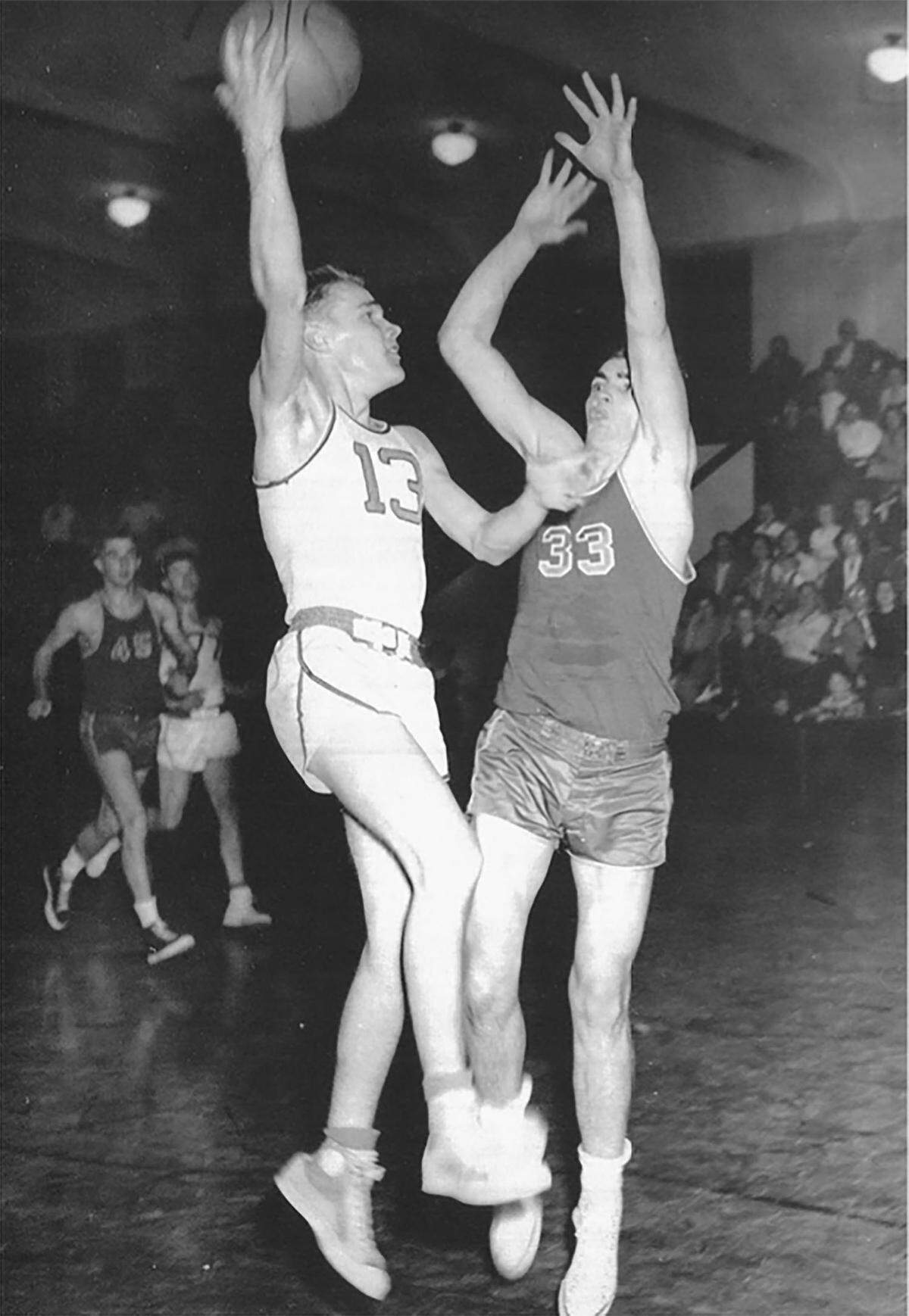
A 1950 graduate of Nampa High, Finkbeiner played basketball at Northwest Nazarene and then got into coaching. He landed his first coaching job at Boise’s East Junior High in 1958, followed by a one-year stint in Othello, Washington, before returning to Idaho to coach at Boise High from 1961 to 1966.
Inspired by John Wooden
Finkbeiner eventually moved to the college ranks, spending three years at Big Bend Community College in Moses Lake, Washington, followed by 10 years at Point Loma Nazarene University in San Diego.
During an interview with the Idaho Statesman in 1993 about the formation of the World Sports Humanitarian Hall of Fame, Finkbeiner said a key influence in his life was legendary UCLA basketball coach John Wooden.
“Every year I’d go up and watch his practices,” Finkbeiner said in the 1993 interview. “But probably more important was his influence as a human being. Nearly every practice he would talk about character-building, and I tried to mimic all that in my own coaching career.”
Wooden would later help Finkbeiner get in touch with many of the famous athletes the hall’s board voted to induct, and the Nell and John Wooden Humanitarian Award for Lifetime Coaching Achievement was introduced in 2002.
Finkbeiner returned to NNU as the Nighthawks’ alumni director in 1978 and later became the university’s director of development until his retirement in 1994. But Finkbeiner’s retirement turned into a full-time job as he worked to bring the World Sports Humanitarian Hall of Fame to life.
Finkbeiner spent years working behind the scenes to illuminate the humanitarian efforts of some of the world’s greatest athletes. It will be up to his friends, family and Northwest Nazarene University to make sure those inspirational stories live on for generations to come.
“Gene has really put together a great opportunity to bring (the hall) back and have it housed at Northwest Nazarene,” Maneely said. “It just breaks my heart that Myron did not live to see that happen and be physically acknowledged for its presence on the NNU campus.”
Finkbeiner is survived by his wife, five children, 10 grandchildren, 15 great grandchildren, sister, Junella Hagood, and brothers Paul and David Finkbeiner.
At Finkbeiner’s request, there will be no formal funeral or memorial service. He instead wished for his family and friends to gather in “small group settings on their own time over coffee and reminisce,” according to his obituary.
In lieu of flowers, donations can be made to the Myron & Gwen Finkbeiner NNU scholarship fund directed to the women’s volleyball program.
WORLD SPORTS HUMANITARIAN HALL OF FAME INDUCTEES
2010: Joey Cheek (speedskating), Babe Ruth (baseball)
2009: Adonal Foyle (basketball), Diego Gutierrez (soccer), Tracy Mattes (track and field)
2008: Warrick Dunn (football), Jimmie Heuga (skiing), Vlade Divac (basketball)
2007: Dikembe Mutombo (basketball), Edgar Martinez (baseball), Kyle Petty (motorsports)
2006: Harmon Killebrew (baseball), Steve Largent (football), Steve Smith (basketball)
2005: Drew Bledsoe (football), Loduis Zamperini (track and field), Kathy Kusner (equestrian)
2004: Jesse Owens (track and field), Jackie Robinson (baseball), Babe Didrikson-Zaharias (golf)
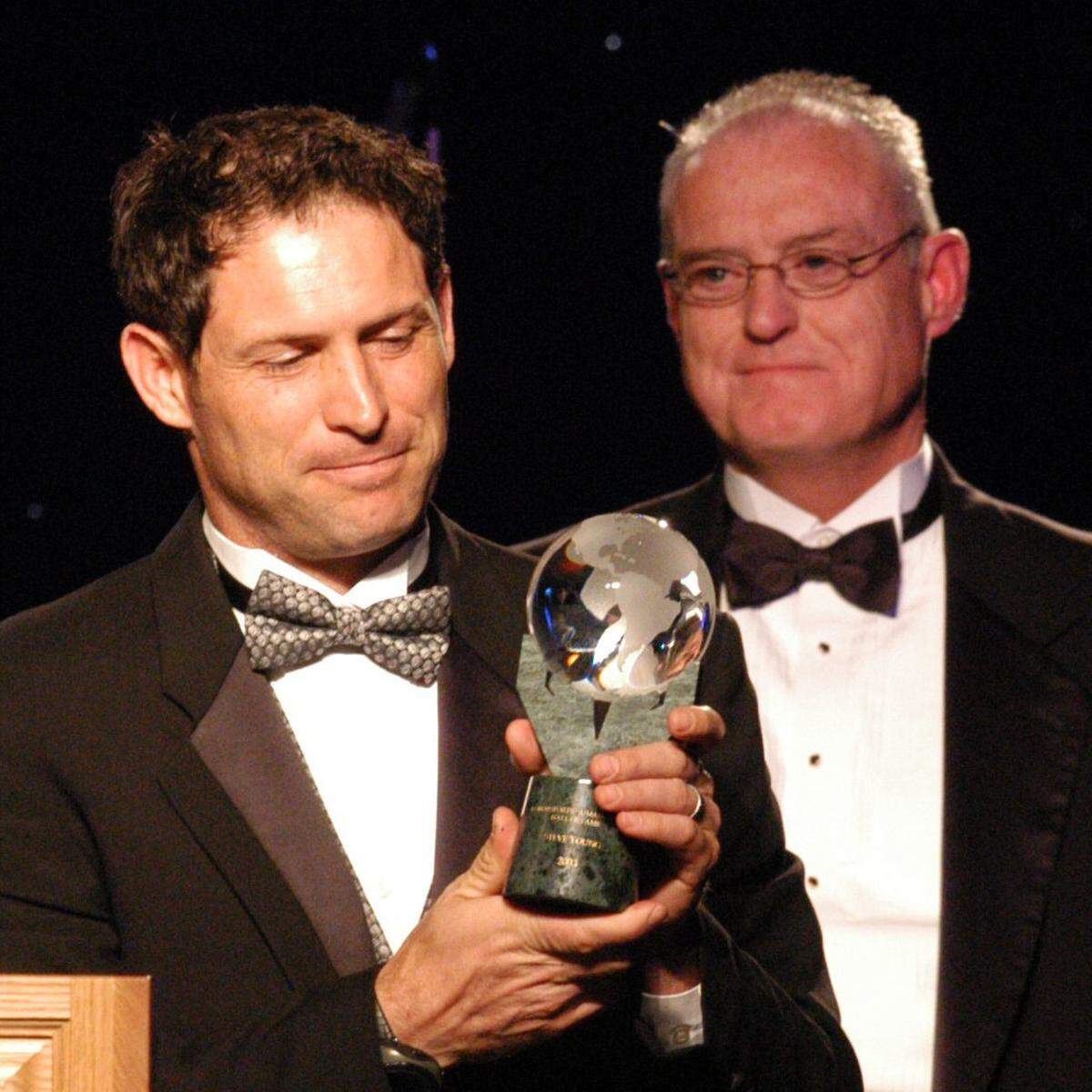
2003: Steve Young (football), Harlem Globetrotters (basketball)
2001: Johann Koss (speed skating), Andrea Jaeger (tennis), A.C. Green (basketball)
2000: Mary Lou Retton (gymnastics), Nate Archibald (basketball), Kirby Puckett (baseball)
1999: Tom Landry (football), Wilma Rudolph (track and field), Tony Gwynn (baseball)
1998: Pele (soccer), Jackie Joyner-Kersee (track and field), David Robinson (basketball)
1997: Billy Mills (track and field), Kevin Johnson (basketball), Mel Blount (football)
1996: Bonnie Blair (speed skating), Kip Keino (track and field), Pat McCormick (diving)
1995: Dale Murphy (baseball), Julius Erving (basketball), Roberto Clemente (baseball)
1994: Chi Chi Rodriguez (golf), Arthur Ashe (tennis), Rafer Johnson (track and field)
This story was originally published July 10, 2021 at 4:00 AM.