Fish are biting, customers aren’t. Idaho hunting, fishing guides see huge drop in trips
For some Idaho fishing guides, this spring was showing promise after poor salmon and steelhead returns that sparked an unprecedented closure on the Clearwater River last fall. Then the coronavirus arrived.
Though hunting and fishing seasons remain open in Idaho (and one rural area is seeing enough steelhead anglers to call for a season shutdown), guided trips are on a steep decline. Social distancing guidelines, economic uncertainty and a moratorium on some out-of-state hunting and fishing licenses have walloped the outdoor recreation industry, which largely relies on customers from outside of Idaho.
Several Idaho outfitters said they worry their livelihoods will be devastated by the pandemic, and they fear its effects could extend not just into upcoming seasons but to the small communities many of them call home.
There are hundreds of licensed outfitters in Idaho and even more licensed guides, according to Idaho Outfitters and Guides Association director Aaron Lieberman.
“Outfitters and guides across the state are understandably legitimately scared,” Lieberman said in a phone interview. “They’re concerned about what the season will look like or if they’ll even have a season.”
Idaho sees outdoor recreation paradox with plenty of crowds but few customers
Toby Wyatt, who owns Reel Time Fishing in Clarkston, Washington, works as a fishing guide in Washington, Oregon and Idaho.
“Right now if this wasn’t going on, I’d be doing some sturgeon and bass fishing in Hells Canyon and some Kokanee and bass fishing on Dworshak Reservoir in Orofino,” Wyatt said in a phone interview. “In another week, I’d be migrating down the Columbia River. We’ve got a run of spring salmon coming in, and I’d be fishing that run of spring salmon.”
But his hands are tied in Washington, where a statewide fishing ban is in effect until May 4, and Oregon, which this weekend banned nonresident hunting and fishing during the pandemic. Idaho has also placed restrictions on out-of-state hunting and fishing licenses, which further limits Wyatt’s potential customer base.
He’s been able to hold onto some business through the coronavirus scare.
“About half of my trips kept their deposits on the books and they’re just going to look at fishing again when this blows over,” he said. “I’m scheduled to start fishing again in June, so we’ll see. I’m hopeful that sometime in May they’ll lift all the restrictions and I’ll get to go back to work.”
Still, Wyatt said he thinks the Idaho Department of Fish and Game made the right move.
“There’s a lot of people from other states that were planning on heading to Idaho just so they can fish,” he said. “We’ve got a stay-at-home order right now. You’re not supposed to be doing that.”
Gov. Brad Little’s isolation order has created some confusion when it comes to the outdoors. Little encouraged spending time outside “close to home.” But with little else to do, some outdoor areas have become gathering places themselves, from the Salmon River in Custer County to the Boise Foothills trails and North Idaho lakes.
“It’s elbow to elbow. You’ve almost got to bring your own rock,” joked Jeff Jarrett, who runs Jarrett’s Guide Service out of Orofino.
Though fishing spots are crowded, Jarrett said he’s seen a serious decline in interest in guided fishing trips, even ones that would take place later in the year. He said much of his spring and summer trips start booking at the beginning of March. Instead of adding trips to his calendar, he’s had to remove many this spring.
“I’ve lost probably 35 trips so far,” Jarrett said. “It’s been kind of devastating. You couldn’t have thought this up in your worst nightmare.”
When coronavirus affects hunting and fishing, it also hurts Idaho economy
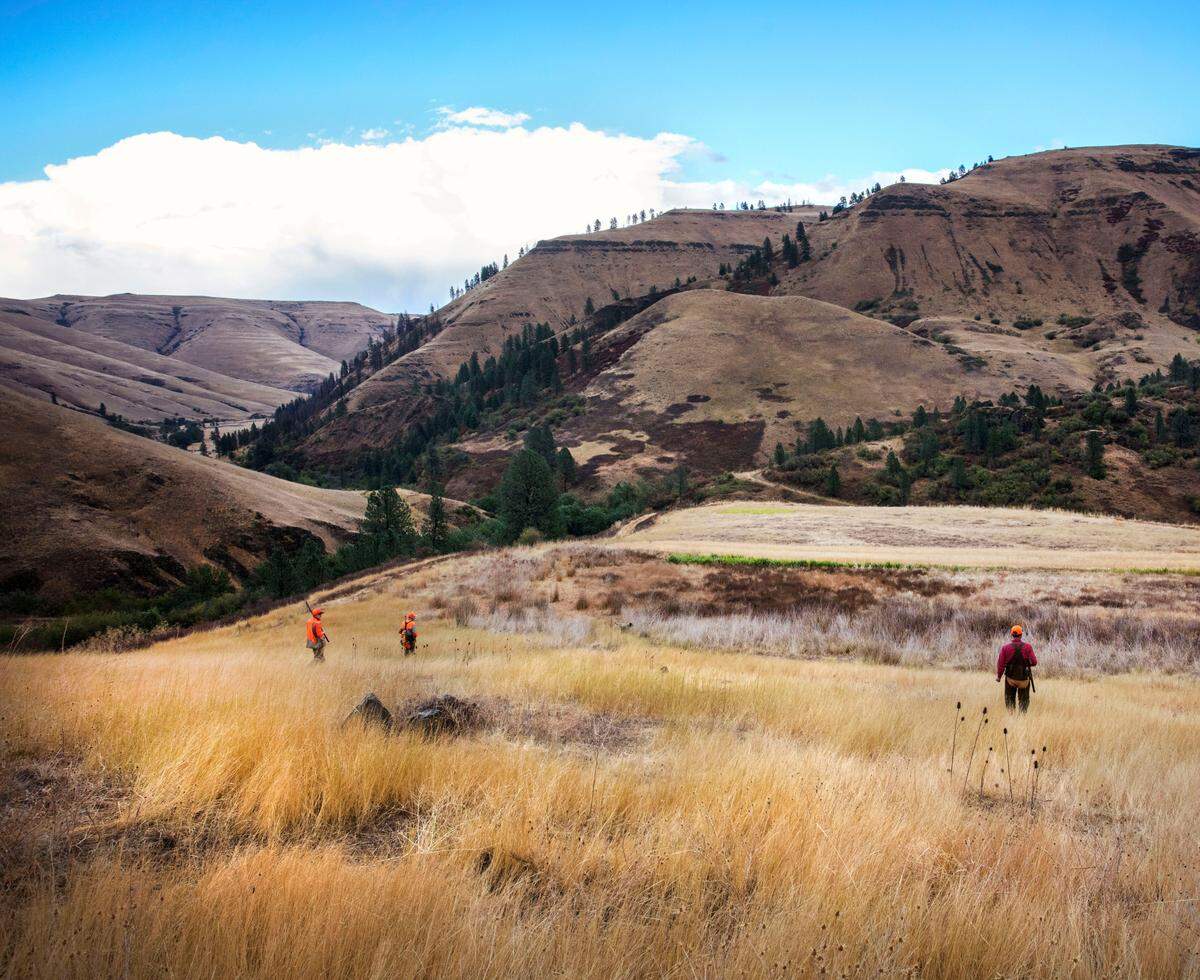
Spring closures are hitting fishing outfitters hard, but for hunting outfitters, this time of year is just the precursor to prime time in the fall, when it’s big-game season. Currently Idaho’s only open hunting seasons are for spring turkey and bear. But hunting outfitters said they’re also seeing cancellations due to travel restrictions, as well as clients postponing trips.
Though they’re happy to keep customers on the books, the scheduling shakeup could prove tricky later on.
“The problem we’re going to run into is we postpone people for this year, but we’re already booking a year out. So we already have people booked for next year,” said Karen Syron, marketing manager for Flying B Ranch in Kamiah. “For elk hunting, we’re booked out to 2023 already.”
Syron said customers are still booking fall trips in the hopes that coronavirus-related restrictions will be a thing of the past by then.
“We’re hoping and praying that this doesn’t trickle into the fall,” she said. “If it trickled into the fall season, that would be devastating for our business.”
Syron said Flying B Ranch is one of the largest outfitters in Idaho, and it operates year-round. That already puts it a step ahead of some smaller outfitters in terms of financial stability. Lieberman said many smaller outfitting businesses don’t qualify for assistance programs through the CARES Act, meant to provide emergency relief for families and businesses.
Lieberman has been working with outfitters and the Small Business Administration to try to secure the same kind of financial aid that Boise restaurants, salons, retail stores and other businesses are pursuing. He said he hasn’t had much luck.
“Everybody’s hurting, right?” he said. “Not to diminish what mainstream small businesses are experiencing, but there’s something fundamentally more precarious about a seasonal outdoor recreation-based small business in this context.”
Lieberman said he’s also looking to lawmakers to try to get approval for outfitters to work as maintenance contractors on Forest Service trails.
“We’re not even asking for a bailout. We’re asking to be allowed to work really inhospitable conditions in the backcountry in the heat of Idaho summer,” he said.
If outfitting businesses go under, it won’t just affect people who work for those businesses.
“Hunting and fishing from residents and nonresidents is a multi-billion-dollar industry every year. It’s way beyond license sales. It’s all of the gear, the incidental purchases that come with people visiting our state and hunting and fishing,” Syron said. “Just the Flying B Ranch not taking guests has a huge effect on our little town.”
Lieberman said conversations about coronavirus and outfitters are really conversations about how coronavirus hurts rural Idaho.
“Outfitters have always been an incredible source of support for their communities,” he said. “Salmon, Challis, Riggins, Kamiah … . All these small, rural Idaho towns and gateways to the wilderness, those towns and those communities depend heavily on the revenue and the activity those outfitters bring into their communities.”
Outfitters try to remain optimistic through coronavirus troubles
As we near the end of Idaho’s original 21-day isolation order, the outdoors is already serving as a refuge for many Idahoans, and outfitters said their clients will need nature more than ever after quarantine restrictions are lifted. Syron said everyone at Flying B Ranch is missing their customers.
“It’s not just the economic part, it’s the social and emotional part of being able to take people out,” she said. “They’re going to need it when this is over.”
In the meantime, Syron and others said they’re looking for the silver lining in the situation — or at least attempting to make one. Syron said Flying B is trying to set an example by halting business. Lieberman said some outfitters are using their portable camp kitchens to make meals for health care workers and first responders in lieu of clients to feed. Fishing guides Wyatt and Jarrett said they expect the moratorium on fishing in Washington and Oregon to prove helpful in one way.
“One positive to this whole thing: I’m part of the salmon and steelhead recovery group … and for the first time in history, we’re going to see what not fishing these spring salmon actually does for them,” Wyatt said.
Lieberman said he’s proud of how his industry is handling things, and he’s not surprised that they’re looking for the good in the situation.
“I think there’s a lot of hope in the industry. They’re outfitters — you don’t get into that unless you’re kind of blindly hopeful,” he said.