
How to survive — and thrive — fishing through the cold of an Idaho winter
Cold weather isn’t for everyone. Many anglers choose to winterize the boat and find something else to do once the thermometer dips below freezing.
But in Idaho, the fishing fun doesn’t have to stop. Most fisheries are open year-round, and wintertime provides unique opportunities for those willing to bundle up and get after it. As winter conditions set in, here are some of the upsides of fishing in the cold — and tips to help you overcome the downsides.
Pro: Crowd Control
Fishing on a warm summer day is great. But the nicer it is, the more people are likely to join you at your favorite spot. Idaho fishing crowds have increased in recent years, especially on weekends. But once the temperatures drop, things quiet down. Boat traffic on the ramps and in popular fishing areas slows to a crawl. Since November began, my trips to C.J. Strike, Brownlee and the Boise River have essentially been solo missions. In my book, it’s well worth bundling up to have the water to yourself!
Con: Cold Hands
The biggest downside of fishing in the cold is, of course, that it’s cold! But with proper gear, it’s easy to overcome. Dress in warm, waterproof layers and give special attention to your hands and feet. Fingers are of particular importance when fishing. To keep yours warm, I recommend bringing extra gloves, keeping handwarmers in your pockets and using a small towel to dry off after handling fish.
Pro: Hungry Fish
There’s a misconception that fish “hibernate” during the winter months. And while it’s true that some species (notably bass and bluegill) slow down, there isn’t a species swimming in Idaho waters that can’t be caught in cold water. Some fish, like trout, actually prefer the cold. Lake Cascade’s famous jumbo perch school up for pre-spawn in February and March, when they are at their record-breaking biggest. I’ve even had days catching dozens of bluegill and bass through the ice! You may need to alter your tactics (hint: use smaller presentations), but the cold definitely doesn’t stop fish from biting.
Con: Frozen Gear
Just like our bodies, some gear doesn’t function at 100% when it’s freezing outside. Common issues include ice building up in your rod guides or on your line. These minor annoyances can be remedied with a little extra time and attention, but others require more planning. Boat motors don’t love the cold. If possible, keep your boat stored indoors, and consider leaving it at home if temperatures dip below freezing. If you do boat in the cold, drain your motor of water before you leave the ramp to avoid costly ice damage. And if you plan to use motorized equipment on your cold weather fishing trip (an ice auger, for example), keep it stored indoors to avoid a cranky motor putting the freeze on your day.
Pro: Big Fish
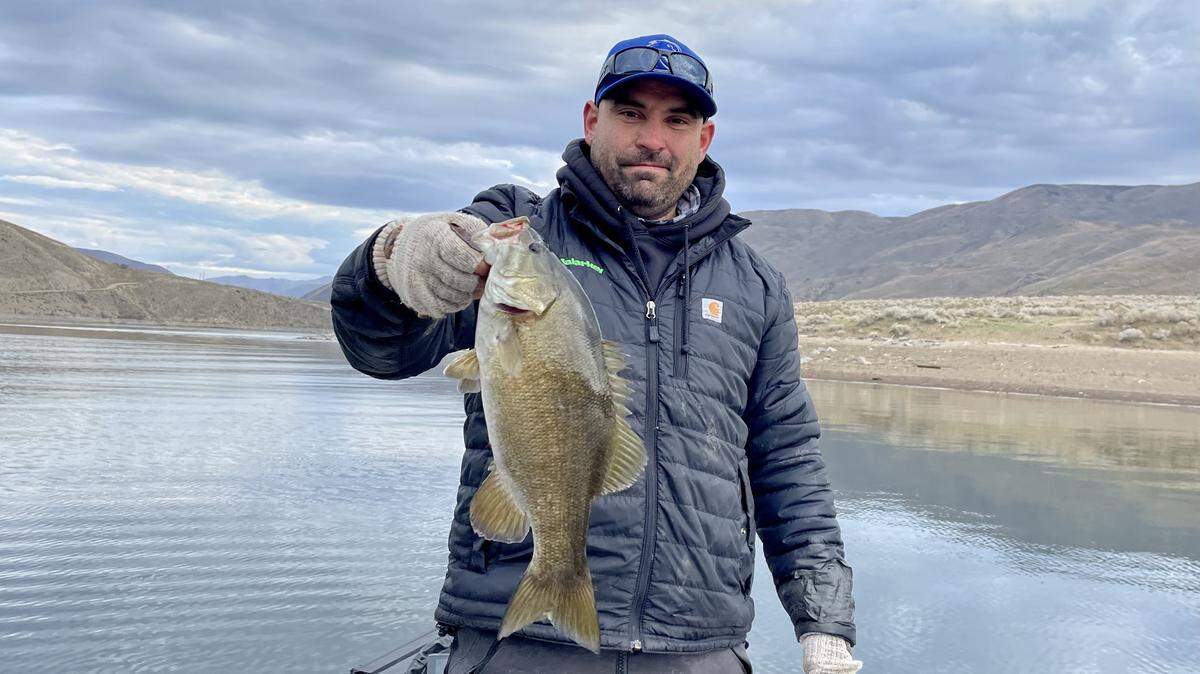
Winter can be a great time to hunt for trophies. Many smaller fish slow their metabolisms when the thermometer drops, but big fish remain on the prowl. Last ice season, I caught the legendary Walter, a 30-inch cutbow trout, beneath a foot of ice. My personal-best muskie, a 30-pound Great Lakes giant, was caught on a day with single-digit wind chill. And on my last open-water bass trip of 2023, my buddy Caleb and I enjoyed a quality late-November smallmouth bite. Employing jerkbaits and crankbaits, we boated a dozen bass in two hours. The same stretch of shoreline likely would have produced more fish in June, but every bass we caught was in the three-pound class. I’ve had similar experiences on the Boise River in winter and early spring — many jaunts only yield a few fish, but they are some of the biggest trout I catch all year. Quality over quantity in the cold!
Pro: Ice, Baby!
For me, one of the biggest upsides of cold weather is ice fishing. In my next column, we’ll get you geared up and dialed for hardwater fishing this winter. Until then, tight lines!