
Idaho AG: Wall Street’s secret climate agenda drives up energy costs | Opinion
Three private companies control roughly 95% of the global credit rating market. Their job is to assess how financially healthy a company is and assign it a rating. Investors, pension funds, businesses and governments rely on those ratings to decide where to put their money, trusting that the analysis behind them is honest and objective.
Recently, my office joined a 23-state coalition sending a formal demand to Fitch Ratings, Moody’s Investors Service, and S&P Global Ratings after evidence emerged that all three agencies secretly committed to United Nations-backed climate groups, then used those commitments to shape ratings on American energy companies without ever disclosing the conflict.
When a ratings agency downgrades an energy company, that company’s borrowing costs go up. Higher borrowing costs mean less money available for drilling, production and infrastructure. Less production means tighter supply, and tighter supply means higher prices at the pump and on your utility bill. The ratings agencies don’t set energy prices directly, but their decisions ripple through the economy in ways that eventually reach every Idaho family.
Those decisions were supposed to be based purely on financial analysis. Instead, all three agencies secretly adopted a framework called ESG, which stands for environmental, social and governance, that uses credit ratings as a tool to advance climate activism and left-wing social priorities rather than honest financial assessment.
All three agencies signed onto the United Nations’ Principles for Responsible Investment, pledging to incorporate ESG goals into their credit ratings in a systematic way. Moody’s and S&P went further, joining a net-zero alliance and committing to use their ratings to help eliminate fossil fuel consumption by 2050. They then downgraded American energy companies accordingly, while publicly describing those ratings as independent financial analysis. They were not independent. They were the product of commitments the agencies never disclosed.
Securities law requires ratings organizations registered with the SEC to disclose material conflicts of interest. A commitment to use your ratings to phase out an entire industry is a material conflict.
Moody’s and S&P never listed their UN climate commitments on the required disclosure forms. Fitch made only limited disclosures. A reasonable investor who knew these agencies had pledged to accelerate the shift away from fossil fuels would evaluate their ratings of energy companies very differently. That’s precisely why the disclosure requirement exists.
After downgrading energy companies using ESG predictions, these same agencies sold those companies consulting services to help improve their ESG scores. The SEC’s own Office of Credit Ratings identified this arrangement under both the Biden and Trump administrations as a conflict of interest.
The predictions that justified the downgrades also proved to be wrong. The agencies assumed governments worldwide would adopt aggressive climate regulations, that fossil fuel demand would peak before 2030, and that ESG investment mandates would grow across the financial sector. None of that happened.
The International Energy Agency now projects oil and gas demand will continue rising through 2050. Net-zero financial alliances have largely collapsed. ESG funds posted $84 billion in net outflows last year. Automakers have written off over $70 billion in electric vehicle investments. An honest methodology requires updating ratings when the assumptions behind them fail. These agencies have largely refused to do so.
Our letter calls on each agency to justify their maintained downgrades using actual financial data or reverse them, to formally disclose their climate commitments as conflicts of interest on required SEC filings and to stop selling ESG consulting services to the same companies whose credit ratings they determine.
We forwarded the letter to the SEC’s Office of Credit Ratings. If the agencies fail to respond adequately, the coalition is evaluating enforcement action under state consumer protection laws, antitrust investigation and coordination with the Department of Justice.
Credit ratings only work if people can trust them. When agencies make secret ideological commitments and let those commitments drive their analysis, that trust breaks down and the costs fall on ordinary people. Idaho families deserve markets built on honest information, and my office will keep pushing until these agencies answer for what they did.
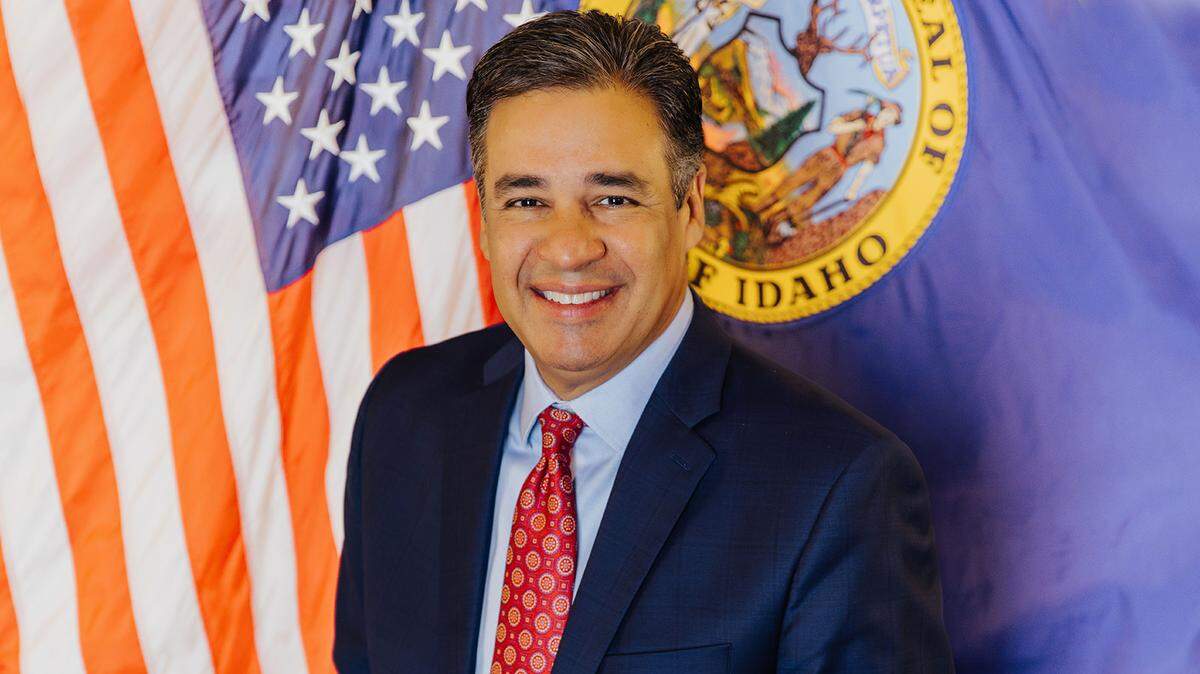
Raúl Labrador is Idaho’s 33rd attorney general.