
There are many false narratives surrounding the Stibnite Gold Project | Opinion
AI-generated summary reviewed by our newsroom.
- Perpetua framed Stibnite as clean‑energy project but critics dispute that claim.
- Company shifted to national‑security claim despite low‑grade antimony and alternatives.
- Project would use public subsidies to extract gold from public lands without royalties.
For more than a decade, Perpetua Resources — the junior gold mining company behind the controversial Stibnite Gold Project — has peddled a shifting set of narratives to “sell” their project to Idahoans, investors, and the U.S. Government. As Perpetua moves toward a final investment decision on the project, it’s worth examining how well those narratives have really held up.
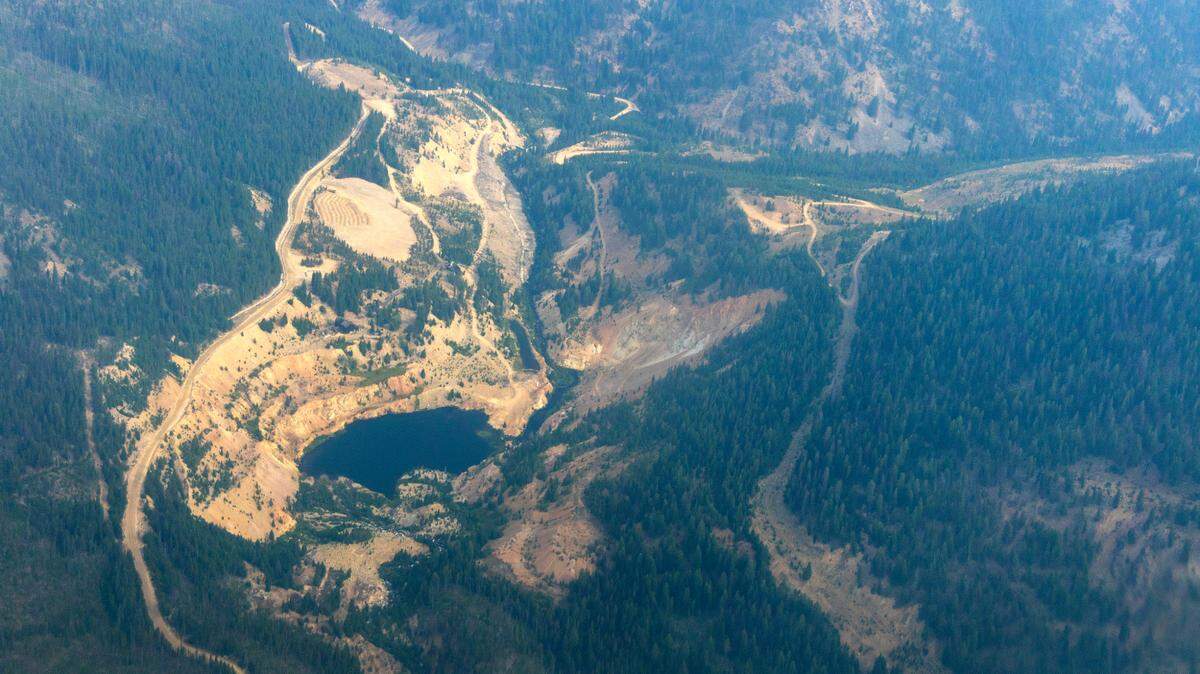
The original narrative Perpetua put forth was that their massive new mine was counterintuitively necessary to clean up historic mining issues at the site. However, the U.S. Forest Service concluded in their Final Record of Decision that taking no action at all to address the existing contamination at the site would be less harmful to the environment than proceeding with the Stibnite Gold Project, even assuming that the company’s mining and proposed cleanup work goes perfectly according to plan (which never happens). Perpetua also inaccurately claimed that restoration was only possible through the proposed mine; the Nez Perce Tribe in particular has invested millions of dollars to restore the surrounding watershed and clean up contamination from earlier mining operations at Stibnite.
Perpetua’s second narrative was that the antimony mined at Stibnite would help advance a broader transition to clean energy by supplying a key ingredient for a new type of liquid-metal battery. However, the company designing those batteries (Ambri) filed for bankruptcy in 2024, and you’d be hard-pressed to hear Perpetua make any mention of clean energy since President Trump’s reelection.
More recently, Perpetua has leaned heavily on a third — and more politically potent — narrative: that the Stibnite Mine is essential to U.S. national security because it would provide antimony for military uses. At first glance, this claim is compelling. Antimony is used in a range of military applications, and reducing reliance on foreign supply chains for our national defense is a worthwhile goal. But a closer look reveals this argument for what it is: a convenient facade.
In a recent appearance on the mining investor podcast Mining Stock Daily, Perpetua CEO Jon Cherry said the quiet part out loud: “Antimony is the enabler because of the government’s support. The economics are driven all by the gold. Our mine plan is based on gold.” The message could not be more clear: Stibnite is not about antimony, it’s about the gold (and it always was).
Even on its own terms, the antimony narrative is full of holes. Perpetua has acknowledged that a mere 10% of Stibnite’s mined antimony ore will actually be routed to the military. And as it turns out, Stibnite’s antimony might not actually be high enough grade to meet the military’s standards. Recent reporting by Bloomberg highlighted that industry experts and some military officials don’t see Stibnite as the best domestic source of antimony, in part because of the high cost associated with refining their lower grade ore. Multiple projects being pursued elsewhere in the West contain notably higher grade antimony than Stibnite.
Perpetua’s evolving narratives to justify this mine have proved to be misleading at best and downright false at worst. Strip away the mining company rhetoric and what remains is an irresponsible, taxpayer-subsidized open-pit gold mine designed primarily to maximize returns for wealthy shareholders. Perpetua will essentially be using $80 million of government subsidies intended to support antimony production to take $18 billion worth of gold out of the ground. And unlike oil and gas companies that must pay a royalty back to the public for the resources they extract from public lands, Perpetua would pay no such royalties to exploit our public lands thanks to the antiquated Mining Law of 1872.
We need some mines in some places for some reasons. But a massive open-pit gold mine in the headwaters of the South Fork Salmon River — one of Idaho’s most ecologically important watersheds — simply to line investor pockets and stockpile gold bars in faraway vaults? No, thanks.
Josh Johnson is the Central Idaho director for the Idaho Conservation League.
This story was originally published February 2, 2026 at 4:00 AM.