
In the first American pope, the nation has a model of compassion | Opinion
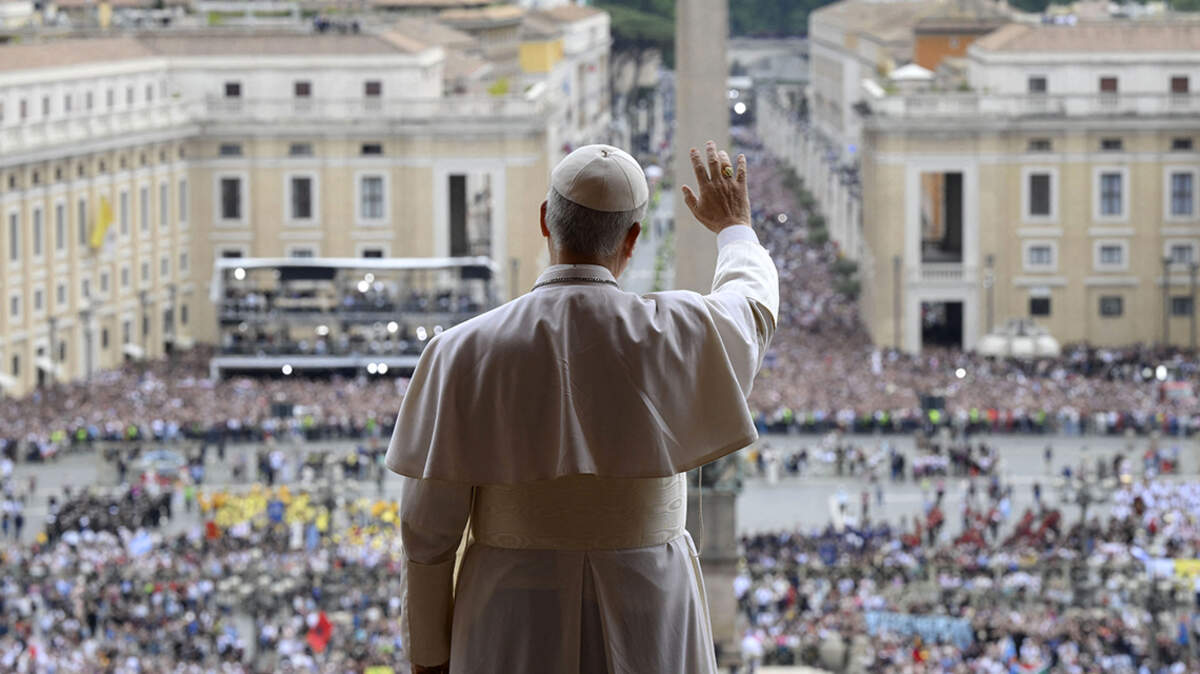
Tears filled my eyes as Pope Leo XIV appeared on the balcony of St. Peter’s Basilica in Vatican City to greet the faithful who anxiously awaited his first appearance as pope. Even for a lapsed Catholic who differs with some of its doctrine and practice, it’s not easy leaving behind years of service as an altar boy and attendance at Catholic schools.
It wasn’t which direction church doctrine might travel that I found most appealing. It was hearing this first American pope speak of the need for compassion in our daily lives. It was his humble service to the poor and disadvantaged in rural Peru, such a polar opposite of the leadership of the American president, who seems fixated on maligning all migrants as criminals.
One of his fellow Augustinian friars said that the bishops of Peru called Bishop Prevost the Saint of the North, beloved for his closeness to his people and his championing of social justice and environmental stewardship. Here in America, President Donald Trump attempts to silence calls for a sustainable future and reverses progress addressing climate change.
Too few Americans understand the role the developed countries have played in exacerbating the climate changes that ruined the land so many of the poor in the Southern Hemisphere rely on for sustenance. Our release of carbon into the atmosphere from our automobiles and power plants over the years has aggravated an already serious climate impact on the poorer regions of the world.
To add insult to injury, the U.S. rigged elections in South and Latin America to install dictatorial regimes, overriding democratically elected leaders committed to land reform and other changes in local economies that offered hope to those who preferred to live where they were born. The new pope’s work in South America gives him unique insight into how the global North must make good on the ecological debt it owes the South.
Today, when migrants line up for entry to America, where they seek employment and a better life, a brutal and cruel border czar, Tom Homan, stands at the border terrorizing with ICE officials’ abusive tactics. It was President Barack Obama who first appointed Homan to border control because Obama understood the importance of a border policy that enforced immigration laws. Conversely, Homan attempted to separate children from their parents during the Obama administration but was denied. Trump, whose moral compass stalled years ago, initially approved such an inhumane policy and turned a blind eye to due process.
Here is the antithesis of everything the United States government stands for today in the new pope’s own words: “Together, we must try to find out how to be a missionary church, a church that builds bridges, dialogues, that’s always open to receive — like on this piazza with open arms — to be able to receive everybody that needs our charity, our presence, dialogue and love.”
His words of evangelism are a welcome relief to the vainglorious and vengeful words and actions of a most opposite narcissist now installed in the White House. Trump’s goal is to incapacitate the government so it cannot serve those in need. Instead, he endorsed a budget resolution cutting $1 trillion from Medicaid and food assistance to pay for more tax breaks for his oligarch buddies. Even Republican conservatives like Sen. Josh Hawley recently opposed Medicaid cuts in a New York Times column.
The new pope refers to the church’s missionary work as essential to the life of the church. For years, the work of the United States Agency for International Development (USAID) could be considered “missionary” work, providing funding for food, medicine and clean water, and modeling democracy as an alternative to dictators and autocrats who consigned the poor to lives of misery.
Trump and his evil twin, Elon Musk, canceled foreign aid programs of USAID, a stark contrast to Pope Leo’s life in service of the poor and his commitment to social justice for the marginalized. For those grasping for an ounce of hope for a return to a saner and more compassionate presidency, the new pope gives voice to those who oppose autocratic leaders like Trump.
It didn’t it take Pope Leo XIV long to weigh in on Russia’s war against Ukraine, calling for “an authentic, just and lasting peace as soon as possible. May all the prisoners be freed and may the children return to their families.” A decided contrast to Trump taking Putin’s side and berating Ukrainian President Volodymyr Zelensky when he visited the Oval Office to seek U.S. aid for Ukraine’s defense against the warring Russia.
Much has been written about the divide in the Conclave of Cardinals between the conservatives and progressives more in tune with Pope Francis. Although it still has miles to go in my mind, Pope Francis moved the church in the direction of moderation as he supported civil union laws and allowed priests to bless same-sex couples.
Francis’ appointment of Prevost as prefect of the Dicastery for Bishops was brilliant, as it apparently added Prevost to a short list of cardinals likely to be considered for pope. First, Francis gave Prevost responsibility for selecting future bishops which raised his profile among his cardinal colleagues. Prevost also presided over one of the most revolutionary reforms of Francis’s tenure when he added three women to the voting bloc that decides which bishop nominations to forward to the pope.
Not surprisingly, American media celebrated the election of an American to the papacy like it has covered no previous pope. Leo XIV, a missionary priest from South America who was born and raised in Chicago, speaks for many of us who yearn for a good Samaritan to rescue us from the politics of spite and rancor. It’s a sign of hope that the Catholic Church will continue its moderation in all things ecclesiastical and will call attention to poverty across the globe, often caused by centuries of settler colonization, which only the developed world that caused it can ameliorate.
Perhaps the cardinals knew it was America, once the leader of the free world and now led by this America-first president, that was most in need of a model of our better angels.