
Want to stop devastating wildfires in Idaho? Fix broken federal forest management | Opinion
As a U.S. senator for Idaho, a state enormously impacted by wildfires decimating communities and landscapes each year, I, Sen. Crapo, am a longtime advocate for active forest management that restores forest health to help reduce the number and intensity of fires and protects our communities. And as a former wildland firefighter, I, Madi Clark, know all too well the disastrous consequences of poor federal land management. What the two of us have in common is an experienced point of view about the current mismanagement of our forests that informs our advocacy for improved federal forest management.
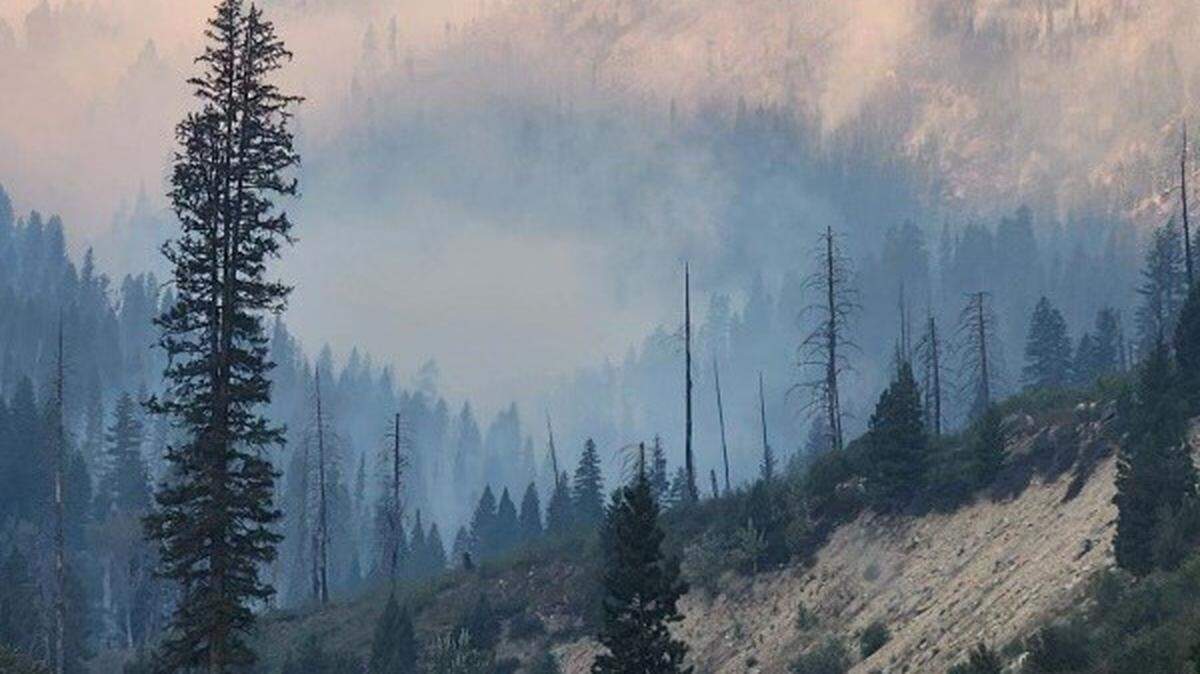
The fuel load on federal lands is growing out of control, smoke has become a weather season, and economic and environmental damage is ballooning from massive fires eating up the western United States.
Though residents of the smoke-filled western United States may doubt this fact, the annual number of fires has not changed much over the last 30 years.
What has changed is a growing trend of hotter and bigger fires, with the major accelerant being the mismanaged, densely vegetative, diseased and infested federal lands.
A recent Congressional Budget Office analysis found that federal lands have less than a third of the number of fires as nonfederal lands, but the federal fires will be more than five times larger than nonfederal fires. In 2024, 7.3 million acres have already burned, far above the 10-year average of 5.8 million acres.
If we are to fix this predicament, the federal government must adopt two main policy strategies.
Management practices such as prescribed burns and harvesting need to be employed at a significant rate to make a difference and regulations need to favor this practice.
Prescribed burning and selective tree removal are the most effective tools for managing understory and excessive density to protect and improve forest ecosystems, especially threatened and endangered species, but regulations and nuisance lawsuits delay these projects for decades.
These lawsuits worsened under the controversial Cottonwood decision, which desperately needs to be fixed. Congress must pass legislation to reverse the Cottonwood decision to reduce the risk of wildfires and better enable agencies to partake in important landscape restoration activities.
The federal government must not adopt top-down trendy sounding policy decrees from Washington, D.C., that achieve little environmental benefit and create obstacles to achieving work on the landscape.
The Biden Administration’s proposed National Old Growth Amendment is a prime example of unhelpful policy that increases bureaucratic hurdles and distracts time and resources away from actions that improve forest health.
The National Old Growth Amendment will impact every national forest across the country and purports to protect the environmental benefits of mature and old-growth trees. However, even the Forest Service recognizes that fire is the main threat to these forest classifications.
Further, the process of utilizing a nationwide process to amend all forest plans across the country is counterintuitive. Forest conditions vary considerably from southern Idaho up through the panhandle, and even more so when comparing National Forests across the entirety of the United States.
Idaho Gov. Brad Little recently said, “They (the Forest Service) have got to do more containment, and they have got to do more management. If they would have done anywhere close to what we (Idaho) do as a practice, the federal taxpayers would probably be hundreds of millions of dollars richer at the end of this year.”
The current fire situation is demoralizing. But as fires continue to eat away at land and livelihoods across the mountain states and smoke continues to fill the skies, federal officials must move forward with good forest management fostered by locally-driven collaborative, consensus building that better shares this essential task with the communities that live, work and play in these remarkable and cherished landscapes.