
Idaho Gov. Little: Preserve religious freedom by vetoing restrictive abortion bill
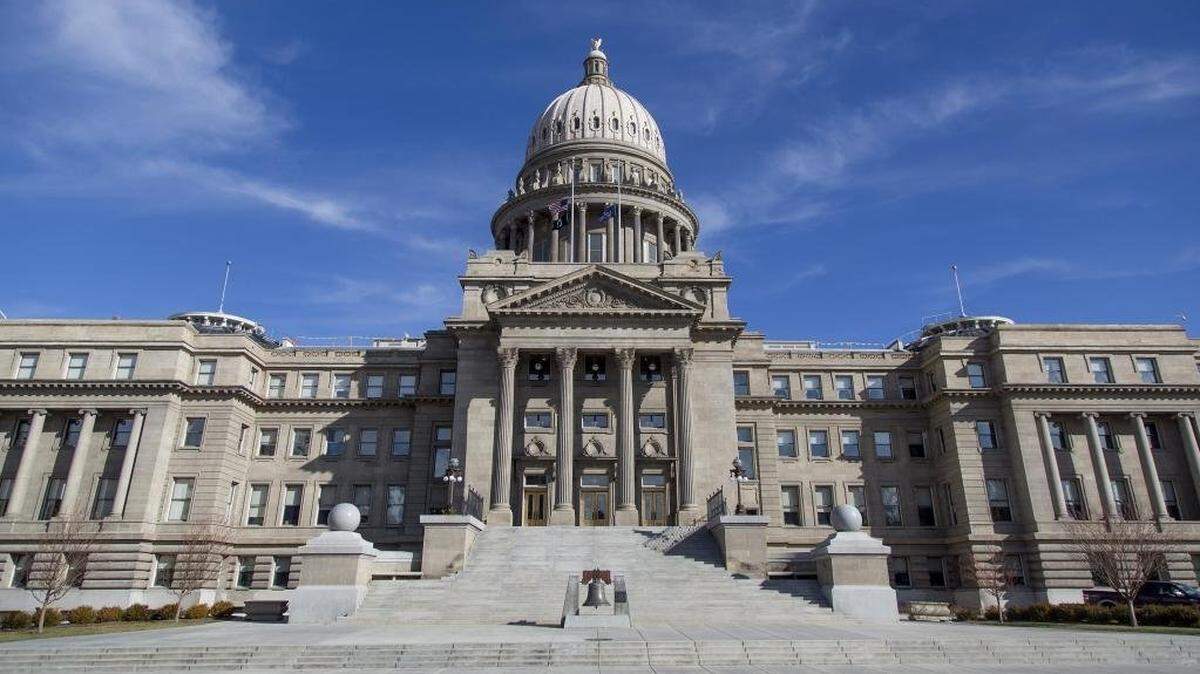
On Monday, Idaho’s Republican-dominated state Legislature passed Idaho SB 1309, a bill that prohibits abortion after six weeks. Idaho’s Gov. Brad Little should veto the bill because it abridges the religious freedom of the state’s largest religion and thus violates the U.S. Constitution. Moreover, it is manifestly inhumane to women.
For nearly 50 years, the Church of Jesus Christ of Latter-day Saints has had a written church administration policy that both strongly affirms the fundamental value of bringing babies to life via pregnancy in a married family context and in certain defined circumstances.
Specifically, the LDS church has had a written policy permitting abortions in the case of rape, incest, danger to the health of the mother “established by competent medical authority” since the mid 1970s. Moreover, in the latest edition of LDS Church policy, abortion is also permitted in cases where “a competent physician determines that the fetus has severe defects that will not allow the baby to survive beyond birth (General Handbook of Instructions, Chapter 38, section 6, paragraph 1). Under these four circumstances, the decision to end a pregnancy is placed in the hands of the fetus’ mother.
It is a decision to be made by the pregnant mother according to the inspiration of her prayers with her God and in consultation with her spouse, family, minister (which the LDS call a “bishop”), and her physical and mental health care professionals. In LDS theology, it is not a matter for the state to decide by law.
Moreover, the policy handbook specifically forbids its lay leaders from second-guessing and judging a woman’s decision in cases where any of these four conditions are present (rape, incest, threat to health of the mother and fatal defect). It is her decision, to be made with inspirational confirmation from God, and church disciplinary councils are instructed not to judge, interfere with, or call into question woman’s decision that has been reached if the abortion relates to any of the four conditions (rape, incest, health, or fatal deformity).
Idaho SB 1309 interferes with this well-established religious process of Idaho’s largest religious community. The proposed Idaho bill prohibits abortion any time after the capacity to detect fetal heartbeat. That is said to be at five to six weeks, although many medical professionals do not think a heartbeat exists at six weeks, but merely electrical activity. Nevertheless, no one can detect the existence of likely fatal fetal abnormalities at six weeks.
In LDS theology, the decision to abort for that reason is given no time limit. Most women don’t even suspect they might be pregnant at six weeks (or so I am told, being a man, with no bodily experience of pregnancy).
Moreover, any attempt to sample the fetal tissue at or before six weeks to determine the possibility of fatal abnormalities would probably put a fetus at risk and constitute medical malpractice. That the case, Idaho SB 1309 abridges LDS religious freedom on the grounds of blocking a woman’s right to decide based on competent medical authority indicating a pregnancy could not come to term because of abnormality.
Again, the possibility that a pregnancy is a threat to a mother’s health is not likely to be known before five to six weeks of pregnancy, if for no other reason than that the pregnancy is not known to exist. Again, in LDS theology and long-standing written policy, if it becomes known by competent medical authority that a pregnancy is a threat to the health of the mother, then it is the woman’s decision whether or not to abort. The LDS Church’s written policy does not set time limits on when the window of risk analysis is closed.
Beyond the matter of religious freedom, the state should not force any woman, at any point in her pregnancy, to risk orphaning her living children and widowing her spouse due to a pregnancy. She, in counsel with her spouse, living children and medical authority, should decide what the risks are and whether they are willing to take them.
Emphatically, state legislatures should not force families to risk family integrity or require women to risk health or death. That is a family decision only. The state should get the hell out of the decision loop.
Leave it up to God, a woman and her family, pastor, and medical doctor, with no legal constraints, legal risks, or timing limits at all.
Idaho SB 1309 infringes on the LDS belief and practice that a woman has a religiously granted right to protect the health and safety of her body and to thereby protect the welfare and integrity of her family. No law should block a woman’s judgment of what best preserves her life so she can continue to nourish, love and guide her existing family.
Finally, rape and incest are horrific events on the life and psyche of a woman of any age. Women made pregnant by rape, or young children or women of any age made pregnant by incest, are not likely to figure out what has happened to them, or to process what their long-term response ought to be, within five or six weeks of the rape or incest event.
In LDS theology, and in good, humane common sense, such a woman — with appropriate family, ministerial, medical, and psychiatric counsel — should be able to abort a pregnancy derived of rape or incest at any time she achieves clarity and prayerful inspiration on the matter.
In LDS theology, that is her right.
Republican state legislators should not compound the horror of the rape or incest by imposing time limits on when the decision must be made. Moreover, it should be understood that state legislators and state office holders become complicitous in the process of rape or incest if they restrain the woman’s decision, or her ability to implement her decision, in any way.
Legislators who create bills such as Idaho SB 1309, and governors who sign them, become co-conspirators and co-perpetrators in the acts and consequences of rape or incest by making the woman’s decision of what to do about a rape or incest-induced pregnancy legally difficult or impossible after six weeks.
There are, of course, other religions equally offended and curtailed by this law, if not more so. Thus, the issue of religious freedom is not unique to the LDS Church. But the Church of Jesus Christ of Latter-day Saints is the case I am most familiar with, being a member thereof, so I feel I can treat the issue in detail
I have laid out several grounds on which Idaho SB 1309 is inhumane and shown that it substantially interferes with and abridges long-established tenets and practices of the LDS faith, the largest faith-group in the state of Idaho.
Gov. Little should veto the bill. He should veto Idaho SB 1309 both because it is inhumane to half his constituency and in order to protect the principle of religious freedom enshrined in the United States Constitution’s First Amendment, which maintains that state and national legislative bodies “shall make no law respecting an establishment of religion, or prohibiting the free exercise thereof.”