
Killing is too grave a matter for state secrecy. Little should veto execution drug bill
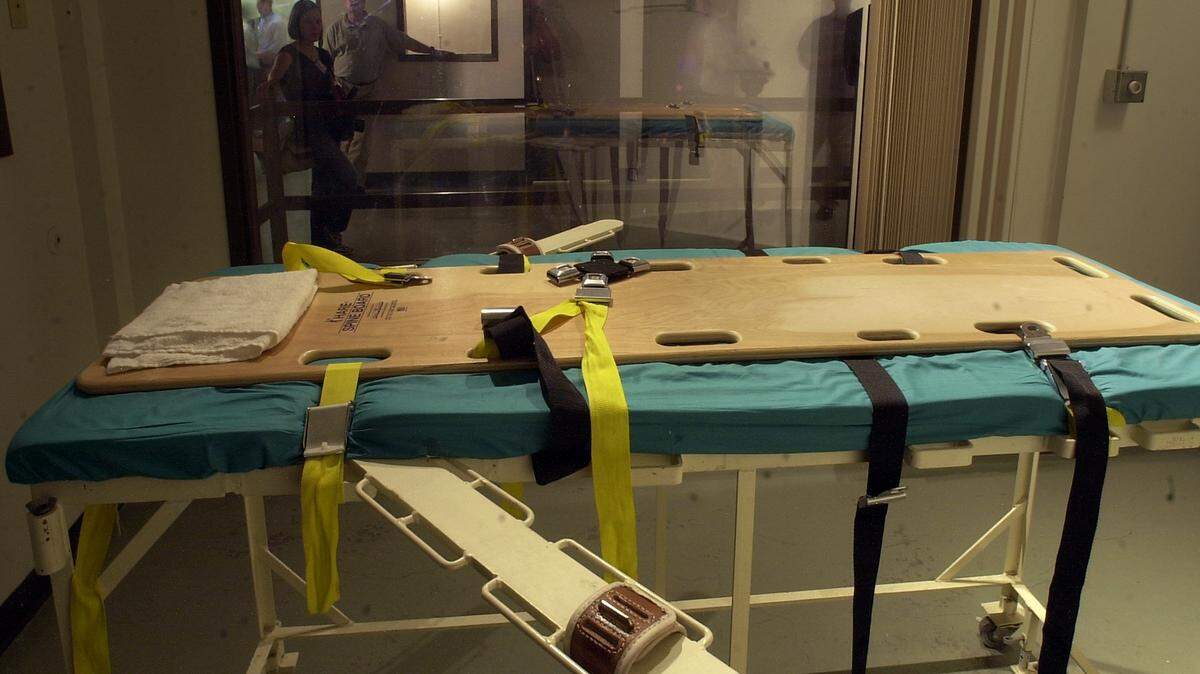
House Bill 658, now sitting on Gov. Brad Little’s desk, would enable the state to keep secret the identities of the companies or people that supply the state with execution drugs. Little, who has shown strong support for the death penalty, should nonetheless veto the bill.
In matters like the state executing a person — a state that has already had to pull one innocent man, Charles Fain, off of death row following a wrongful conviction — transparency is of the highest importance.
That transparency is important when it comes to the specific drugs used in lethal injection, as well as their manufacturers and distributors.
Records can shed light on the practices the state uses to procure drugs, as an extensive investigation by Kevin Fixler showed earlier this year.
Such records can also be used to examine whether executions are cruel and unusual.
Lethal injection was invented as the modern mode of execution, to replace the barbarism of the gas chamber and the electric chair. It was said that unlike those sometimes-horrific methods of killing, lethal injection is humane.
But over time it has become highly questionable that lethal injection results in a painless death. In fact, considerable evidence to the contrary has emerged — in part because of access to records about lethal injections.
As part of a 2020 NPR investigation, doctors examined a large number of post-execution autopsies. In the vast majority of cases, they did not find that death had been quick and painless.
“I began to see a picture that was more consistent with a slower death,” anesthesiologist Joel Zivot told NPR. “A death of organ failure, of a dramatic nature that I recognized would be associated with suffering.”
The lungs of the executed were most often filled with fluid. Even more troubling, they often had froth in their airways, indicating they were struggling to breathe as the fluid built up — though the paralytic drug administered to them likely made their suffering invisible to observers.
“It would be a feeling of drowning, a feeling of suffocation — a feeling of panic, imminent doom,” lung doctor Jeffrey Sippel told NPR.
Most of these executions used the traditional three-drug cocktail that has been used in executions in the U.S. for decades. Novel drug mixtures seem to have made the situation worse.
Reports of botched executions — executions that involved prolonged deaths, inmates audibly gasping or crying out, inmates straining against restraints — have become more prominent in recent years as more and more companies have decided they won’t sell drugs for executions, and states have responded by turning to novel drug cocktails.
That is why Gov. Brad Little should veto House Bill 658, which would allow the Idaho Department of Correction to keep secret the suppliers of execution drugs. If the state is going to end a life, potentially in an excruciating way, then everyone involved must assume full responsibility.
Little himself has pushed hard for Idaho’s next execution, vetoing a recommendation for clemency for murderer Gerald Pizzuto, who is dying of cancer. When that decision was blocked by the courts, he announced he would appeal.
If Little is bound and determined that the state of Idaho kill a man by lethal injection, he should ensure it is done in the light of day. Every aspect of the process should be open to public scrutiny. If a company wants to provide drugs for the purpose of killing a person, they should do so publicly and take responsibility for their decision.
But the Idaho Department of Correction says it cannot obtain execution drugs unless companies can be assured that no one will know who they are.
If no company will provide execution drugs except in exchange for a briefcase full of cash in a parking lot late at night — as if the state were buying a brick of heroin — then perhaps it isn’t moral to sell them.
Or to buy them.