
Painting, writing — and ukuleles. Idaho Prison Arts Collective seeks to improve lives
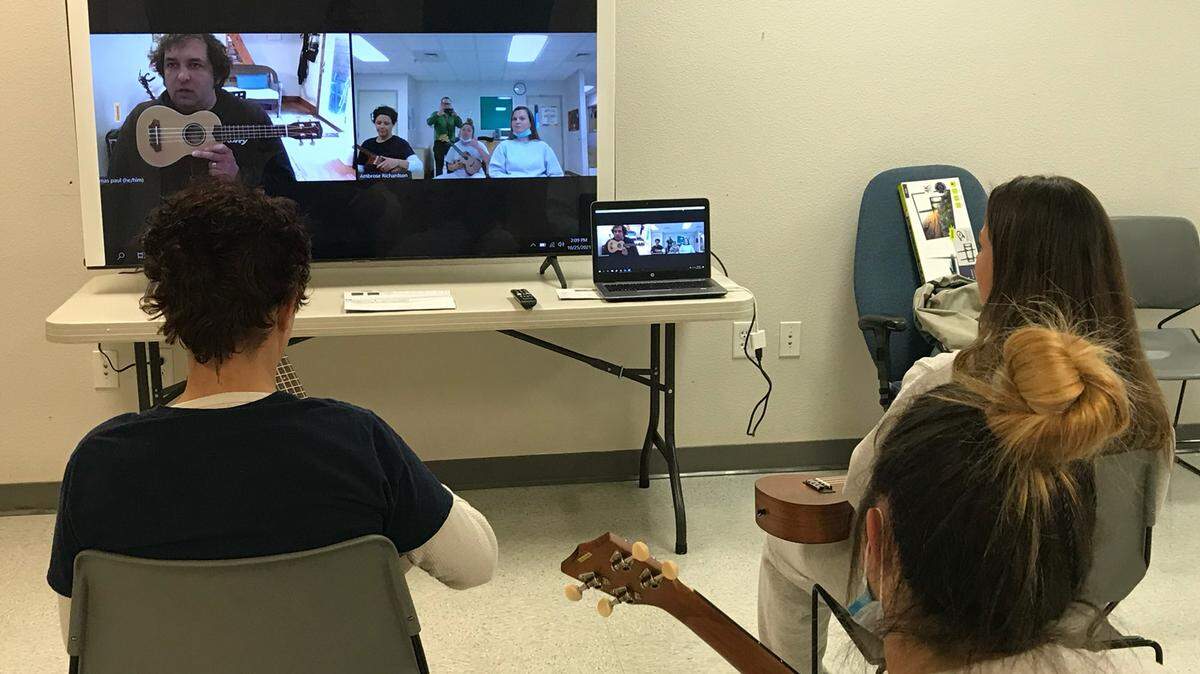
As the director of a new prison arts program in Idaho, I’ve had the chance to meet folks who are incarcerated, people in re-entry and Idaho Department of Correction staff and administrators.
The prison residents I’ve met are earnest, talented and intelligent. Staff at IDOC are flexible, generous and patient. The wardens I’ve met are deeply caring about the people living in their facilities.

Idaho Prison Arts Collective is only at seedling stage, but IDOC has been wonderfully supportive. We’re giving ukuleles and music lessons to women at one facility, doing writing and web design classes for men at another, and teaching painting and mindfulness classes at a third prison.
We’ll also be facilitating social opportunities for residents related to their creativity, setting up ways to perform, publish and exhibit.
We believe that teaching the arts — especially informed by brain science and psychology — presents one of the best opportunities for personal growth for anyone, and that it’s the most flexible, scalable and fun system available for helping people who are incarcerated. When you learn to write fiction, for example, you’re also learning to write emails to your employer, and you’re cultivating self-respect and self-control. Expressive writing has measurable effects on emotional well-being, too.
It’s refreshing to see that IDOC is carefully steering away from old models of punishment and toward new methods of healing and rehabilitation.
Notably, they’re making an effort to address trauma that’s often at the root of crime, as many victims of crime and abuse, especially as children, become perpetrators of violence or fall prey to addiction. It’s a tricky balance, of course, because being incarcerated is traumatic too, both to residents and to their family members. In fact, the Adverse Childhood Experiences scoring system, which measures trauma, considers having a relative in prison to be a significant source of trauma. At the same time, it’s not meant to be a retreat center.
Unfortunately, the traumatic nature of Idaho prisons is heightened these days.
To anyone who studies the matter, it’s clear that IDOC is being unfairly burdened, and prison residents are suffering unnecessarily, by laws that put too many Idahoans in prison for too long.
The Pew Center ranks Idaho as the second most punitive state in the country, which means in the world. Per 100,000 people, we incarcerate over 700. For perspective, Sweden, which has the same crime rate as ours, imprisons just 70. Today, Idaho has over 500 men imprisoned out of state, making family visitation prohibitive. Idaho’s “truth in sentencing” law means people can’t get out early for good behavior. The parole board seems to have no clear criteria for when they release people. These are agonizing and confusing conditions. When people are released, they still feel imprisoned by many wounding, stigmatizing and disempowering factors.
This is a crisis that can be mitigated by updating our criminal code. Our lawmakers should start by emulating states like Utah and Texas and refactor Idaho’s sentencing laws. Just as one example, the threshold for felony theft should be raised from $1,000 to something more reasonable, as inflation by itself would have called for. With the tens of millions the state would save, we could invest in things like transitional housing and mental health services.
Clearly, doctrines of “law and order” have limits. Laws that are overly punitive produce disorder and weaken our trust in government, because they’re no longer just.
We should all revisit assumptions we might have, too, about how a human is able to change for the better and consider the very conservative idea that some components of government are more effective when they’re smaller.