
It’s about time Idaho legislators reined in the Lottery by banning Powerball in Idaho
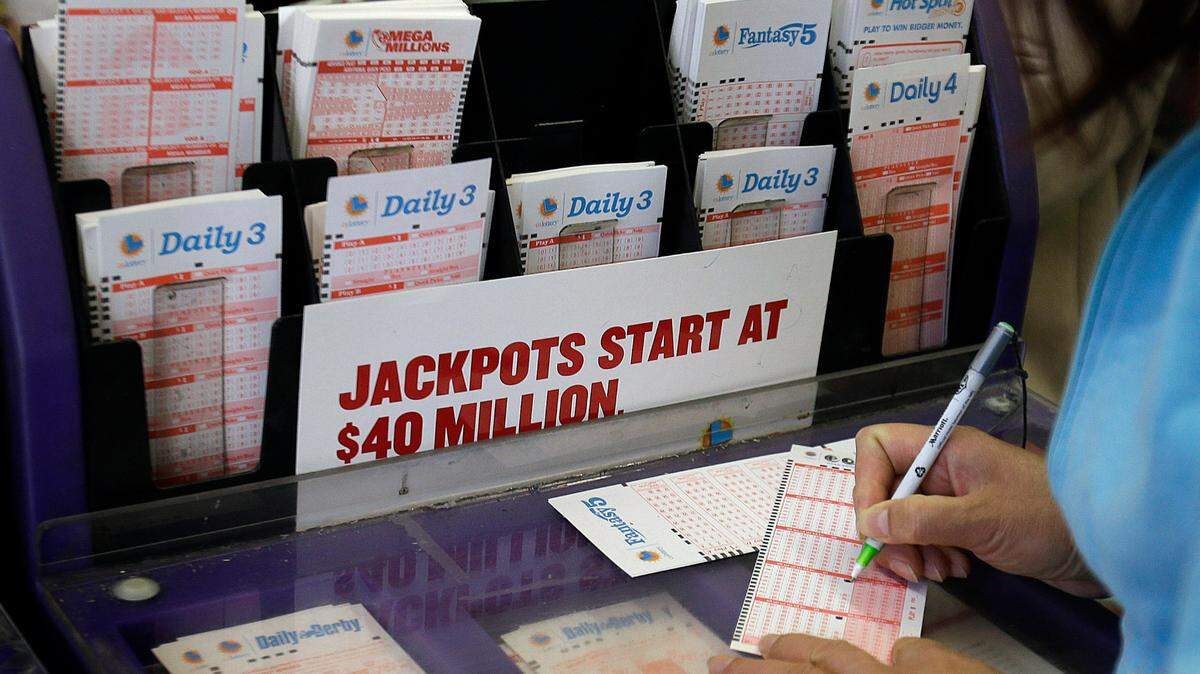
Thank you, Idaho legislators, for rejecting Powerball’s request to change our state law to support their international ambitions. Powerball is a product of the Multi-State Lottery Association, guilty of the worst lottery scandal in modern history when Multi-State Lottery Association Security Director Eddie Tipton, jailed in 2017, diverted millions of dollars in prizes across several states to his friends and family, leaving lottery players with worthless tickets.
Could it happen again? “We only catch the dumb ones,” joked Steve Bogle, VP of Security for the Iowa Lottery, which led the investigation.
Getting out of Powerball is a sound step for Idaho. But more should be done. Here’s why.
The lottery is a different kind of gambling than you think. It’s not just the scratch tickets and numbers games that the Lottery promotes. Instead, the lottery is, itself, a $270 million shell game.
Legislators and citizens are manipulated to watch the shell that spits out a meager $55 million “for education” and ignore the shells where the money is coming disproportionately from disadvantaged Idahoans … at the expense of Idaho’s small businesses … while gambling contractors reap big profits … for running a government-protected monopoly … whose business model depends on inducing citizens young and old to gamble more … eroding belief in the American Way of hard work, thrift and perseverance that lead to long-term economic success.
The lottery is problematic across the political spectrum, for significant reasons.
Some see the lottery as a government-run monopoly that sucks discretionary spending away from most main-street free-market businesses while making winners out of convenience stores and bars. The lottery does not create miracle dollars from thin air. It is the government, itself, enticing Idaho consumer spending away from our small businesses.
Others recognize that ending the lottery would be one of the single best ways to help the least advantaged among us. It would immediately put money back in the pockets of our lowest-income and minority citizens, the heaviest “players” of the lottery, and accelerate their move from poverty to independence.
Still others can’t support that “gamble more” is the loudest voice we hear from our government day after day, replacing the American belief in hard work and perseverance with a false-promise get-rich-quick scheme whose mathematical certainty is that the more you play, the more you lose.
Yes, some (highly regressive) dollars go to education. But what do we educate our kids for? We educate our kids to be able to make smart decisions for themselves and become productive, independent contributors to society. We undermine that education by promoting a legalized swindle, in the name of education, that targets, among others, the very kids we seek to educate.
If Idahoans want to play the lottery, why do we spend millions of dollars each year to entice them? The Lottery is one of the biggest advertisers in Idaho. Just watch their “Super Heroes” Super Bowl ad (yes, they bought one of those) and tell me the lottery is not targeting our kids and teens, too. In the United Kingdom, 450,000 children aged 11 to 16 bet regularly. No one is counting in Idaho.
Don’t blame the Lottery for advertising, for trying to change Idaho’s Powerball law, or for bringing us unconstitutional TouchTabs slot machines, whose “digital pull tab” euphemism hides a 20-bets-per-minute addictiveness that now takes $40 million per year from Idahoans statewide (actual pull tabs take only $1.5 million). The Lottery does what we tell it to do: “maximize revenue.” This legislature can fix that charge and provide a model for the nation.
Getting out of Powerball is a good first step. Here are three more: 1) protect Idaho’s young people by reining in gambling advertising, 2) ban the unconstitutional rapid-bet TouchTabs slot machines, and 3) charge the Lottery to put measuring, reporting on and minimizing lottery harms ahead of maximizing revenue.