
A message to all aspiring allies to the Black Lives Matter movement
To aspiring allies,
You’re witnessing a movement that criticizes the inherent racism of a police system designed to target Black people. This movement is pushing non-Black folks to take direct action and hold definitive stances of support or opposition. We are taking notes. Our conversations about abolishing the police are not new; you probably just haven’t been listening. However, if you are tuning in to our circles of transformative justice and taking stances for the first time, there are a few things you need to know:
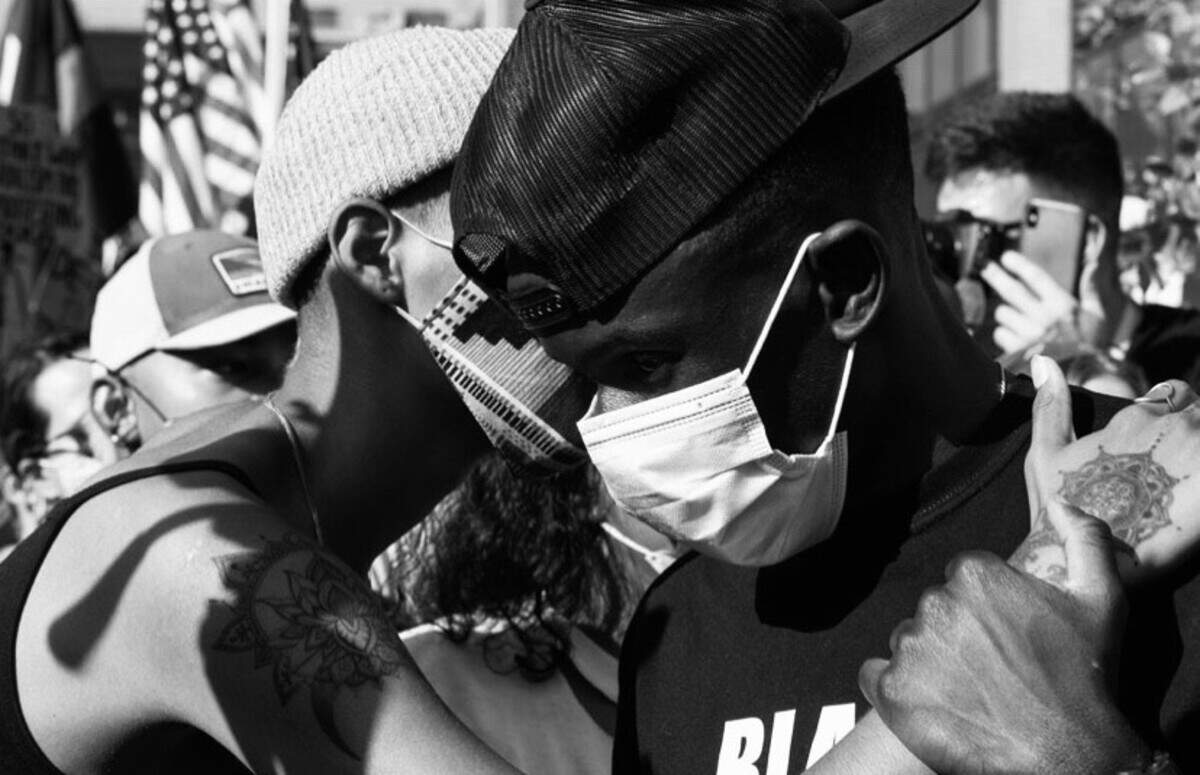
First, it’s a privilege to learn about racism instead of experiencing it. If it’s difficult for you to unpack racism, or if it adds levels of inconvenience to your daily life, try imagining the actual trauma inflicted upon Black people every day. For instance, last week’s standoff between people chanting for Black lives and people propelling white supremacy at Boise City Hall was “just another day” for many Black folks while being a shocking awakening for most non-Black witnesses. This phenomena is called suspension of disbelief.
Non-Black folks can have a particularly difficult time engaging with narratives from Black people because racism and oppression are a lot less proximal to them. It’s easy to be “stunned” or “surprised” by the very real and daily experiences of Black people. Suspending that disbelief, even just temporarily, to entertain the idea that Black truths are real opens various doors for our movement.
Your initial self-admissions of privilege show the depth of power imbalances that proliferate systems of racism, such as police systems. Your privilege realizations give you credence in our movement, re-establishes the importance of Black life and reveals your ability to show up with us. The hashtags you’re tweeting and the fists you’re raising signify real humans and impacts. Although learning from a distance will never be comparable to a firsthand experience, you hold influence as a non-Black person. Carry your learning and impact with accountability and intention.
Second, racism is not just a person-to-person interaction where one person is vulgar and aggressive. Racism is discrete. Racism is an institution. Racism is reinforced by our internalized ideals of whiteness as “pure” and Blackness as “inferior,” whether small- or mass-scale. This range of racism — from personal encounter to systemic oppression — strategically tiered our society with advantages exclusively based on race.
In other words, even if you are not actively engaging in individual acts of racism, there are still benefits and advantages you get within social circles and systems (whether you ask for it or not, whether you recognize it or not). Consider racism an ocean, deep and vast — for those who are non-white, they must swim against the current every day, every hour, every second. For those who are white, they swim with the current, which means that they do not have to swim to simply move forward. You are not doing enough while simply “not” committing racist acts; you must be anti-racist 100% of the time, even if the racism you confront is nuanced or seemingly bigger than you.
Third and arguably most important: Stop expecting people of color to explain racism to you, particularly at the expense of their own time, energy and capacity. Non-Black folks may think it is a sign of good merit to garner an explanation or validation from the closest Black person to them, but the effect is typically counterproductive.
Beyond experiencing a denial of privileges, microaggressions, and systemic racism, Black fatigue is exponentiated by the need to repackage, placate and present information about oppression into educational opportunities for you. To dismantle white supremacy, non-Black folks must stop considering racism as a struggle or duty for someone else. By restructuring a framework which considers racism as our collective battle — just as much your own personal fight — we can begin to recognize this movement as everyone versus racism rather than Black and non-Black. Instead of asking us to expand our trauma and labor, discuss anti-racism with other non-Black folks and do your own research.
Fourth, you have a duty to correct the incomplete narratives surrounding our lives, our movement and our goals to defund police. Racism thrives by altering the directionality of blame and violence toward people of color while simultaneously consolidating power for white and lighter-skinned folks. To correct false narratives and interrupt racism, it is imperative to tell the truth — even if it’s uncomfortable or vile.
Racist narratives were in your nursery rhymes, history books, every other field of your education, workplaces, favorite TV series, magazines, family lineage, etc. Within every story you know, there’s a long and harmful history of anti-Blackness and white supremacy. It is your responsibility to re-tell the narratives which got us here, change the narratives that circulate around us, and speak truth upon the narratives we co-create moving forward toward the emergent future where Black people are not policed when lucky and murdered without justice when not.
Fifth, and finally, you need to explore intersectionality. Kimberlé Crenshaw, professor of law at UCLA and Columbia Law School, coined the term intersectionality by describing how identities are interconnected and inseparable when examining social hierarchies. When a Black woman was not treated fairly at work and called for justice, she was dismissed because her employers had both Black people and women in positions of power. However, Crenshaw argued, she was not promoted because she was either Black or a woman; she was a Black woman, and those combined identities held her behind Black men and non-Black women.
Our ancestors taught us that we do not live single-issue lives, and our multiple identities create unique situations that may disproportionately influence our experiences in life. Just as you have a range of privileges and marginalizations, Black people have a range of intersections which empower or oppress us. Simplified, you cannot be pro-Black Lives Matter but homophobic, transphobic, ableist, fatphobic, xenophobic, etc. As an aspiring ally, you cannot support one part of our identity while invalidating another. Our liberation necessitates the destruction of every system of oppression, and dehumanization is unwelcome in our movement of restorative and transformative justice.
For folks just now joining the conversation, you are late. To hold your privilege with intention, it is crucial to unpack the racist contributions made overtly and covertly in daily life. It is not the job of Black people to teach you how to carry privilege or interrupt racism. We will not be returning to your regularly scheduled programming that engenders a culture where white supremacy and unmitigated violence thrive.
As Angela Davis once said, we have to act as if it were possible to radically transform the world. And we have to do it all the time.
No more #JusticeFor_____.
Let’s just have Justice.