
President George Washington’s parting words of wisdom for our times
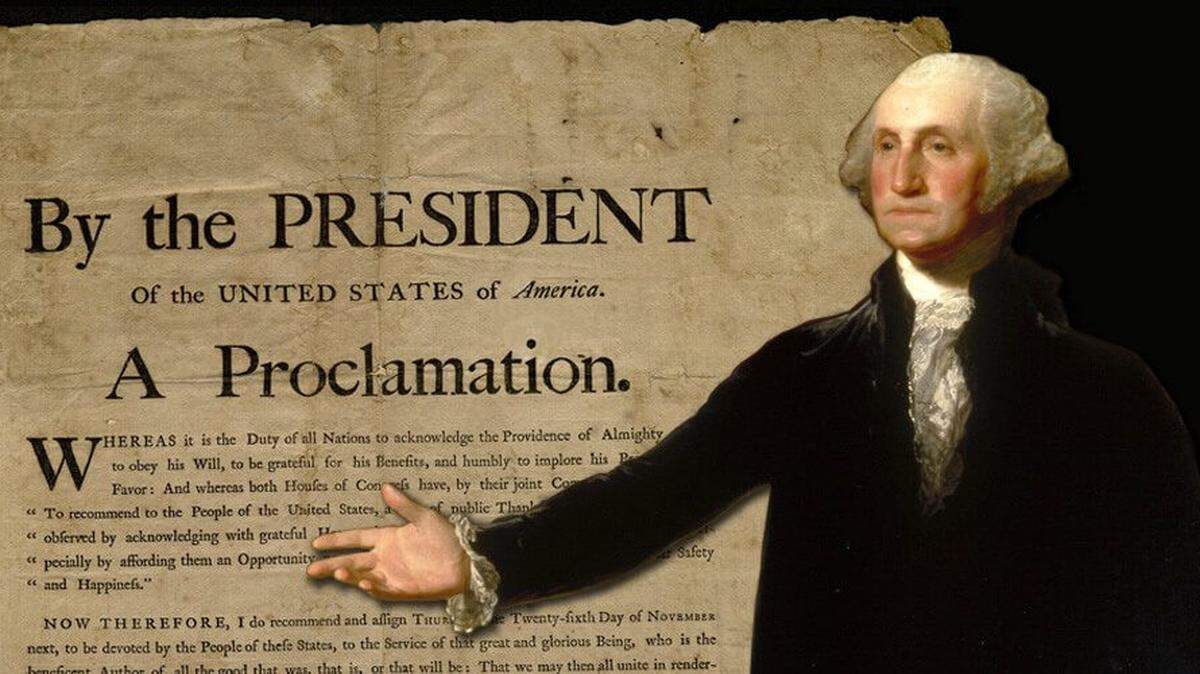
In 1796, President George Washington delivered his farewell address, in written form, to the American people. He had served two terms as president under the new U.S. Constitution. He was assisted in writing his address by James Madison and Alexander Hamilton who had significant roles in authoring and then serving in the government formed by the new Constitution. These were not the musings of academics but the observations of well-read and practical men who had actually served and governed during the first formative and turbulent years of the new American republic. They had not only helped write and advocate for the new Constitution, they had lived it.
So what did they recommend and commend to those who would follow them when it came to the continuing battles they foresaw to preserve the new republic?
On protecting the separation of powers
Washington states, in part: “It is important . . . that the habits of thinking in a free country should inspire caution in those entrusted with its administration to confine themselves within their respective constitutional spheres, avoiding in the exercise of the powers of one department to encroach upon another. The spirit of encroachment tends to consolidate the powers of all of the departments in one and thus to create whatever the form of Government, a real despotism . . . the necessity of reciprocal checks in the exercise of political power, by dividing and distributing it into different depositories and constituting each the guardian of the public weal against invasion by the others, has been evinced by experiments ancient and modern . . . to preserve them must be as necessary as to institute them. . .”
On the danger of party loyalty
“All obstructions to the execution of the laws, all combinations and associations under whatever plausible character with the real design to direct, control, counteract or awe the regular deliberation and action of the constitutional authorities, are destructive of this fundamental principle (adherence to the Constitution) and they serve to organize faction; to give it an artificial and extraordinary force; to put in the place of the delegated will of the nation the will of a party, often a small but artful and enterprising minority of the community; and, according to the alternate triumphs of different parties, to make the public administration the mirror of the ill concerted and incongruous projects of faction, rather than the organ of consistent and wholesome plans digested by common councils and modified by mutual interests . . . (such actions) . . . “in the course of time . . . become potent engines by which cunning, ambitious and unprincipled men will be enabled to usurp for themselves the reigns of government, destroying, afterwards the very engines which have lifted them to unjust dominion.”
On the dangers of foreign influence
“As avenues to foreign influence in innumerable ways, such attachments are particularly alarming to the truly enlightened and independent patriot. How many opportunities do they afford to tamper with domestic factions, to practice the arts of seduction, to mislead public opinion, to influence or awe the public councils! Such an attachment of a small or weak towards a great and powerful nation dooms the former to be the satellite of the latter. Against the insidious wiles of foreign influence . . . the jealousy of a free people ought to be constantly awake, since history and experience prove that foreign influence is one of the most baneful foes of republican government . . .”
Washington’s farewell address is a great piece of American history. The concerns expressed about foreign influence, elevating party above constitutional separation of powers and preserving the Constitution as a duty of all elected officials and U.S. citizens and the need for preserving mechanisms to work toward common goals and the need to promote education of the citizenry rather than retreating to factional corners are timeless admonitions for the preservation of a free republic.
Washington retired to Mount Vernon, Virginia, and died three years later in 1799, at the age of 67. Washington stated his wish for his farewell address as follows: “ . . . if I may even flatter myself that (these counsels) may be productive of some partial benefit, some occasional good, that they may now and then recur to moderate the fury of party spirit, to guard against the impostures of pretended patriotism -- this hope will be a full recompense for the solicitude for your welfare by which they have been dictated.”
Given the current events going on in our country today, I think most Americans hope George Washington’s words will be both remembered and helpful. Thank you, Mr. President.