
Idaho lawmakers shouldn’t risk runaway constitutional convention | Opinion
AI-generated summary reviewed by our newsroom.
- Idaho should reject an Article V convention to avoid open-ended constitutional changes.
- A convention lacks binding limits or judicial review and could exceed its mandate.
- A balanced budget amendment risks unintended limits on emergency fiscal and civil rights.
Lawmakers should reject the proposal, now under consideration in the Idaho House, to call Article V conventions to propose a balanced budget amendment and a congressional term limit amendment.
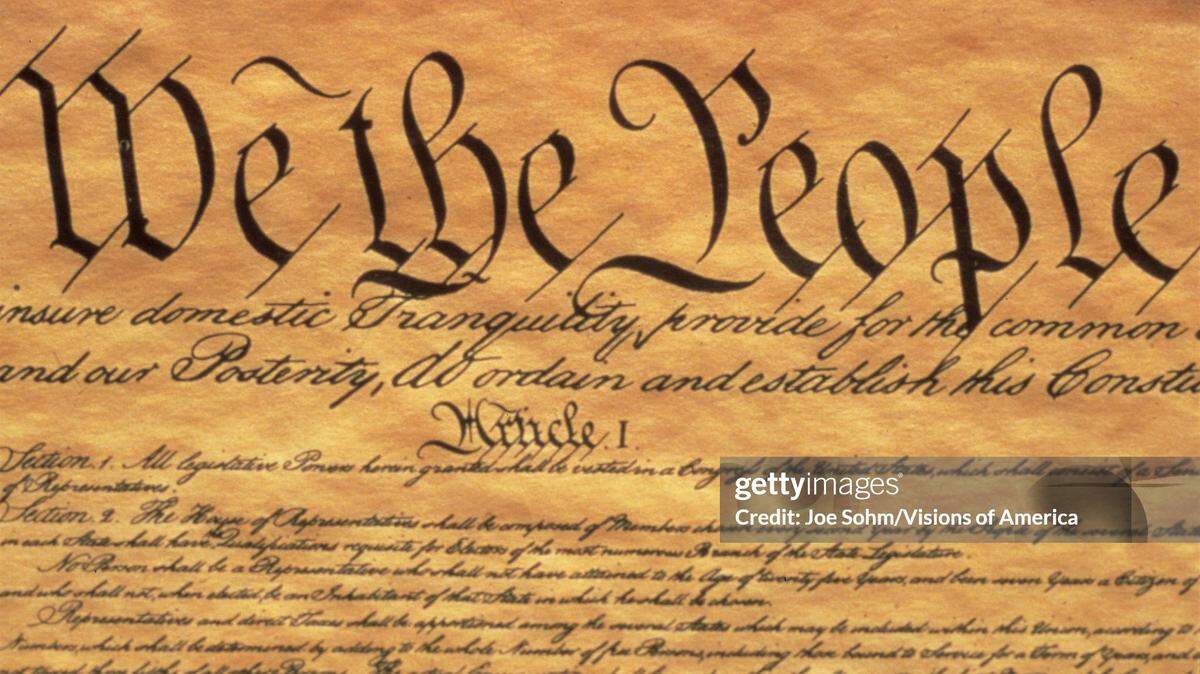
An Article V convention is a procedure, roughly outlined in the U.S. Constitution but never before tried, for amending the Constitution. The relevant passage reads: “... on the application of the legislatures of two thirds of the several states, shall call a convention for proposing amendments ….” These 20 words are the entirety of the guidance we have about how an Article V convention would work.
All 27 amendments to the U.S. Constitution, as well as all prior failed amendments, have come by a vote of two-thirds of Congress, which then requires ratification by state legislatures. While the constitutional language for this procedure isn’t much clearer than the convention, there is history, tradition and precedent to guide and limit its course.
An Article V convention is entirely new ground. And what has long been feared is a so-called “runaway convention,” where any imagined limits on the scope and power of the convention would be set aside by the convention delegates. It is a credible fear because there are no rules to bind those delegates beyond whatever rules they themselves decide to self-impose.
Even if the convention confined itself to its stated goals — which there is no assurance of — it could do the nation great unintended harm.
The national deficit and debt have reached unsustainable levels, particularly given that we are in a period of economic plenty, and so a balanced budget amendment sounds like a good idea.
There are times when it can be very important to run large deficits, like during significant recessions, as a way of restarting economic growth.
This was demonstrated in the Great Recession. The U.S. made some mistakes during this period, somewhat embracing a model of so-called “austerity” — reducing deficits by cutting spending and/or raising taxes. But Europe embraced austerity (some countries voluntarily, others by a degree of coercion) to a much greater degree.
The result was a long period of economic stagnation in Europe. While the Great Recession was certainly bad in the U.S., as well, we emerged from it faster and stronger — precisely because the U.S. mostly continued to run large deficits while Europe took a path of fiscal austerity.
The resolution calls for an amendment that exempts national emergencies, but there was no emergency declaration during the Great Recession.
We also had to run enormous deficits in the buildup to World War II in order to defeat Nazi Germany and imperial Japan. Would that count as an emergency under terms of the amendment? There’s no way of knowing precisely what counts, because no definition of the term has been offered.
The idea of Congressional term limits has more merit to it, as the Statesman editorial board pointed out in our recent editorial. Congress has become sclerotic and filled with people happy to sit there and do nothing but grow old. But an Article V convention is a bad means of reaching that end.
The promoters of the proposed convention, which has been considered each year in the Idaho Legislature for many years, have always tried to assure states that the scope of amendments proposed would be narrow and limited, things like a balanced budget amendment and the imposition of term limits (the current versions of the resolutions limits themselves to those subjects, but other states that have passed similar resolutions with much broader scope.)
But precisely because an Article V convention is completely unprecedented, there is no real way to assure that any promised limitations on its scope or powers would be more than tissue paper handcuffs.
If the convention exceeds its authority, who will declare that it has done so? The U.S. Supreme Court had to assert its right to review the constitutionality of legislation in Marbury vs. Madison, which eventually settled into general consensus, but there is absolutely no precedent to say it can review the work of an Article V convention.
If the convention assumes powers the states did not intend to grant it, who will stop it from exercising them? Does the president have that right? Congress? The courts? The Constitution is silent.
Is now, a time when the country is at a peak of internal division and strife, really the time when we want to risk rewriting the Constitution?
Many Idahoans value the current interpretation of the Second Amendment. Many people, especially in larger and more populous cities, have radically different views. Would there be a drive to revoke the right to bear arms in public, for example? About six in 10 Americans want stricter gun control laws.
The official position of the Idaho GOP is that you should not be allowed to vote for who represents you in the U.S. Senate, and they are not alone in that view. Could you lose that right? Hard to say.
There is a rising movement within Christian Nationalist circles to revoke the right of women to vote. Want to risk that?
For all our system’s flaws, we still have some basic common agreement on how it works. It would be a terrible idea to risk upending all of that by embracing a never-before-tried means of rewriting our nation’s fundamental document. As they have in years past, Idaho lawmakers should walk away from this one.
Bryan Clark is an opinion writer for the Idaho Statesman.