
There’s a ‘No Kings’ rally near you. You should consider joining | Opinion
AI-generated summary reviewed by our newsroom.
- No Kings rallies mobilize citizens across urban and rural Idaho communities
- Scholars warn U.S. democratic norms declined since Trump’s first term
- Public protest acts as civic defense; mass turnout can repel authoritarian moves
It’s easy to believe that protesting is irrelevant, just some people on a street corner having no effect on the world.
Don’t buy it for a second.
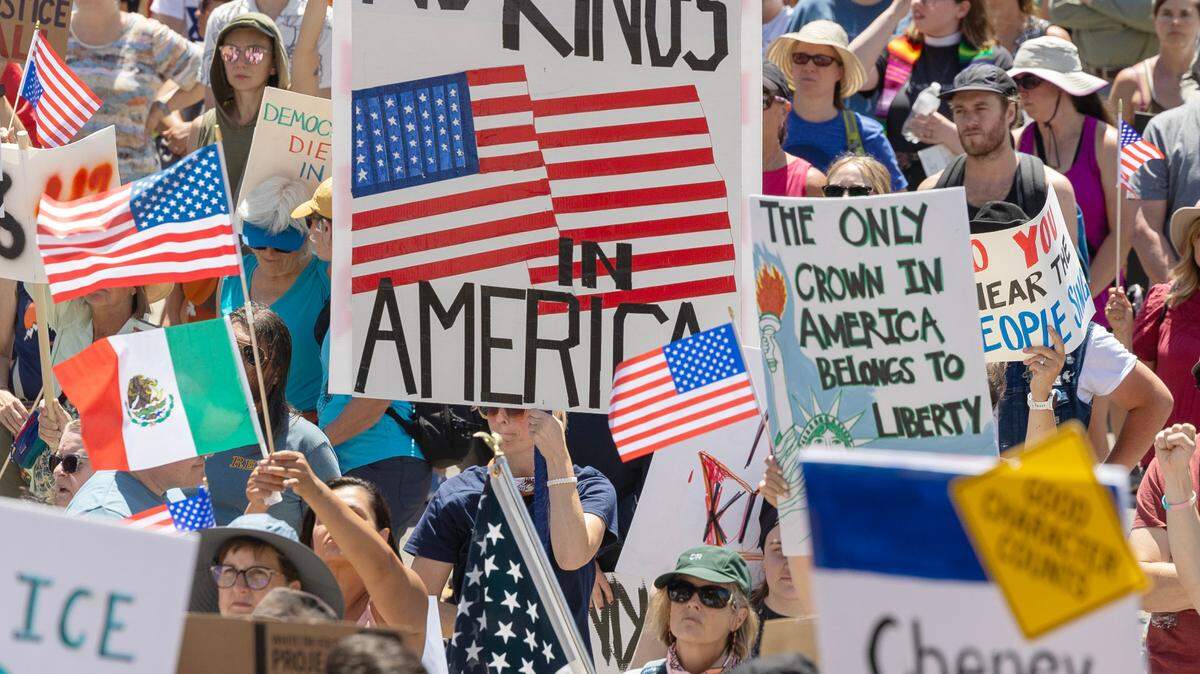
When people take to the streets Saturday for a No Kings protest, it is important, serious work. And if you are concerned about the advance of authoritarianism in the United States, you should join them. No Kings protests aren’t planned only in Idaho’s few blue specks like Boise, Driggs and Sun Valley. They’re also planned in many rural areas, in the heart of red territory — Rexburg, Twin Falls, Salmon and Arco, among other places. No matter where you live, there’s one within a few hours’ drive.
There is a broad consensus among political scholars that the U.S. has significantly slid away from a functioning democracy and toward a more authoritarian system of governance since President Donald Trump took office.
This is rather obvious. Last time Trump lost an election, he organized an attempt to set aside the results of the election and to remain in power — that is, he launched a failed coup. And a majority of Americans voted in 2024 to return to the White House a man who had trampled on the basic principle that political leaders are chosen by the people.
Freedom House, which has long evaluated countries throughout the world in terms of their protection of basic freedoms, now rates the U.S. barely above South Korea in terms of protection of basic rights.
The comparison to South Korea is meaningful, because protesters there just months ago beat back an attempt to end their democracy.
On Dec. 3, South Korean President Yoon Suk Yeol declared martial law, imposed media censorship, deployed the military domestically, instituted rule by decree and accused the political opposition of engaging in “anti-government activities” — all steps Trump has either taken or suggested, with varying degrees of winking and nodding, that he might take.
The South Korean people had some advantages relative to Americans, who have for decades been able to rely on systems of checks and balances that functioned well.
South Koreans have a much more recent and more visceral memory of tyranny than we do. In 1948, its first president, Syngman Rhee, engaged in pervasive and violent political repression. After a brief period of political opening, Park Chung Hee instituted military dictatorship in a coup. After his assassination, Chun Doo-hwan staged yet another military coup. It wasn’t until 1987 that South Korea entered a sustained period of political freedom — a period that could easily have ended last year.
But because of massive protests and organized opposition, along with swift action by the opposing majority in parliament, martial law lasted six hours. Yoon was successfully impeached and currently faces criminal trial.
Yoon’s small segment of supporters have adopted Trump’s language from his prior coup attempt, carrying signs in English with the slogan “Stop the Steal.” This is hardly an isolated incident; Trumpist slogans have become the lingua franca of global authoritarianism.
We are not now in the place that South Korea was late last year. Trump has not declared martial law, though he has repeatedly threatened to invoke the Insurrection Act.
Trump has repeatedly federalized troops and sent them into Democratic-majority cities, where they largely do nothing because there is no threat. Secretary of Defense Pete Hegseth has called generals into central meetings to berate them and encourage them to retire, opening slots that can be filled with loyalists.
Most recently, the Trump administration attempted to deploy troops to Portland, ostensibly to quell violence from protesters — who in fact are mostly standing around in inflatable animal costumes to mock the idea.
“This historical tradition boils down to a simple proposition: this is a nation of Constitutional law, not martial law,” wrote U.S. District Judge Karin J. Immergut, a Trump appointee, wrote when blocking the deployment. “(The Trump administration has) made a range of arguments that, if accepted, risk blurring the line between civil and military federal power — to the detriment of this nation.”
While we are not in an acute crisis of democracy now, we are not yet at the end of Trump’s first year in office. Things could easily get worse. If the time of a South Korea-style crisis comes, massive public protests will be an essential, maybe the most important, means of ensuring the future of American democracy.
It’s time to start building those muscles now. That’s why you should strongly consider finding the No Kings rally nearest to you and showing up.
Public protests matter, which is why authoritarians always attempt to crush them.
And when they prove unable, tyrants fold.
Bryan Clark is an opinion writer for the Idaho Statesman.