
Why this version of the Bible? Why a new bill imperils Idaho’s religious freedom | Opinion
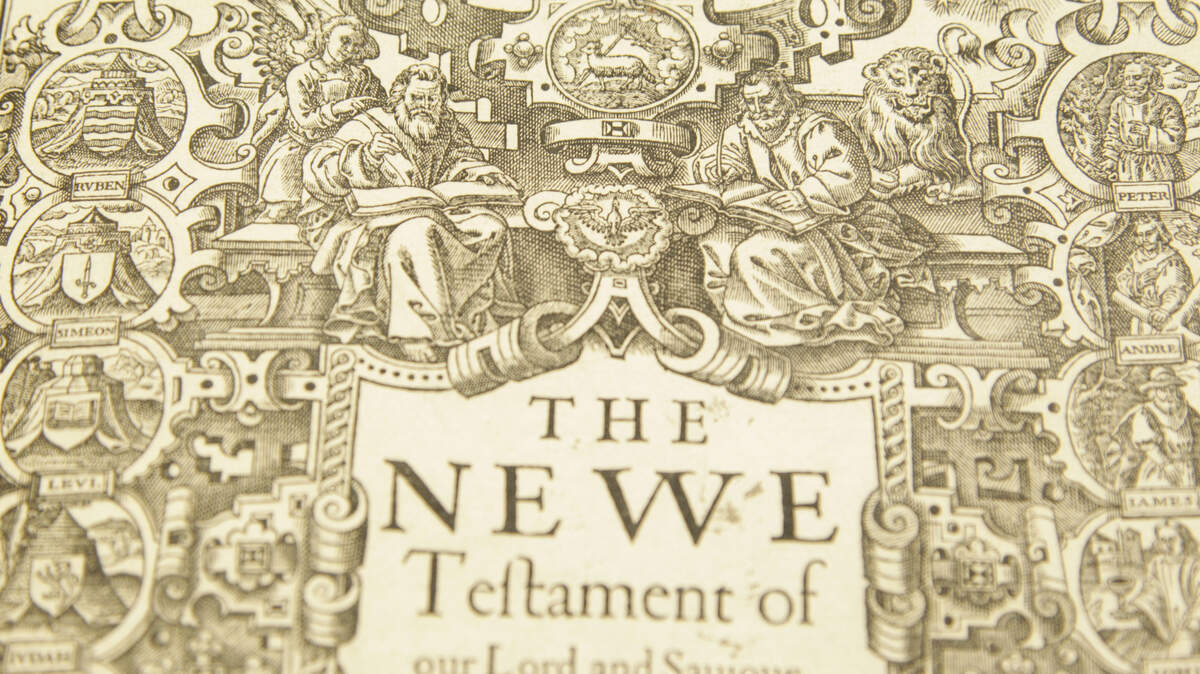
On Thursday, as had long been expected, a bill was introduced to read verses from the Bible in all Idaho public school classrooms every day of the school year.
The sponsors described it as an effort to “cultivate morality and encourage good citizenship” and to respect the state’s history and tradition.
Which is all nonsense. This is part of an effort to teach one particular kind of Christianity to your kids, using your tax dollars — and probably not your version of Christianity.
Look closely at the bill. It does not allow individual communities to choose what Bible their school district will teach. In all schools, in all places, it will be the King James Bible and a couple of closely related variants.
The King James Version is a beautiful, magisterial translation of the Bible. But choosing that particular version isn’t neutral — it is not even neutral with regard to Christianity. It’s not just about how specific words are translated, but what books are included and excluded.
It was named for King James IV, inheritor of the conversion of England to Protestantism by Henry VIII, principally because he enjoyed marrying a new woman every year or two, which the Catholic Church did not approve of. So this particular version of the Bible is part of a particular movement within Christianity, one which began a few hundred years ago. As such, it differs significantly not only from non-Christian religious traditions, but older and newer Christian religious traditions as well.
Choosing a mandatory version of the Bible, the state would be implicitly choosing what it deems the correct and canonical version of Christianity — incidentally, a version ascribed to by a small minority of Idahoans.
It is unlikely, even with shifts in Supreme Court precedent, that a clearly unconstitutional law like this would survive scrutiny by the courts. But it’s worth understanding what would happen if it were enacted.
Idaho Family Policy Center President Blaine Conzatti argued that the Supreme Court’s “history and tradition” test would not require equal time be given to other religious texts like “The Satanic Bible.” Of course, this is a red herring — there is no constituency demanding that book be read to kids. Here’s what such a test would exclude, which you might care about:
- If you are a member of The Church of Jesus Christ of Latter-day Saints, many of your religious texts would be excluded — according to Conzatti’s standard — in exactly the same way as “The Satanic Bible.” Since there’s no history and tradition of reading The Book of Mormon or the Pearl of Great Price at the beginning of school, our state’s largest religious group will be excluded. (Let’s remember the black stain of “history and tradition” in the state of Idaho with regard to Mormons: at the founding, they were banned from voting, holding public office and serving on juries.)
- If you are Catholic, your Bible will not be read. Several books that appear in the Catholic Bible are excluded from the King James Bible, which all students will wind up reading roughly twice, cover to cover, through the course of their public education. So the state will be implicitly teaching your kids that their Bible is wrong, that they are not proper Christians.
- If you belong to one of the Orthodox churches or the Coptic Church, your Bible will not be read. Many of these churches use Bibles with significant differences from the King James version.
- If you are Jewish, Hindu, Muslim, Buddhist, Daoist, Sikh, atheist, agnostic or have any other set of views on religion, the schools you fund with your taxes will work every day to teach your children that your family’s personal religious views are wrong and immoral.
Of course, kids can sit out with a note from their parents. And thereby isolate themselves from their classmates, single themselves out and subject themselves to ridicule.
Religion is not excluded from public schools. Kids can pray, alone or in groups, however and to whomever they want. They can study whatever religious texts they want. They can evangelize. They can form religious study, prayer or service groups. They can wear religious clothing.
What they have now is religious freedom.
What the establishment of an implicit state religion for Idaho schools would do is begin to erode and erase that freedom. The point of these bills is to turn Idaho schools into centers for indoctrination into one, very particular kind of Christianity — a brand of Calvinist, evangelical Christianity ascribed to by many of those who are advancing this bill.
The enemy of this bill is not immorality or bad citizenship, societal decline or “wokeness.”
The enemy of this bill is religious freedom.
This story was originally published February 10, 2025 at 4:00 AM.