
Idaho politics has long felt broken. Water deal shows pragmatism still has a chance | Opinion
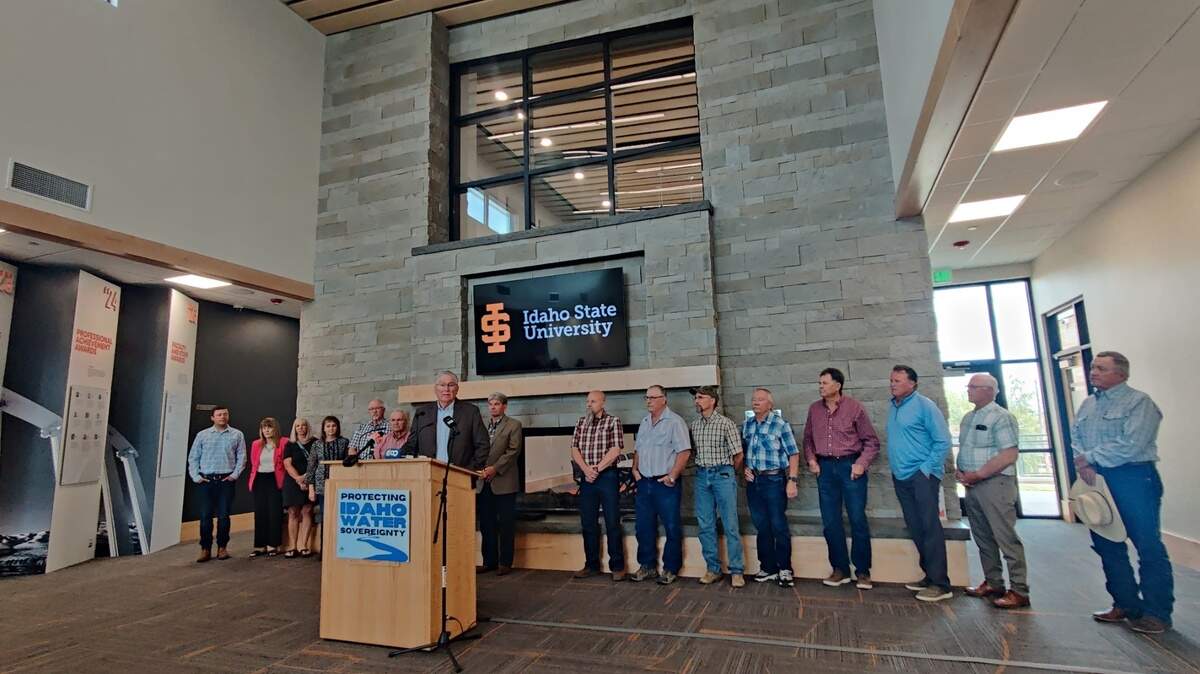
At a meeting of the Legislature’s Interim Committee on National Resources on Monday, Idaho received good news: Negotiations brokered by Lt. Gov. Scott Bedke and Idaho Water Resources Board Chairman Jeff Raybould produced a proposed deal to end the water conflict that has pitted surface and groundwater irrigators in Southern Idaho against one another for two decades.
The conflict centers around the massive Eastern Snake Plain Aquifer, which has been declining since the mid-1950s, when groundwater pumping became more common and farms began to transition away from flood irrigation to more efficient sprinkler systems. The aquifer feeds springs along the Snake River, so declines in the aquifer have also meant declines in available surface water for irrigation, particularly in the Magic Valley.
Since most surface water rights are older than groundwater rights, the conflict has repeatedly threatened to cut off water to much of Idaho’s most highly productive farmland. The latest flare-up resulted in a curtailment order, which threatened to end the growing season on about one of every six irrigated acres in Idaho.
The precise details of the new deal won’t be fully public until the members of surface and groundwater districts ratify it. But in the broad outlines, it addresses several outstanding issues that repeatedly boiled over into litigation over the last 20 years.
- It assigns blame directly to individual groundwater pumpers who fail to comply with the mitigation plan, rather than punishing them collectively if one member fails.
- It creates a means of accounting for privately funded aquifer recharge projects meant to offset groundwater pumping and prioritizes recharge that feeds parts of the Snake River that need water, like the stretch between Blackfoot and Minidoka.
- It deals with water decisions in predictable four-year blocks, allowing farmers to make intelligent decisions about what to plant given how much water know they’ll have.
- And it increases the amount of data available about how much is being pumped out of the aquifer and when.
Remarkably, one piece of the deal involves both surface and groundwater irrigators agreeing to either dismiss or stay the host lawsuits they’ve been embroiled in for years. That promises to transform the relationship from one of mutual distrust and hostility to one of collaboration.
“Collaboration has been the secret to our success, and it will be the secret to our success going forward,” Bedke said in an interview. “As long as communities live together, they’re going to have to get along.”
“Both sides came to the realization they were stuck with each other, and then the magic started happening,” he added.
There is evidence that all of the pain has produced some good.
At the hearing, Idaho Department of Water Resources Director Mathew Weaver testified that efforts to conserve the aquifer are paying off. The long-term decline of the aquifer, from the mid-1950s to the early 2000s, has either slowed or halted by water management.
Since around 2005, aquifer levels have bounced up and down, but there is no longer a clear downward trend. Simulations by the department of what would have happened without recharge and pumping have saved about 3 million acre-feet — around six times the total capacity of Anderson Ranch Reservoir — in the aquifer.
“I think that’s a very hopeful message. … We’re not seeing those historical declines in the system,” Weaver told the committee.
Water is a unique issue in Idaho governance. There is almost nothing political about water problems, at least in the traditional sense of the word. They’re immensely complicated. The stakes are enormous. Everyone involved fights as if their livelihood depends on the outcome — because it does.
But there are no Republicans and Democrats, no liberals and conservatives. All the problems are practical, and the only question is whether a solution can be found.
And it’s a relief, in a time of endless polarization and culture-war nonsense, that some parts of Idaho’s government can still solve real problems like these.
“Nothing replaces the parties getting together and learning about each other’s positions and learning that their positions are not unreasonable,” Bedke said. “Every successful family, every successful business has learned these skills, and it’s what’s missing in the public discourse.”